Judge rejects Montrose application to revisit 2025 Aboriginal title ruling
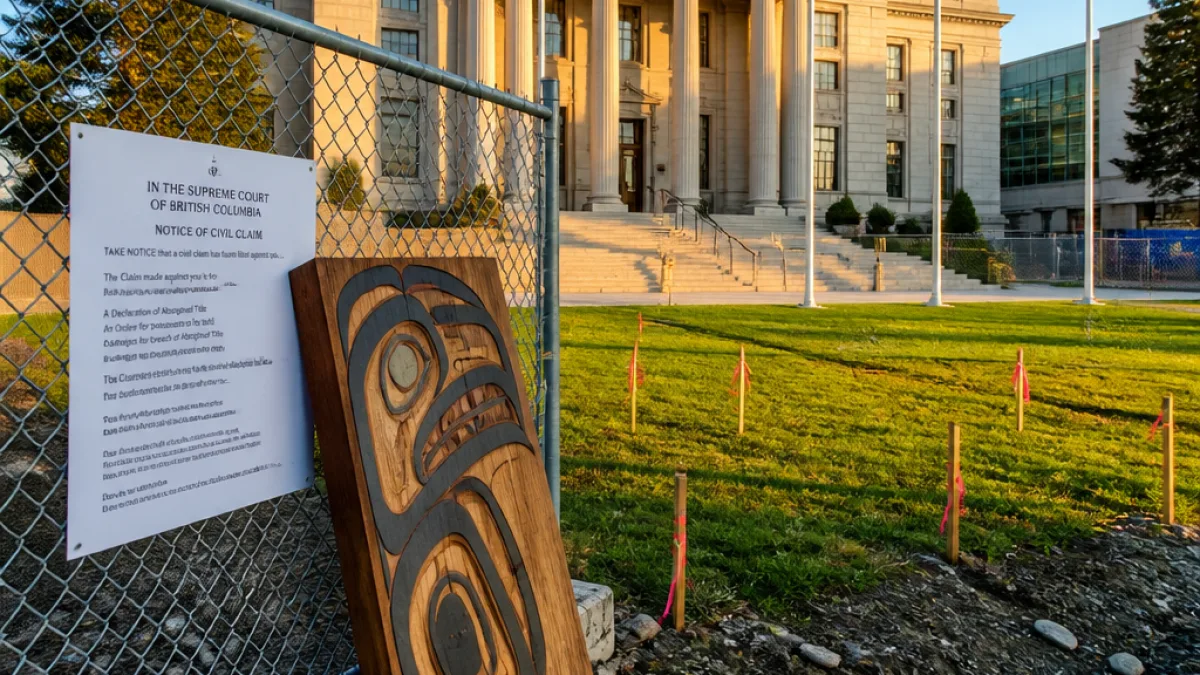
The B.C. Supreme Court will not reopen its 2025 decision recognising Aboriginal title held by the Cowichan Tribes over roughly 800 acres of land in south Richmond, and an east Richmond company will not be added as a party, Justice Barbara Young ruled.
The company, Montrose Properties, applied in January to have the court revisit Young’s judgment after last year’s multi-year trial. Much of the land covered by the declaration falls within holdings owned by Montrose, prompting the application to challenge whether the court could properly declare title over lands where the fee-simple owner had not been a formal party to the litigation.
Montrose raised four other grounds in its bid, including questions about how provincial laws apply on land subject to Aboriginal title, how Aboriginal title and fee-simple interests would be exercised together, whether fee-simple titles had been found to unjustifiably infringe Aboriginal title and whether Aboriginal title could have been extinguished by existing fee-simple rights.
- 513-day trial: Young noted the issues raised by Montrose were largely addressed during the lengthy trial involving the Cowichan Tribes and the governments of Canada, British Columbia and Richmond.
- Participation: No private landowners were formal parties to the original case; the federal government’s application to give notice to private owners during the trial was rejected.
- Finality and fairness: The judge said finality must not sacrifice fairness but found no basis — such as fraud or newly available evidence — to reopen the case.
In her written reasons, Justice Young observed that four of Montrose’s five points had already been canvassed during the trial, which she described as being prosecuted by well-resourced parties. While acknowledging the company did not take part in the trial, she found the record addressed the legal issues Montrose now sought to re-litigate.
“This is not a case where the trial was tainted by fraud or dishonesty, or where fresh new evidence, previously unavailable, impeaches the original result,” Young wrote.
Young agreed with the plaintiffs that allowing Montrose to be added at this stage would create a precedent opening the door to repeated challenges of concluded litigation. The original decision, handed down last August, declared Aboriginal title over a sizeable area in south Richmond after a trial that ran more than a year.
Local implications and next steps
The ruling preserves the status of the 2025 declaration recognising Cowichan Tribes’ Aboriginal title in the designated area. That declaration remains an important legal determination for municipal land use, resource management and the relationship between fee-simple owners and Indigenous title in Richmond.
Municipal officials, landowners and residents in the affected area will be watching how the parties and governments proceed now that the court has closed the door on reopening. The judgment does not, by itself, resolve how practical arrangements between Aboriginal title and existing private interests will be implemented; those questions were among the matters contested during the trial and may require further negotiation or litigation if not settled by agreement.
| Item | Detail |
|---|---|
| Decision originally handed down | August 2025 |
| Trial length | 513 days |
| Area of land | About 800 acres (south Richmond) |
| Applicant to reopen | Montrose Properties |
| Presiding judge | Justice Barbara Young |
For Richmond residents, the judgment reaffirms a significant court finding about Indigenous title within city boundaries and underscores continuing legal and practical questions about how Aboriginal title and existing private property rights coexist. Any changes to land use, municipal planning or compensation arrangements will depend on follow-up steps by governments, the Cowichan Tribes and affected owners.
The court’s refusal to reopen the case leaves the 2025 ruling intact and maintains the framework within which those next steps will unfold.