The B.C. government has issued an order-in-council exempting FortisBC from a regulatory requirement that would normally force the utility to obtain a certificate from the B.C. Utilities Commission before expanding the Tilbury liquefied natural gas facility in Delta.
Energy Minister Adrian Dix said the exemption will speed approvals for the proposed $2-billion expansion, allow construction to begin sooner and preserve the project’s financial viability. The province says the move could support about 1,100 construction jobs and produce roughly $260 million in tax revenues.
“What we are talking about here is action that will bring prosperity and progress to the province, improve our emissions reductions, improve the competitiveness of our port and invest in B.C. at a time when surely that is important for our province,”
The order-in-council removes the requirement for a certificate of public convenience and necessity from the utilities commission — a step developers typically must complete before starting or expanding a public utility plant or system. The government said the exemption is intended to provide greater regulatory certainty and to optimise FortisBC’s investment timetable.
Project timeline and oversight
According to the province, the project will remain subject to all other applicable regulatory approvals and permitting requirements before construction begins. The government said construction could start by the middle of next year, with operations as early as 2031.
| Item | Detail |
|---|---|
| Projected investment | $2 billion |
| Estimated construction jobs | 1,100 |
| Estimated tax revenue | $260 million |
| Earliest operation date | 2031 |
Local role and environmental framing
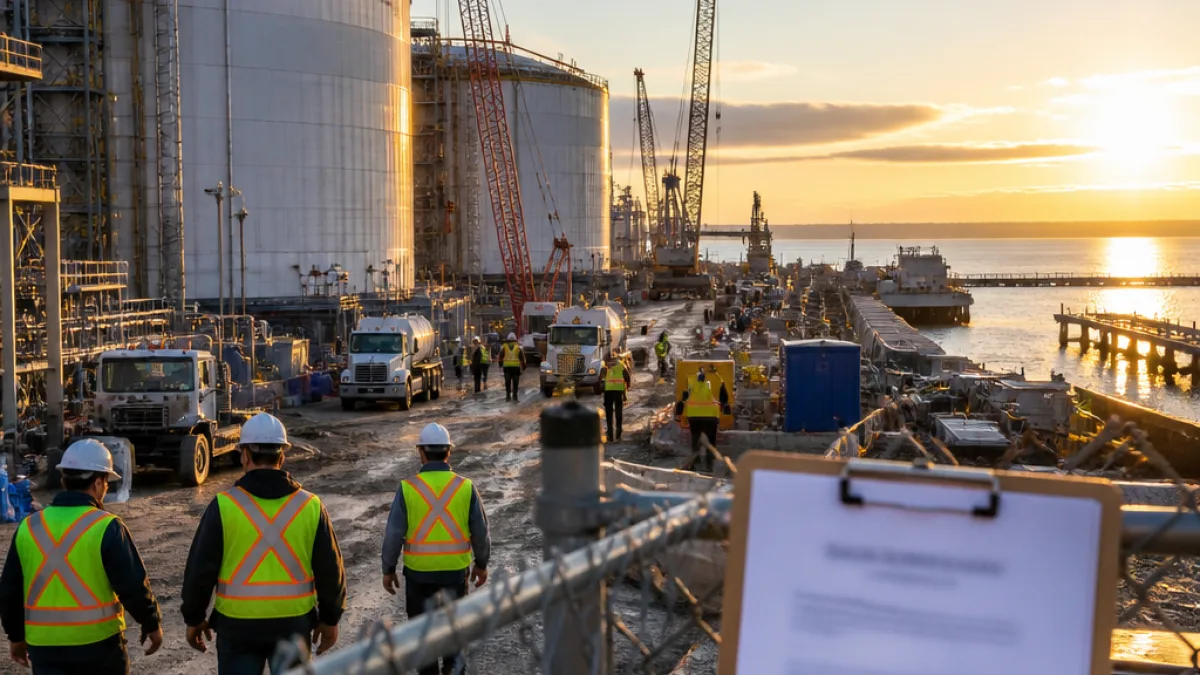
The Tilbury site has operated since 1971 as a natural gas storage facility used to meet peak demand. More recently it has produced LNG for marine refuelling and worked with the Vancouver Fraser Port Authority on developing a bunkering service for vessels. The province framed the expansion as supporting decarbonization of domestic and international shipping by offering a cleaner alternative to conventional marine fuels.
While the government emphasised benefits including job creation and emissions reductions, the decision to bypass the utilities commission removes a level of independent regulatory review that would normally assess whether the expansion is in the public interest. The province said the project would still have to clear other regulatory and permitting hurdles prior to construction.
What to watch next
- Whether FortisBC secures remaining permits and approvals required for construction.
- How local stakeholders and environmental groups respond to the exemption from BCUC review.
- The precise timeline for construction and the company’s plans for workforce and community engagement.
The provincial announcement signals a policy choice to accelerate energy infrastructure projects deemed strategically important to economic and emissions objectives. The full scope of public scrutiny and consultation that would normally accompany a utilities commission process will be an area of interest for local officials and residents as the project advances.