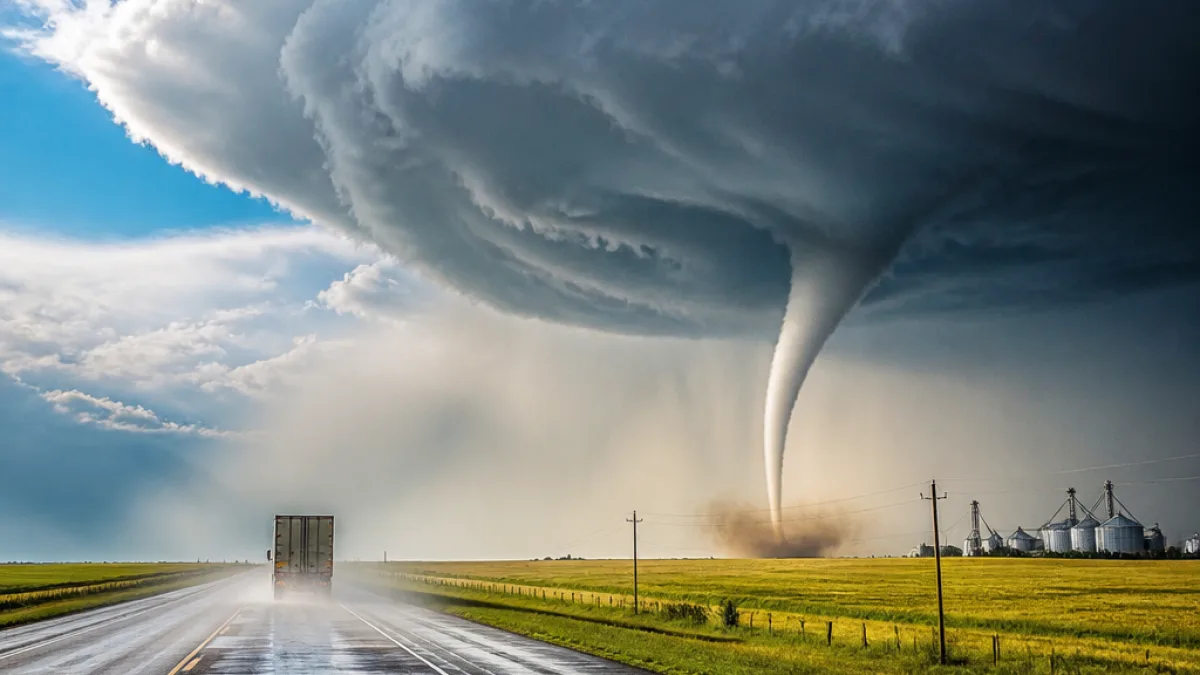
Warnings expand as severe storms intensify
Environment and Climate Change Canada (ECCC) issued tornado warnings Saturday evening for parts of central Alberta as severe thunderstorms developed quickly and a tornado was confirmed on the ground west of Rocky Mountain House. A highway camera captured the funnel at 6:32 p.m. MT, corroborating reports of a touchdown just west of the community.
By 7:40 p.m. MT, warnings named specific areas in Ponoka County and Lacombe County, with ECCC urging residents to take shelter without delay. Communities in the storm’s projected path included Leedale.
| County | Warning Area |
|---|---|
| Ponoka County | Near Rimbey, Bluffton and Hoadley |
| Lacombe County | Near Eckville |
“This is a dangerous and potentially life-threatening situation. Take cover immediately, if threatening weather approaches,” the agency said, advising people to move to “a room on the lowest floor, away from outside walls and windows.”
Risk zone extends from central Alberta into western Saskatchewan
Forecasters described a highly energetic setup across the central Prairies, noting that ingredients were aligning over central Alberta, including Edmonton, and into western Saskatchewan. The corridor from Edmonton to North Battleford was highlighted as especially vulnerable to severe weather late Saturday. While not every location would experience a storm, ECCC cautioned that any cell that formed could intensify rapidly.
Authorities asked residents to keep a close watch on alerts through the evening and to have a sheltering plan ready, including a strategy for when a warning is issued while travelling.
What to do right now
With storms evolving quickly, the priority remains getting to secure shelter and staying there until the warning expires. ECCC’s guidance emphasizes moving away from windows and exterior walls and avoiding vehicles and temporary structures.
- Head to a basement or the lowest interior room (bathroom, stairwell, closet) of a sturdy building.
- Do not remain in vehicles, mobile homes, tents, trailers or other temporary shelters—seek a solid structure.
- If caught outside with no shelter, lie low in a depression and protect your head from debris.
- Monitor official alerts and heed updated warnings through the evening.
Why this setup matters for Alberta
Peak summer brings the province’s most active period for severe thunderstorms, and Saturday’s conditions fit that profile: ample low-level moisture, daytime heating and strong wind shear capable of spinning up rotating storms. The presence of a confirmed tornado near Rocky Mountain House underscores how quickly hazards can materialize once storms break through a cap and organize.
Central Alberta’s mix of rural communities, highways and recreation areas means tornado warnings can affect residents, travellers and people outdoors at short notice. With warnings in Ponoka and Lacombe counties and a confirmed tornado west of Rocky Mountain House, forecasters signalled that additional alerts could be issued as storms track east or northeast during the evening.
Staying informed as conditions evolve
ECCC advised that severe weather could change with little notice. People along and north of the Edmonton–North Battleford line should be ready for sudden shifts in wind, heavy rain and hail as storms pulse in intensity. Keeping mobile devices charged, identifying a safe room in advance and limiting non-essential travel in warned areas can reduce risk as new cells develop.
InfoRadar will continue to track updates from ECCC and provincial road cameras through the night. Residents in warned regions should follow official channels for the latest statements and act immediately on safety instructions if new warnings are issued.