Regional cooling meets local heat
St. Albert’s resale market remains active even as broader indicators in the Edmonton region point to a gradual cooldown. An analysis from RBC’s Robert Hogue found a 2.1 per cent year-over-year decline in benchmark prices for June in the Edmonton area and a 22.2 per cent increase in available listings, signs of a shift from a seller‑leaning market toward balance. ATB Financial economist Rob Roach described the trend as a measured step down from recent peaks.
“It’s safe to call it a cooling off,” said ATB Financial economist Rob Roach.
Local analysts say St. Albert is bucking some of that easing, with demand still firm and competition evident for well‑priced homes. They point in part to aggressive early bids from out‑of‑province buyers — particularly so‑called “bully offers” from British Columbia — as one factor sustaining pressure in select price bands.
Construction steady; supply still tight at entry levels
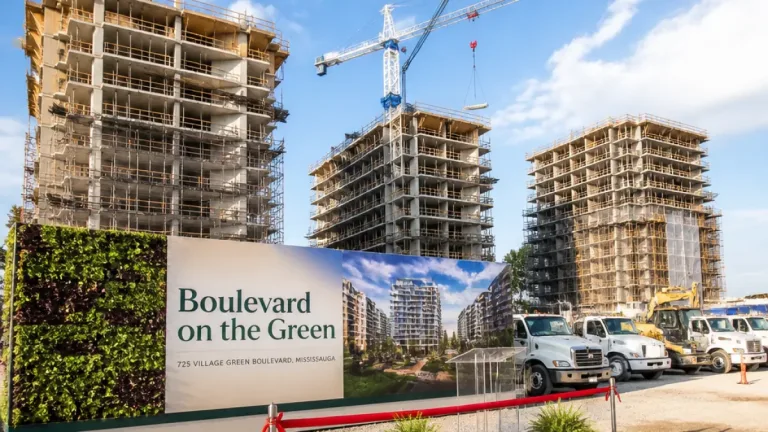
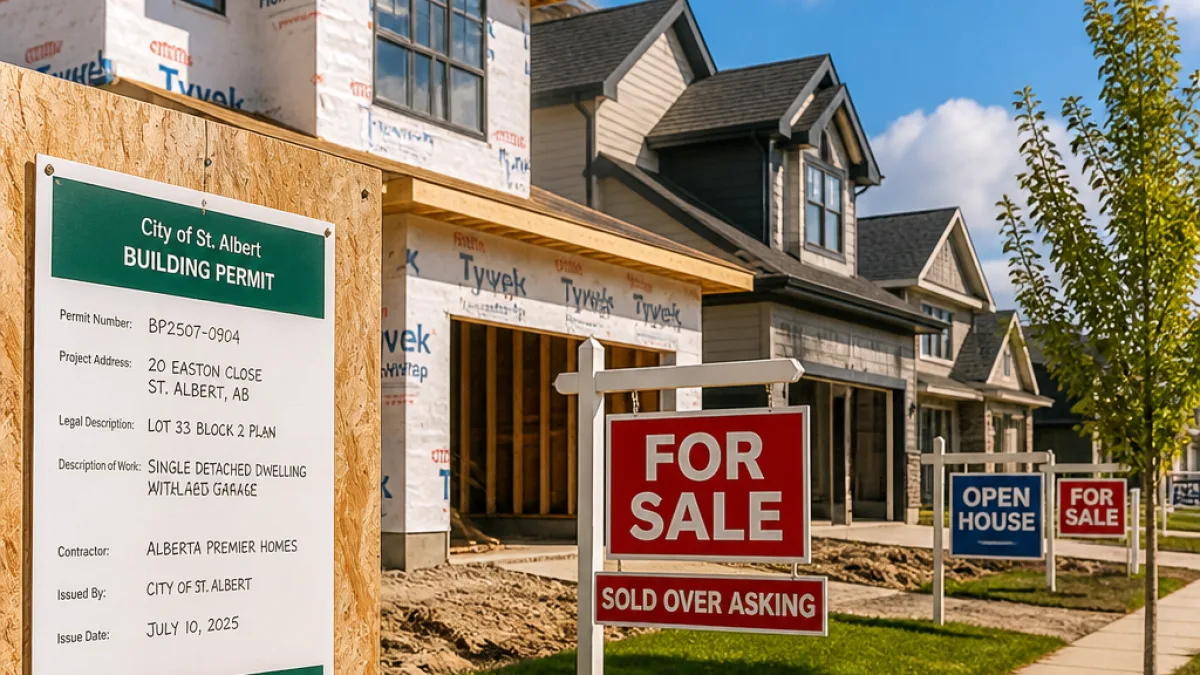
New supply pipelines in the city remain active. The City of St. Albert’s planning and development director, Kristina Peter, said 356 building permits were issued from Jan. 1 to June 30 — the same tally as the first half of last year — indicating homebuilding has not slowed locally so far this year. That aligns with provincial trends Roach highlighted, with Alberta on pace for roughly 46,000 housing starts in 2026, fewer than last year’s high of about 55,000 but well above the five‑year average near 35,000.
Even so, agents report that entry‑level choices remain limited for would‑be buyers. Erin Willman of CyrWillman Real Estate Group said the number of lower‑priced resale listings remains thin, despite more new homes making it to market this year.
“There’s not a lot in the lower price point range,” she said, noting typical townhouse prices around $250,000 and most single‑family homes listed in the $550,000–$850,000 range.
Affordability strain persists
While benchmark prices in the region have retraced modestly — Roach noted they are down about 3 per cent from a record set in early 2025 — the pullback has not restored affordability for many households. Population growth has eased following federal limits on non‑permanent residents, and builders have increased output, yet both factors are working through the system gradually.
Roach said an earlier influx of newcomers to Alberta, many of them renters or non‑permanent residents, pushed up demand for rental and multi‑family units. As construction catches up and population gains moderate, the pace of price escalation has tempered. Still, incomes, borrowing costs, and inventory in certain segments — especially lower‑priced single‑family homes — continue to challenge buyers.
What this means for St. Albert buyers and sellers
- Sellers of homes priced near local averages may continue to see quick interest, especially if well‑prepared and competitively listed.
- Buyers may find more choice than a year ago across the Edmonton region, but St. Albert’s entry‑level segments remain comparatively tight.
- New construction is adding supply, yet it may take time to significantly ease pressure in the most in‑demand price brackets.
Local realtors report that competition is strongest for accurately priced properties in family‑oriented neighbourhoods, while higher‑end listings can take longer to firm up. For those entering the market, the current environment rewards pre‑approvals, flexible timelines, and readiness to move when a suitable home appears. For sellers, realistic pricing and strong presentation remain decisive.
By the numbers
| Indicator | Figure | Context |
|---|---|---|
| Edmonton region prices (YoY, June) | -2.1% | RBC analysis signals cooling |
| Edmonton region inventory (YoY, June) | +22.2% | More listings easing conditions |
| St. Albert building permits (H1 2026) | 356 | Matches H1 2025 total |
| Alberta housing starts (2026 pace) | ~46,000 | Below 2025’s ~55,000; above five‑year ~35,000 |
| Price from early‑2025 peak | -3% | Regional pullback still leaves affordability tight |
| Typical St. Albert townhouse | $250,000 | Lower‑price options limited |
| Typical single‑family listing range | $550,000–$850,000 | Most active segment |
Outlook
With regional inventory improving and prices off their highs, St. Albert could see a more balanced second half of 2026. But steady local construction and continued interest from out‑of‑province buyers suggest demand will not fall away quickly. For now, the city’s market sits at the intersection of a cooling region and tight local supply, with affordability pressures lingering even as conditions normalize.