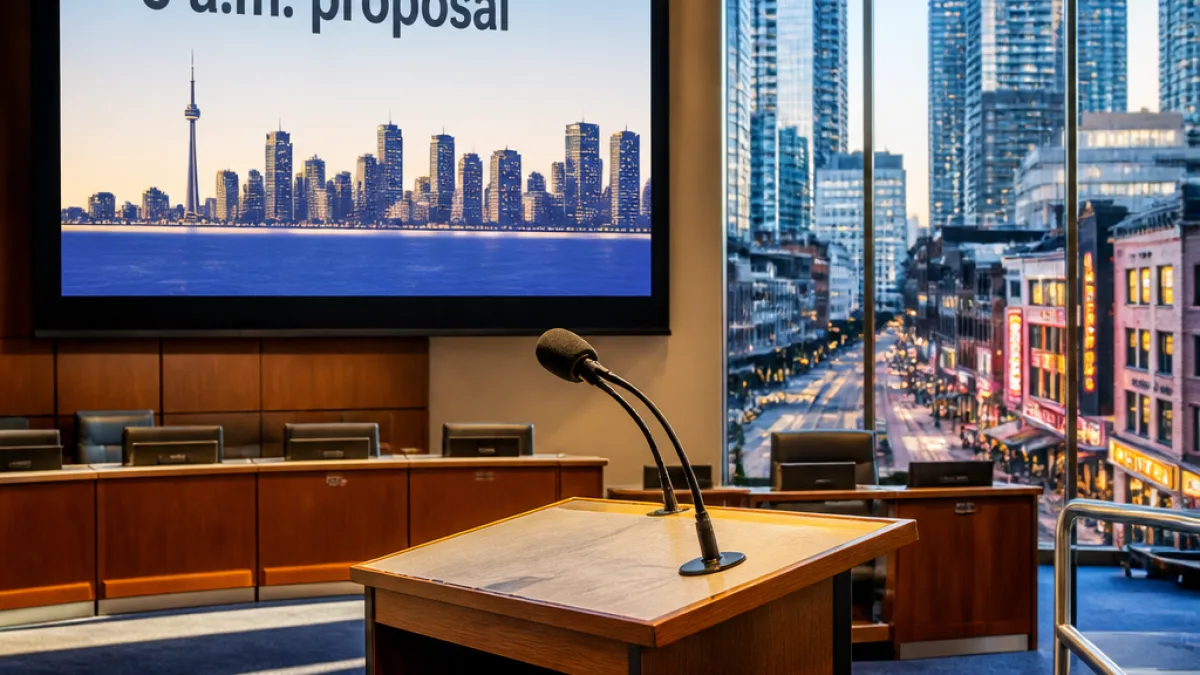
Proposal would extend permitted hours to 6 a.m.
The Toronto City Council is weighing a proposal that would permit bars, nightclubs and arts venues to serve patrons until 6:00 a.m.. The motion was introduced by Scarborough-Guildwood Councillor Paul Ainslie, who also serves as Deputy Mayor for Scarborough.
Arguments for and against extending nightlife hours
Proponents argue longer opening hours would help revive a nightlife economy they say has been diminished by condo development and curtailed social spaces. Supporters also point to temporary extended hours during recent FIFA World Cup events — when venues were allowed to remain open until 4:00 a.m. — as evidence the city can manage later service.
- Supporters say extended hours could strengthen community connections, increase economic activity and reduce disruptive mass departures from venues at earlier closing times.
- Opponents cite concerns about late-night noise, public-safety risks and a shortage of suitable venues as residential development replaces former cultural spaces.
- There are questions about enforcement, neighbourhood impacts and how extended hours would align with provincial liquor regulations.
“I think it can be managed effectively. I think it brings a lot of connection and joy for people,” said a Toronto resident who supports later hours, noting experience living in countries with more active late-night cultures.
Context: current and proposed service hours
Days after temporary allowances for the FIFA World Cup, which extended bar hours to 4 a.m., the new motion would push the limit another two hours. City staff and councillors will need to consider policing, licensing, transit and noise-control implications if Council approves the change.
| Situation | Last call |
|---|---|
| Standard recent hours (pre-FIFA extension) | Earlier than 4:00 a.m. |
| FIFA World Cup temporary extension | 4:00 a.m. |
| Proposed regular hours | 6:00 a.m. |
Local consequences and next steps
If Council approves the proposal or directs staff to study it, city divisions will assess impacts on public safety, transit scheduling and licensing rules. Neighbourhood associations and business groups are likely to challenge or support measures depending on local conditions. The debate will centre on balancing economic and cultural benefits against potential disturbances to residents, especially in denser areas where several people pointed out that “everything’s a condo.”
Public hearings or committee review are probable next steps before any change becomes permanent. Implementation would also require coordination with provincial liquor authorities and local enforcement agencies to address compliance and safety concerns.