Thunder Bay, Ont. — A small First Nations community more than 200 kilometres north of Thunder Bay that was largely destroyed by a fast-moving wildfire is being denied emergency supports because it is not recognized as a community under the Indian Act, its lawyer says.
Community left to self-evacuate
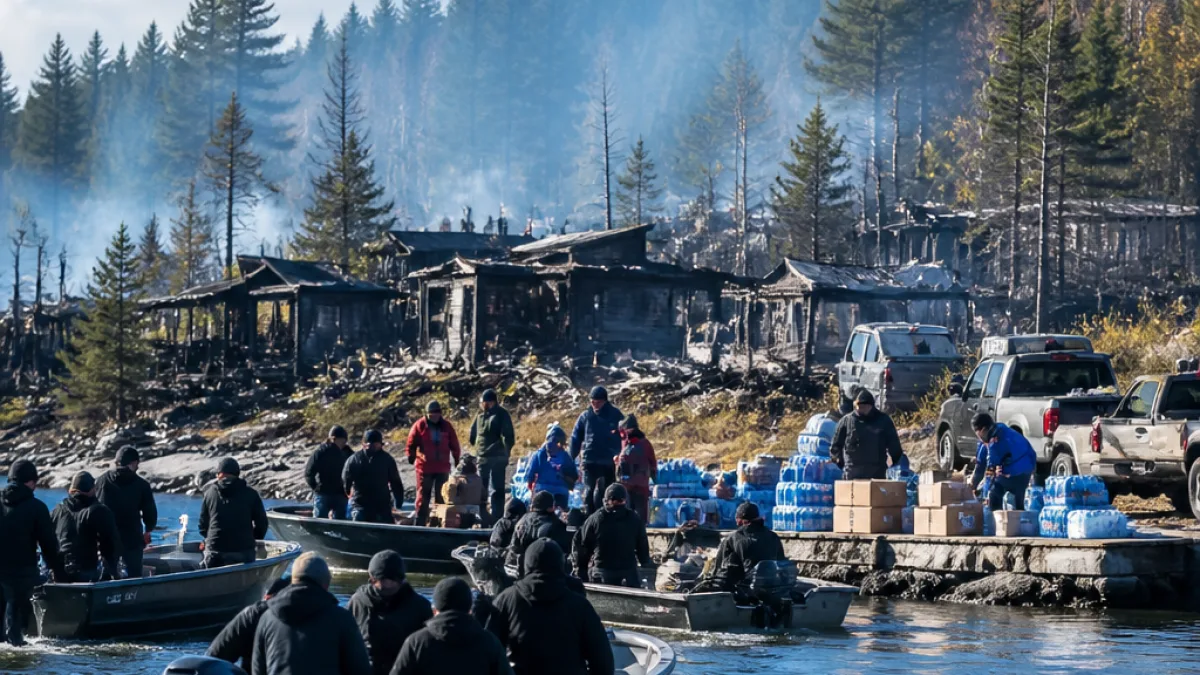
Residents of Collins First Nation — also known by its Indigenous name Namaygoosisagagun — were forced to self-evacuate after flames approached the shoreline of the remote settlement earlier this week. Videos from the scene showed people fleeing on small boats as the fire closed in.
The community has no road access, and its members say provincial and federal agencies failed to warn them or provide evacuation supports. The Anishinabek Nation Grand Council Chief, Linda Debassige, described the escape as narrow and said neighbouring First Nations and the council have provided immediate assistance.
“We don’t know if we’re going to be reimbursed, but that doesn’t matter,”
Debassige said. “Our concern is about supporting this community when the federal and provincial government have failed them.”
Federal recognition and access to supports
Meaghan Daniel, a lawyer representing Collins First Nation, has written to Indigenous Services Minister Mandy Gull‑Masty asking the department to make emergency, recovery and reconstruction supports available to the community. Daniel says residents are recognized as First Nations people under the Indian Act but the community itself is not formally recognized by Ottawa — a distinction she says is blocking access to assistance that other communities receive.
The letter requests that the department extend the same emergency programs available to recognized First Nations to Collins so members can receive help for immediate needs and for rebuilding.
Local and broader context
The destruction of Collins comes amid a catastrophic wildfire season across Canada. Ontario’s Aviation, Forest Fire and Emergency Services reported the fire that affected Collins was more than 350,000 hectares in size on Thursday. The scale of the fires has strained provincial and federal resources and left some northern communities feeling abandoned.
- Community: Collins First Nation / Namaygoosisagagun
- Recognition status: Community not recognized by federal government
- Impact: Community largely burned; residents self-evacuated
Members of the Anishinabek Nation have provided temporary supports including hotel stays, food and clothing. Debassige said the council and neighbouring First Nations are assisting regardless of reimbursement, focusing on immediate needs.
| Item | Detail |
|---|---|
| Distance from Thunder Bay | More than 200 km north |
| Fire size (reported) | More than 350,000 hectares |
| Road access | No road access |
Indigenous Services Minister Mandy Gull‑Masty has not been quoted in the material provided, and federal officials’ response to the lawyer’s request was not included in the available reports. The community’s lawyer urged the minister to apply emergency measures that already exist for recognized First Nations communities.
This situation highlights legal and administrative gaps that can affect access to disaster relief for unrecognized communities, and raises questions about how emergency programs are administered in remote areas during large-scale, multi-jurisdictional crises.
Coverage will continue as Collins First Nation and federal and provincial authorities respond to requests for aid and clarification on eligibility for emergency supports.