New supply cools asking rents, even as summer demand returns
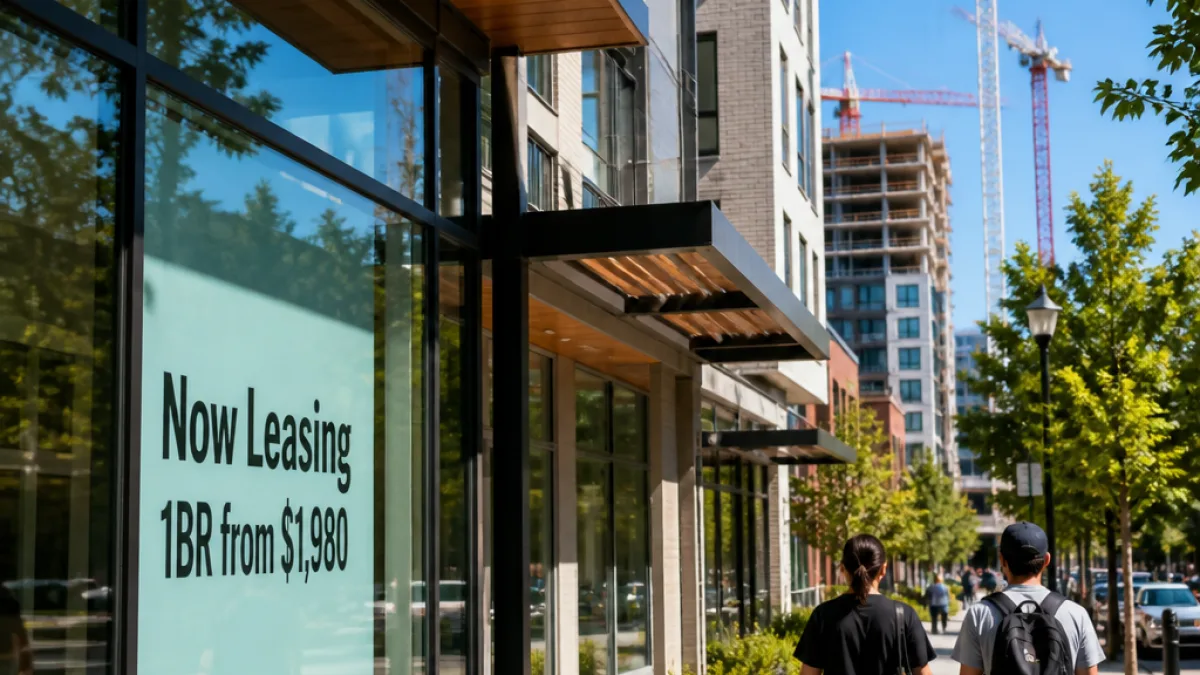
Average asking rents for apartments in Victoria have fallen notably over the last year, with one-bedroom units down 7.9% in June compared with a year earlier, according to Zumper’s latest National Rent Report. The typical one-bedroom listing in the city came in at $1,980, reflecting a market that has begun to loosen as a wave of purpose-built rentals reaches completion.
The same report shows two-bedroom apartments averaging $2,630 in June. While that represents a 4% month-over-month increase, asking prices for two-bedrooms remain 5.7% lower than in June 2025. The figures underscore a market recalibrating after years of escalating rents, with new inventory beginning to put downward pressure on prices.
“A record supply pipeline is still working through B.C., which is expected to keep pressure on rents even as seasonal demand picks up,” the report states.
Data at a glance
| Unit type | Average asking rent (June) | Month-over-month | Year-over-year |
|---|---|---|---|
| One-bedroom | $1,980 | +1.0% | -7.9% |
| Two-bedroom | $2,630 | +4.0% | -5.7% |
Despite the decline, Victoria remains among Canada’s most expensive rental markets, ranking as the fifth priciest city in the survey. Within British Columbia, the report highlights divergent trends: Kelowna posted the steepest annual drop at 11.4%, while Vancouver retained its position as the country’s most expensive market with rents up 2.1% year-over-year.
What this means for renters and landlords
For tenants, the shift suggests a measure of relief after sustained increases across the region. Although June’s one-bedroom rate in Victoria edged up 1% from May, the broader annual slide points to improved choice and slightly more leverage in lease negotiations—particularly for those considering older stock or moving between neighbourhoods. The momentum of new purpose-built rentals coming online could maintain that trend into the coming months, according to the report.
Landlords are likely to face a more competitive environment as additional projects reach the market. While quality, location and amenities will continue to command premiums, the data indicates list prices are responding to a larger pool of available units. Month-to-month fluctuations are still evident—especially in two-bedroom offerings—yet the overall trajectory since last summer has bent lower.
Regional context and Victoria’s standing
British Columbia’s rental landscape is evolving at different speeds across cities. Zumper’s findings place Victoria in the middle of a provincial reshuffle: prices here are softer than a year ago, but still elevated relative to most Canadian cities. Vancouver’s continued lead nationally underscores how proximity to the Lower Mainland’s job market and amenities remains a strong driver of demand, even as supply expands. Kelowna’s double-digit decline suggests the influx of new units there is having an even more pronounced impact.
- Victoria: One-bedrooms at $1,980, down 7.9% year-over-year.
- Two-bedrooms: Averaging $2,630, up 4% month-over-month, down 5.7% year-over-year.
- Provincial backdrop: Expanding rental supply moderating price growth in several B.C. markets.
What to watch in the months ahead
The report suggests further supply is set to arrive through the remainder of the year, which could continue to dampen rent growth despite typical summer and fall leasing spikes. For Victoria, the key variable will be how quickly newly completed projects are absorbed and whether additional buildings reach the market as scheduled. The balance between seasonal demand and a growing inventory will determine if the city’s rents stabilize, slip further, or resume upward pressure.
For households watching their budgets, the recent declines may open brief windows to secure lower rates, particularly as listings refresh and incentives appear in more competitive buildings. For property owners, the data underscores the value of differentiating on building quality and tenant experience as the market adjusts to a larger base of available homes.