The Business and Economic Support Team of Waterloo Region (BestWR) has released its second Vision 1 Million Scorecard, taking a closer look at whether the region is prepared for an expected population increase over the next 20 to 30 years. The report, produced by a coalition of five local business organizations, updates a baseline established in the group’s first scorecard released just over a year ago.
Key shortfalls identified
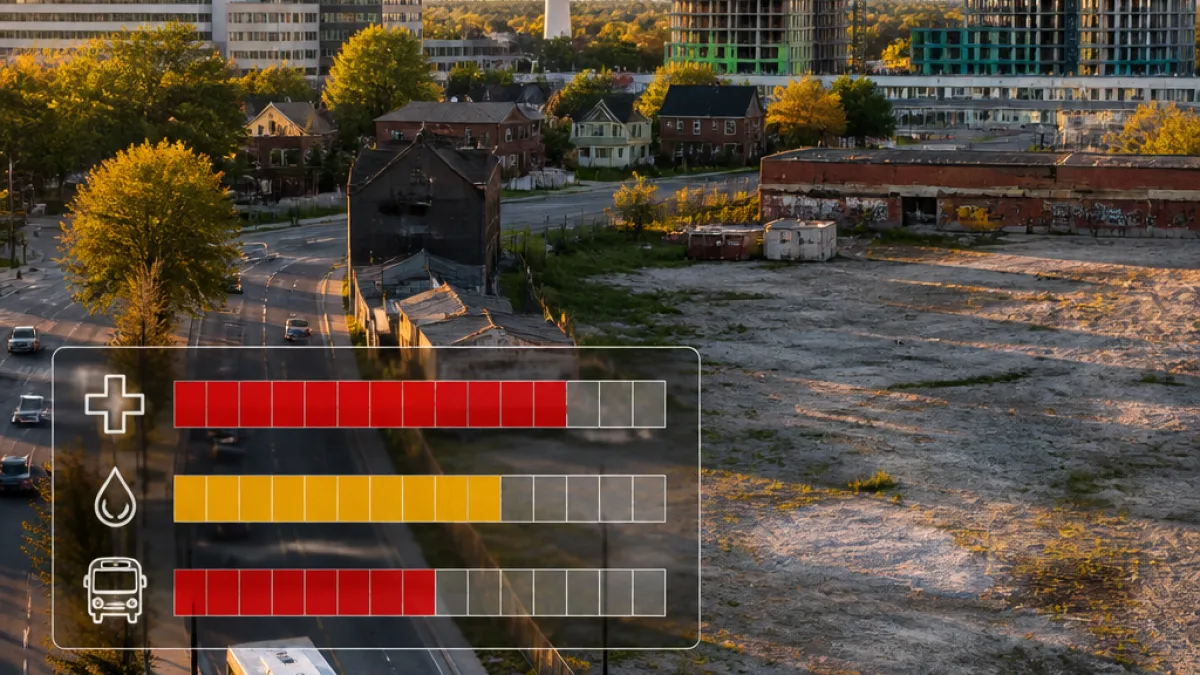
The Scorecard emphasises that while the region can build physical infrastructure such as housing, roads and transit, it is less ready on people-centred measures — notably health, social supports and post-secondary capacity. The report singles out specific concerns that could constrain growth or reduce quality of life for existing residents.
- Health infrastructure and services: acquiring funding for a new hospital at the University of Waterloo and addressing long mental-health care wait times and a shortage of family doctors.
- Water capacity: limited water capacity is cited as a constraint on housing development over the next decade.
- Economic development and site readiness: the Waterloo Region Megasite is described as not sufficiently ready to accommodate large-scale investment.
- Transit: the Scorecard calls for improved commitment to Two-Way All-Day GO service along the innovation corridor between Kitchener–Waterloo and Toronto.
“The gap between our physical readiness and our people-centred readiness is the defining challenge this Scorecard is now surfacing,”
The comment appears in opening remarks from Ian McLean, chair of the Kitchener-Waterloo Chamber of Commerce, one of the groups participating in BestWR. McLean and BestWR argue the Scorecard should be used as a planning tool by all levels of government to ensure the region can absorb new residents while maintaining social supports.
Implications for Waterloo residents
The report reframes growth as not just a matter of constructing more homes and transit lines but also ensuring access to primary health care, mental-health supports, affordable housing and pathways to stable employment. Without parallel investment in these areas, BestWR warns a physically expanded region could become “structurally sound and socially fragile.”
| Issue highlighted | Potential consequence |
|---|---|
| Hospital funding at University of Waterloo | Delays in acute-care capacity for a growing population |
| Water capacity constraints | Limits on housing development in the next 10 years |
| Megasite readiness | Reduced attractiveness for large-scale investment |
| Transit — Two-Way All-Day GO | Fewer options for regional commuting and economic integration |
The second Vision 1 Million Scorecard narrows the focus from a broad baseline to the specific areas BestWR believes require immediate attention. The group intends the document to inform municipal, provincial and federal decision-making as the region plans for population growth.
For Waterloo residents, the Scorecard highlights concrete policy levers and service gaps — from hospital capital funding to transit commitments — that will affect where and how the region grows. BestWR’s assessment makes clear that meeting the needs of future residents will require coordinated investment in both physical infrastructure and social services.