
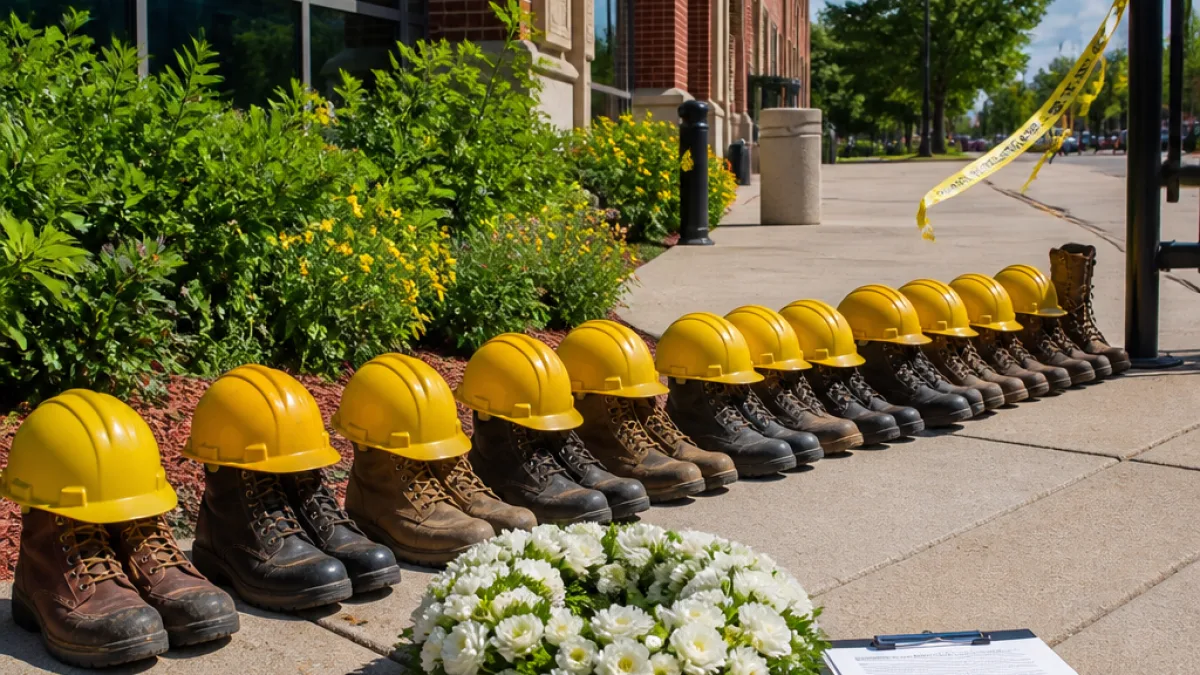
Workplace fatalities in New Brunswick fell to 9 in 2025, down from 15 the previous year, according to WorkSafeNB's 2025 annual report released this week. While the decline is described as a meaningful step forward, the Crown corporation cautioned that the number of lives lost remains unacceptable and that further improvements are needed.
New safety metrics introduced
WorkSafeNB introduced two new key performance indicators in 2025 to give a clearer picture of safety trends: total injury frequency and severe injury frequency. The report shows overall injury frequency held steady at 1.6 per 100 workers, while severe injury frequency — tracking life-altering and fatal incidents — rose slightly to 36 per 100,000 workers from 34 the year before.
"Workplace fatalities declined from 15 in 2024 to 9 in 2025 which is a meaningful step forward," WorkSafeNB stated in the report.
Those measures form part of WorkSafeNB's plan through to 2029. The organisation has set targets of 1.25 injuries per 100 workers and 30 severe injuries per 100,000 workers by 2029, indicating current results remain above the desired thresholds.
Psychological injuries and partnerships
One notable improvement reported was in traumatic psychological injury claims, which fell by 26 per cent, from 225 in 2024 to 167 in 2025. WorkSafeNB attributed the decline to expanded mental-health partnerships and supports, including collaborations with Wounded Warriors Canada and the Paramedic Association of New Brunswick.
- Fatalities: 15 (2024) → 9 (2025)
- Total injury frequency: 1.6 per 100 workers (2025)
- Severe injury frequency: 36 per 100,000 workers (2025)
- Traumatic psychological injury claims: 225 (2024) → 167 (2025)
Financial position and employer refunds
WorkSafeNB reported strong financial results in 2025. The organisation set its average assessment rate at $1.10 per $100 of payroll — the lowest in its history and the second-lowest among Canadian jurisdictions. Investment returns of 15.2 per cent helped lift WorkSafeNB's funded position to 161 per cent, well above its target range of 115–125 per cent.
The Crown corporation returned more than $53 million to eligible employers through performance refunds in 2025, following a record $180.6 million refund the previous year.
"We held our average assessment rate at $1.10, the lowest in our history and the second lowest in the country and returned more than $53 million to employers through our performance refund," said Tim Petersen, WorkSafeNB's president and chief executive officer.
| Measure | 2024 | 2025 |
|---|---|---|
| Workplace fatalities | 15 | 9 |
| Total injury frequency (per 100 workers) | — | 1.6 |
| Severe injury frequency (per 100,000 workers) | 34 | 36 |
| Traumatic psychological injury claims | 225 | 167 |
| Average assessment rate | — | $1.10 / $100 payroll |
What this means for workplaces
WorkSafeNB's figures indicate mixed progress: while fewer fatalities and lower psychological-injury claims suggest improvements in some areas, the slight rise in severe injury frequency and current rates above 2029 targets point to gaps that remain. Employers, unions and occupational-health stakeholders will likely focus on targeted prevention for high-risk sectors and continued mental-health supports to sustain gains.
The report's combination of safety metrics and financial data will inform employers' planning and premium expectations in the coming years, while signalling to policy-makers where regulatory or programmatic attention may be required to meet the 2029 safety objectives.