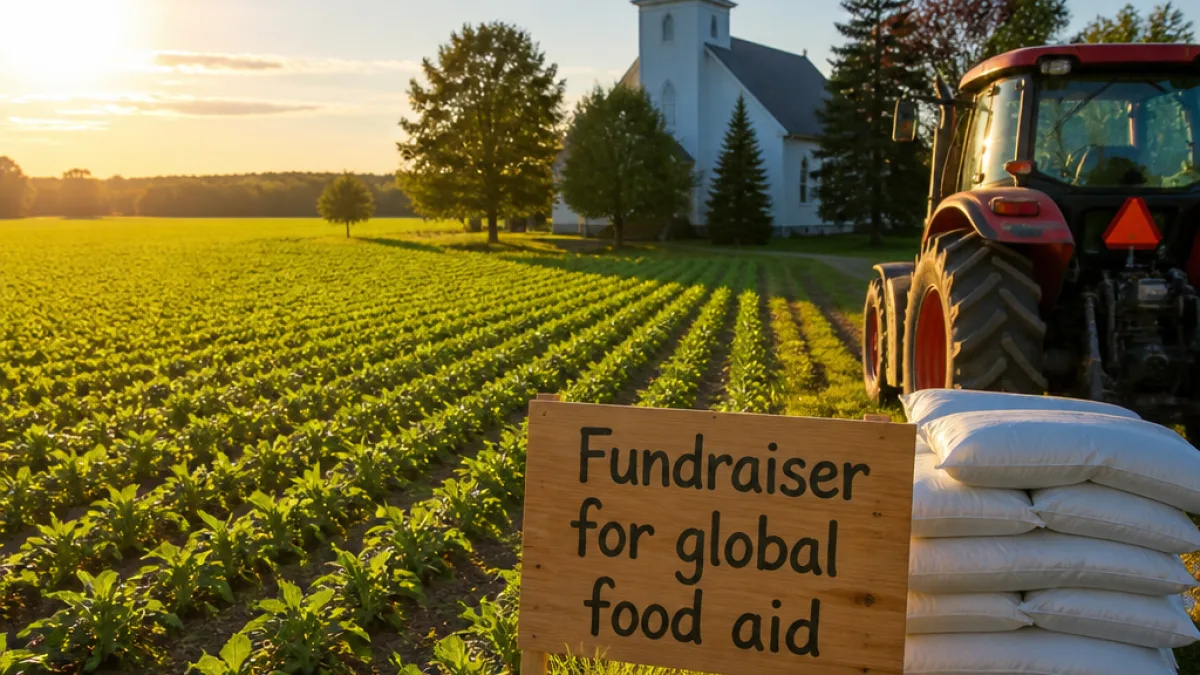
The Cambridge Street United Church in Lindsay has partnered with local farmers and suppliers to grow soybeans on donated farmland as a fundraiser for the Canadian Foodgrains Bank, organisers confirmed this week. Ten acres of soybeans were sown near Oakwood using seed and services contributed by community partners.
Local donations and partners
Church fundraisers procured the land, seed and agronomic support from several area contributors. Farmland for the growing project was provided by the Bruce VandenBerg family. Agricultural inputs and services came from local suppliers, including Huitson Farms AgriServices (acting in care of Bayer), Dekalb soybean seed donated by Little Britain and assistance from Alliance Agri-Turf.
- Land: donated by the VandenBerg family
- Seed: Dekalb soybeans donated by Little Britain
- Ag services: Huitson Farms AgriServices (in care of Bayer) and Alliance Agri-Turf
How the project raises aid
Funds from the sale of the harvested soybeans will be forwarded to the Canadian Foodgrains Bank, a national charity that works with church groups and agencies to respond to global food insecurity. The church’s organisers say the project is part of what the Foodgrains Bank describes as “A Christian Response to World Hunger”.
“The Outreach Team of Cambridge Street United church thanks Phil VandenBerg, a Volunteer Ambassador for the Canadian Foodgrains Bank.”
The group is aiming to raise approximately $5,000 from the crop if market prices are favourable at harvest in October. That sum could be substantially increased through federal matching. According to organisers, Global Affairs Canada currently matches growing-project funds at up to four to one, which would multiply donations forwarded to the Foodgrains Bank.
Local context and potential impact
Farm-based charitable growing projects are a way for congregations and rural donors to convert in-kind contributions into cash for international relief. By contributing land, seed and labour, local partners reduce costs and increase the portion of proceeds that goes to aid. The Foodgrains Bank then channels matched funds into food assistance and development programs overseas.
| Item | Contributor |
|---|---|
| Farmland | Bruce VandenBerg family |
| Dekalb soybean seed | Little Britain |
| Agronomic services | Huitson Farms AgriServices (in care of Bayer); Alliance Agri-Turf |
Organisers are inviting the community to follow progress on the Cambridge Street United Church Facebook page and to learn more about the Foodgrains Bank’s work at www.foodgrainsbank.ca. The church’s Outreach Team highlighted the role of volunteer ambassadors in connecting local efforts to national charitable networks.
This harvest-to-donation model ties local agricultural capacity to international humanitarian assistance, allowing small congregations to contribute to larger relief efforts without requiring cash outlays from every donor.