U.K. initiative targets equipment theft at community sports clubs
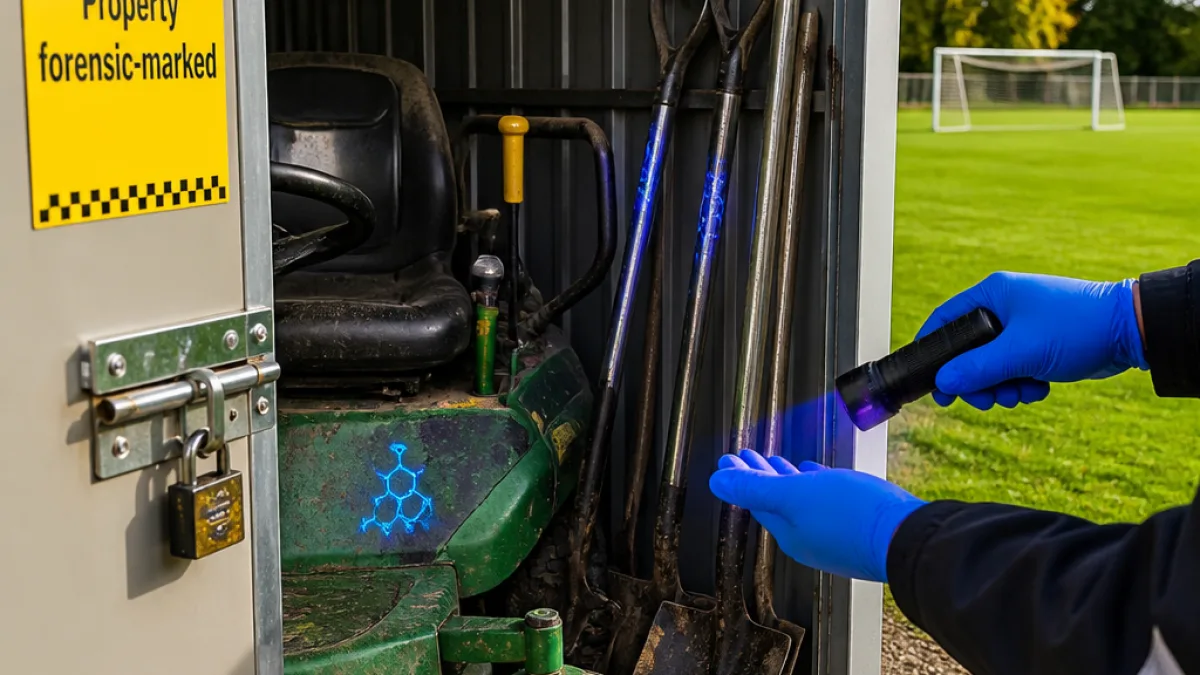
Community sports organizations in the United Kingdom’s Cornwall are adopting a forensic marking system to protect high-value equipment after a series of thefts stretching back to 2025. Police in Devon and Cornwall describe the product, branded SmartWater, as an invisible solution that binds a unique code to tagged items, enabling officers to match property to its owner when recovered. A single application, officers say, can last for about five years.
According to police updates cited in September 2025, there had been 35 incidents reported across Devon and Cornwall since March of that year. Those incidents included the loss of a £30,000 ride-on lawn mower and trailer from a youth football club near Newton Abbot in Devon, and a £16,500 tractor taken from a football club in Bude, Cornwall. In response, rugby and football associations have moved to mark assets and post warning signs on-site to discourage would-be thieves.
Police said SmartWater is an “invisible forensic fluid that tags items with a unique code, linking them to their rightful owner.”
How the marking works—and why signage matters
SmartWater leaves a trace that is not visible to the naked eye but fluoresces under special lighting. When police recover suspected stolen goods, the coating can be scanned and the code traced to a registration, assisting with identification and return. Clubs involved in the effort are also placing prominent signage stating that equipment on the premises has been forensically marked, which police and club officials describe as an added deterrent.
One advocate for the approach, identified in coverage as Denton, emphasized the community impact when grounds machinery and tools disappear, noting the disruption to practices, matches and routine maintenance. The added ability to prove ownership after recovery was cited as a practical benefit alongside deterrence.
“Being able to help prevent this from happening in the first place, whilst providing some reassurance that if stolen items are found they will be reunited to their rightful owners, is positive,” Denton said.
Clubs report thefts hit operations and volunteers
Grassroots sports groups often rely on expensive shared assets—mowers, tractors, line markers, power tools and storage trailers—to keep pitches playable and facilities open. Losses force cancellations, consume volunteer hours and redirect limited budgets from programming to replacement costs. The Cornwall Rugby Football Union called the initiative a potential lasting improvement as it confronts what it termed a persistent concern at many clubs.
Beyond the outlay for replacement, thefts can also drive up insurance premiums and erode confidence among participants and sponsors. Police and club leaders argue that a visible prevention strategy, paired with traceable property, can reduce risk without changing day-to-day operations on the field.
What’s notable for Cornwall, Ont. readers
While the reported thefts and responses are in the U.K., the issues mirror those faced by many community sports organizations in Canada that maintain open grounds and shared facilities. Measures highlighted abroad illustrate options clubs in Cornwall, Ont., may consider when reviewing security plans with insurers or local authorities. Forensic marking products are one tool among several that clubs and municipalities can evaluate based on risk, cost and compatibility with existing policies.
- Marking high-value, portable assets with unique identifiers can aid recovery.
- Posting clear warnings may deter opportunistic theft.
- Coordinating with police about marked property can streamline returns if items are found.
Reported incidents and values in the U.K.
| Detail | Figure |
|---|---|
| Reported incidents (Mar–Sept 2025) | 35 |
| Ride-on mower and trailer (youth club near Newton Abbot, Devon) | £30,000 |
| Tractor (Bude Town Football Club, Cornwall) | £16,500 |
| Estimated longevity of a single SmartWater application | ~5 years |
Police, club representatives and the regional rugby union in the U.K. have framed the rollout as a straightforward preventive measure that could help limit disruptions from property crime. As clubs plan for upcoming seasons and grounds maintenance cycles, the experience in the U.K.’s Cornwall provides a real-world example of how forensic marking and prominent signage can form part of a broader risk-reduction toolkit.