Volunteer shipment targets wildfire fronts in remote communities
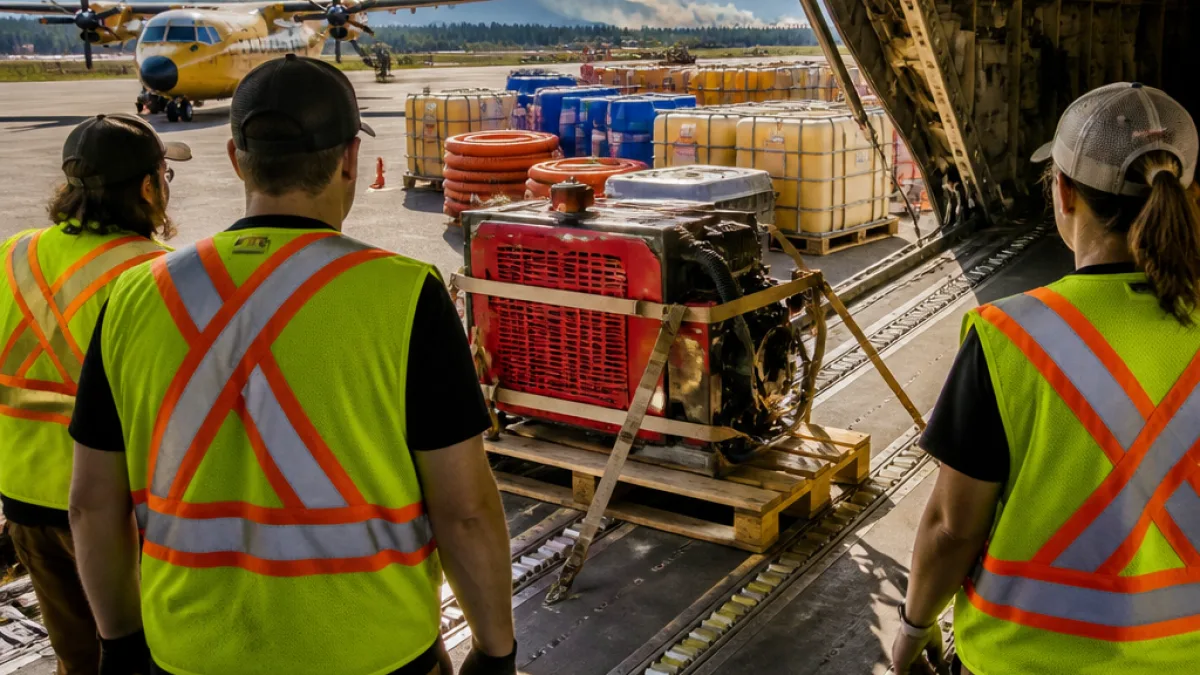
Thunder Bay has become a staging hub for wildfire support in northwestern Ontario, where volunteers with the aid group GlobalMedic moved a fire skid at the city’s airport as part of a delivery of equipment arriving this week. The organization’s shipment is intended to help remote communities confront fires pressing closer to populated areas.
Photographs from the airport show volunteers handling one of the units as part of a broader deployment across northwestern Ontario. The delivery underscores a growing, community-based effort to reinforce local capacity when wildfire risk rises and ground conditions shift quickly. While formal wildfire response is managed by provincial and local authorities, volunteer-driven logistics support can help close gaps for smaller communities with limited access to equipment.
How the equipment helps on the ground
GlobalMedic’s delivered units, referred to as fire skids, are being positioned to aid communities on wildfire watch. The aim is to get practical, field-ready gear close to where it is needed, reducing delays linked to distance and supply bottlenecks. With air transport into regional centres like Thunder Bay, shipments can be broken down and routed toward smaller airports or roadway access points that serve northern communities.
Remote communities often face unique barriers during wildfire season, including limited local resources and long resupply times. Equipment staged in the region helps community responders prepare for encroaching fires, support local mitigation activities and coordinate with provincial crews when conditions deteriorate.
Thunder Bay’s role as a logistics gateway
As the largest urban centre in the area, Thunder Bay’s airport frequently functions as a gateway for emergency supplies and personnel moving into and across the northwest. Concentrating inbound deliveries in one hub allows volunteers and partner agencies to sort, store and reallocate equipment as situational needs evolve.
Positioning gear closer to affected areas also lowers the risk that poor visibility, changing winds or limited flight windows will delay onward transport when crews need to act quickly. This week’s arrival suggests a proactive approach—placing resources in reach before communities face the most acute pressure.
What residents and community leaders should know
- Equipment is being delivered now, with volunteers handling units at Thunder Bay airport.
- The shipments are intended to assist remote communities confronting approaching wildfires.
- Local coordination typically involves municipal, Indigenous and provincial partners; aid groups complement, but do not replace, official wildfire operations.
Residents in the northwest can expect intermittent aircraft activity linked to wildfire logistics. Community leaders coordinating preparedness should factor in staging times at the Thunder Bay hub and ensure local contacts are lined up for onward movement of supplies. While the precise distribution plan for the delivered skids was not detailed, the stated purpose is to equip smaller communities where rapid access to specialized gear can be challenging.
Context and continuing needs
Ontario’s north sees recurring wildfire risk through the warm season, with variability driven by weather, fuels and lightning. Against this backdrop, getting equipment close to the front lines shortens response times. Volunteer participation—whether through established aid groups or local community networks—expands capacity during periods when official resources are stretched across large, sparsely populated areas.
Given the distances involved in northwestern Ontario, pre-positioning of equipment remains a practical measure. Concentrating supplies in a regional hub allows for flexible redeployment as conditions change, including shifting winds or new fire starts. For residents, the most immediate benefit comes from having properly staged gear available when local authorities call for support on short notice.
At a glance: this week’s deployment
| Item | Where | Purpose |
|---|---|---|
| Fire skid unit(s) | Thunder Bay airport (staging) | Support for northwestern Ontario communities facing advancing wildfires |
| Volunteers | GlobalMedic team | Handling and positioning delivered equipment |
As fire conditions evolve, the effectiveness of these deliveries will depend on continued coordination between volunteer networks and the public agencies managing incident response. For communities on alert, the arrival of equipment in Thunder Bay is a practical step that can help bridge time-sensitive needs while larger-scale operations mobilize.