Premier urges compliance with evacuation orders amid expanding fire activity
Premier Doug Ford travelled to Thunder Bay on Saturday to meet people forced from their homes and camps by northern Ontario wildfires and to thank first responders assisting in the effort. Speaking with reporters, he said provincial crews have carried out about 40 rescue missions for roughly 300 evacuees, many of them individual campers caught in active fire zones.
Ford emphasized that several communities remain under evacuation orders as fire behaviour continues to challenge suppression efforts. He identified Armstrong, Whitesand First Nation, Collins First Nation and Gakijiwanong Anishinaabe Nation (Lac La Croix First Nation) among those affected, with other areas preparing in case conditions worsen.
“Do not, I repeat, do not go to your campsites. Do not go back to your homes if they’re saying not to go back,” he said. “Don’t go back. We will find you a place, a hotel room, get you food. We’ll make sure you’re well taken care of.”
Active fires and response resources
According to the premier, 191 wildfires are active across Ontario, an increase of seven from the previous day. Of those, 73 are classified as out of control and 91 are being observed. He said the province is directing resources to areas where suppression has the best chance of success and where the risk to people and communities is highest.
Ford outlined the scale of the response now in the field: 155 fire crew members and approximately 80 water bombers and helicopters are engaged in operations. He thanked the Ontario Provincial Police, Thunder Bay Police Service, firefighters and paramedics for continuing to undertake evacuations and provide emergency support.
| Metric | Figure |
|---|---|
| Total active wildfires | 191 |
| Out of control | 73 |
| Being observed | 91 |
| Evacuees rescued (approx.) | 300 |
| Rescue missions | 40 |
| Fire crews deployed | 155 |
| Water bombers/helicopters | ~80 |
Evacuation orders and what residents should know
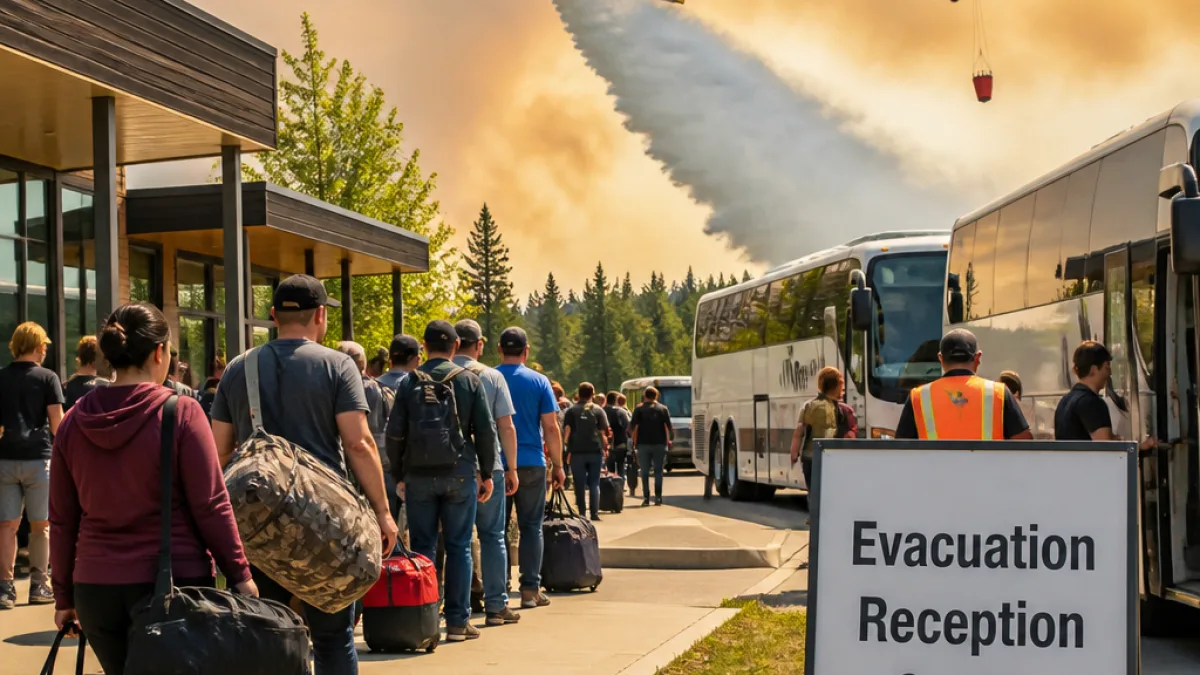
Officials are urging residents to leave immediately when an evacuation order is issued and not to return until authorities declare it safe. Ford said people who attempt to re-enter restricted zones risk interfering with aerial and ground suppression activities, which can delay efforts and put personnel at risk.
- Follow local instructions on evacuation routes and reception centres.
- Do not travel back to restricted areas until clearance is given.
- If you have evacuated, register with the reception centre to access lodging and supports.
The premier said accommodations and basic needs are being arranged for evacuees, noting that returning to evacuated areas can complicate search, rescue and suppression operations.
‘Unprecedented’ season, minister says
Ontario’s natural resources minister, Mike Harris, described the 2026 wildfire season to date as “unprecedented.” He said the province anticipated challenging conditions and has been preparing, but the scale and pace of fires in recent days have intensified the response.
With multiple communities already under orders and others on standby, the province is concentrating on keeping evacuation routes open and deploying aircraft where they can slow fire growth. The premier said decisions about where to send crews and aircraft are made to maximize protection for people, homes and critical infrastructure.
Local impact in Thunder Bay
Thunder Bay is serving as a hub for evacuees and first responders. The city’s emergency services are coordinating with provincial agencies to manage incoming flights and ground transports, provide health supports and connect people with temporary accommodation. Ford publicly acknowledged their efforts and the role they are playing in receiving people from smaller communities facing the brunt of the fire activity.
As conditions continue to evolve, residents across northern communities are being told to monitor updates from municipal officials, First Nations leadership and provincial fire authorities. Authorities say they will adjust deployment as weather and fire behaviour shift through the weekend.