A Georgia man has been sentenced to 170 months in U.S. federal prison for orchestrating shipments of methamphetamine, fentanyl and cocaine sourced from California and channelled to distribution points in Atlanta and southwest Ohio, including Xenia and Dayton, according to the U.S. Attorney’s Office for the Southern District of Ohio.
Prosecutors said David J. Gullatte, 39, of Lithonia, Georgia, oversaw a mail-based pipeline that moved narcotics from a California supplier to residences in Atlanta and Dayton, where the drugs were redistributed to trafficking networks in southern Ohio and elsewhere. U.S. District Court Judge Walter H. Rice imposed the sentence, equal to 14 years and two months.
Mail shipments and Ohio distribution hubs
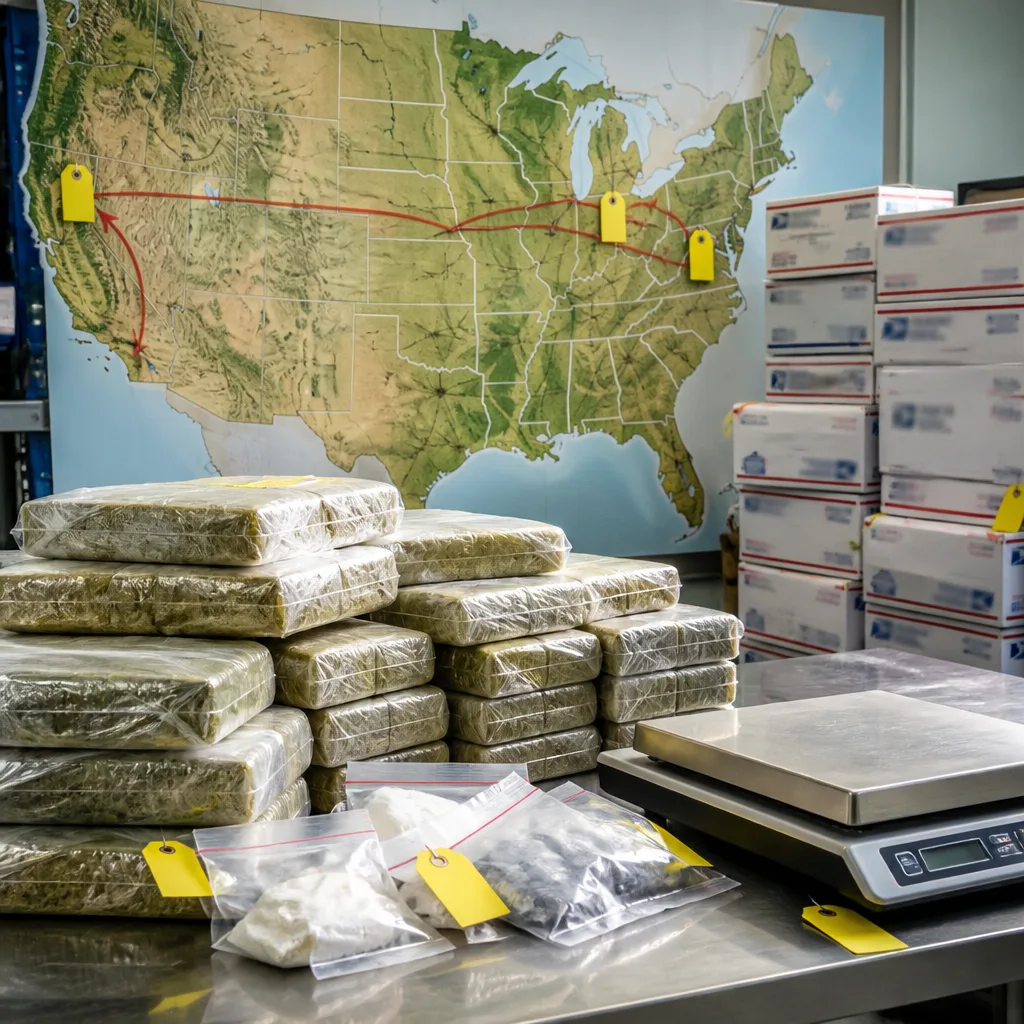
Court filings outline a logistics pattern in which Gullatte purchased product in California and arranged for parcels to be sent to addresses in Georgia and Ohio. One cited shipment, received in September 2020 in Atlanta, contained more than 20 kilograms of methamphetamine, which was then routed for delivery and resale in Dayton. Overall, authorities held Gullatte responsible for trafficking over 30 kilograms of controlled substances, including cocaine, methamphetamine and fentanyl.
Prosecutors also alleged that Gullatte continued to supply narcotics to a ring operating in Xenia, Ohio, even while he was already facing charges in an initial case. The U.S. Attorney’s Office said those activities occurred under indictment, reflecting ongoing conduct that led to a second case.
Two indictments, two guilty pleas
Gullatte’s criminal exposure spanned multiple years and proceedings. He was first indicted in May 2024, then charged again in March 2025 for additional smuggling activity. He entered guilty pleas in September 2025 in both matters. Sentencing followed in the Southern District of Ohio, where Judge Rice presides.
Another alleged source in the supply chain, Ernesto Villalobos, faced separate federal charges for drug smuggling. According to court records cited by prosecutors, Villalobos was sentenced in June 2026 to 12 and a half years in prison.
Scope of the case
- Sentence: 170 months (14 years, two months) in federal prison.
- Drugs involved: methamphetamine, fentanyl, cocaine.
- Quantities: One shipment with 20+ kg methamphetamine; total attributed volume 30+ kg across controlled substances.
- Geography: Sourcing from California; distribution through Atlanta, Dayton, and Xenia.
Timeline of proceedings
| Event | Date | Details |
|---|---|---|
| Large meth shipment received in Atlanta | Sept. 2020 | Parcel contained 20+ kg meth; arranged for delivery to Dayton |
| First federal indictment | May 2024 | Initial smuggling charges filed in the Southern District of Ohio |
| Second indictment | March 2025 | Additional smuggling alleged while under indictment |
| Guilty pleas | Sept. 2025 | Pleaded guilty in both cases |
| Sentencing | 2026 | Judge Walter H. Rice imposed 170-month prison term |
| Co-defendant/supplier sentencing | June 2026 | Ernesto Villalobos received 12.5 years in prison |
Authorities said the case demonstrates how drug suppliers leveraged residential addresses and interstate shipping to move bulk quantities into local markets. In this instance, parcels moved east from California to Georgia and Ohio, where, according to prosecutors, Gullatte supplied downstream distributors, including in Xenia and Dayton.
The court documents referenced by the U.S. Attorney’s Office describe a supply chain resilient enough to persist across indictments, culminating in combined guilty pleas. The Southern District of Ohio has jurisdiction over the Ohio portion of the conduct, including the alleged redistribution networks in and around Dayton and Xenia.
Gullatte’s sentence reflects the volumes attributed to the trafficking activity and the mix of substances involved. Prosecutors emphasized quantities exceeding 30 kilograms across multiple narcotics categories, as well as a single shipment exceeding 20 kilograms of methamphetamine in 2020. Villalobos’s separate federal case, resulting in a sentence of 12 and a half years, underscores the role of California-based sourcing within the broader conspiracy alleged by authorities.
No further details on supervised release, fines or asset forfeiture were provided in the information released by prosecutors. The U.S. Attorney’s Office did not specify any charges beyond the trafficking conduct described in the court documents cited.