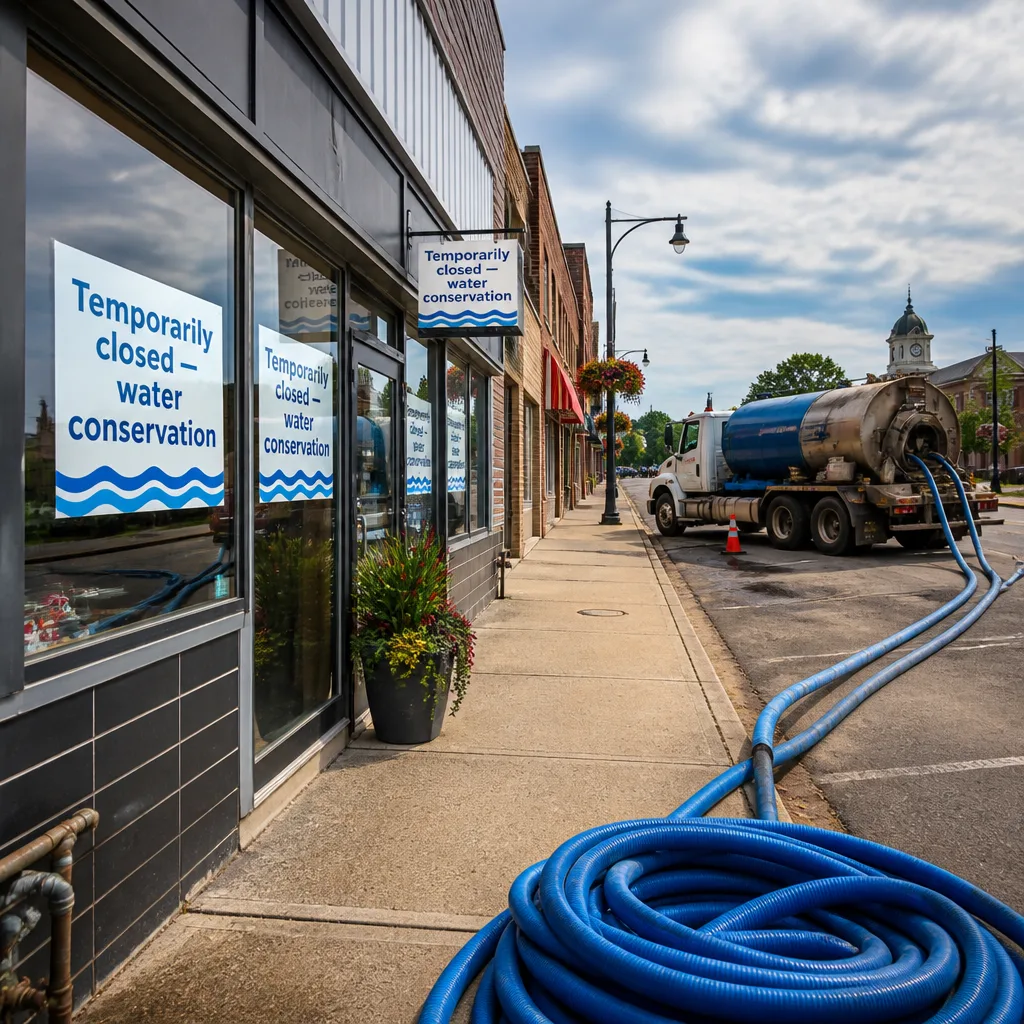
Several businesses in Chatham-Kent temporarily halted operations that use large volumes of water after municipal officials issued an emergency restriction on Aug. 29, citing trouble with the main transmission line that supplies the water treatment plant.
What happened and why it matters
The municipality asked companies whose daily routines involve substantial water use to voluntarily close for the day, a request aimed at stabilizing the public water supply while repairs were carried out. The disruption fell on a busy Saturday for many service providers, forcing owners to weigh lost revenue against the need to conserve a strained resource.
"significant supply challenges"
The municipality characterised the situation as having "significant supply challenges" following work on the main transmission line that feeds the Chatham water treatment plant. Officials contacted high-consumption enterprises directly to request temporary closures.
Impact on businesses and households
Operators of car washes, pet grooming facilities and other water-intensive services reported immediate losses in foot traffic and sales after posting signs and locking off wash bays. One site operations manager noted the owner agreed the closures were necessary despite the financial hit.
- Immediate operational effect: Some businesses closed for the day, removing access to wash bays and cancelling appointments.
- Economic effect: Busy weekend trade was lost for affected outlets; managers described the decision as a trade-off to protect municipal supply.
- Public-health priority: Conserving potable water to maintain services to households and emergency users was the stated objective.
For households, the restriction was a reminder that municipal infrastructure work can ripple quickly through local commerce and daily life. For businesses, the episode highlights the vulnerability of revenue streams to short-notice utility constraints and the importance of contingency planning.
Short-term response and longer-term considerations
Municipal officials coordinated with business owners to minimise risk to the drinking-water system while repairs proceeded. The voluntary closure approach aimed to limit economic harm compared with a mandatory shutdown, but still imposed measurable losses on operators who rely on weekend demand.
| Measure | Purpose |
|---|---|
| Voluntary closure requests | Reduce non-essential water consumption to protect supply |
| Direct contact with high-use businesses | Targeted reductions without broad mandatory bans |
Operators and residents will watch for municipal updates on repair progress and any follow-up resilience measures. The incident underscores the economic consequences of infrastructure interruptions and may prompt businesses to review contingency plans for utility disruptions.