A University of Alabama in Huntsville (UAH) research team has developed a handheld device that uses cold plasma to sanitise clothing, bedding and other soft surfaces without water or conventional detergents — a potential solution for hygiene and infection control on long‑duration crewed missions to the moon and Mars.
How the device works
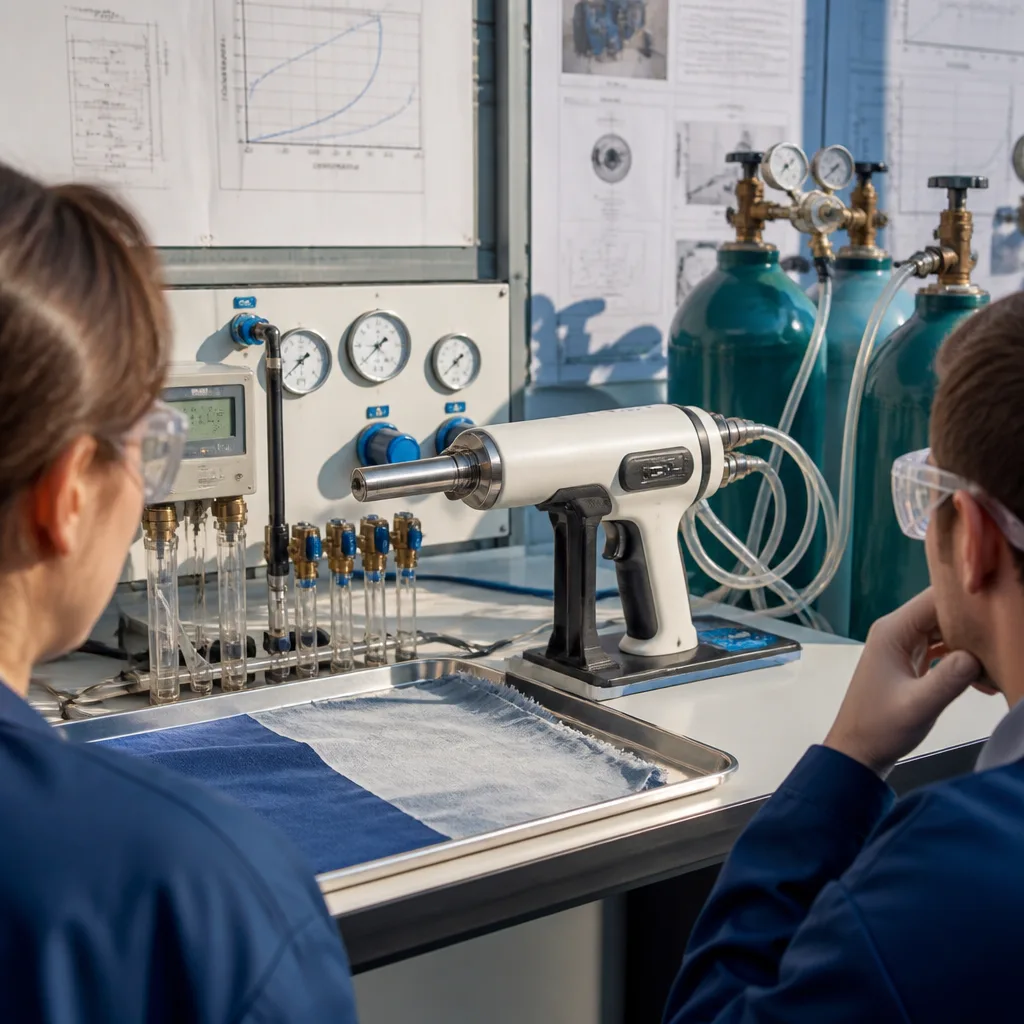
The prototype — described by researchers as a “laundry gun” — generates plasma from a mixture of helium, air and water vapour. The charged particles created by the plasma form reactive oxygen species that chemically attack and damage bacterial cell membranes, reducing microbial contamination on fabrics.
“The purpose of the laundry gun is to sanitize soft material, such as fabrics on couches, bedding, clothes, etc. in enclosed space habitats like the International Space Station or on lunar and Mars expeditions,” Dr. Gabe Xu, lead investigator and professor of mechanical and aerospace engineering, said in a statement.
The team is working with NASA’s Marshall Space Flight Center (MSFC). Researchers emphasise that the device targets microbes rather than visible soil — it is designed to lower bacterial counts and help maintain healthier living spaces in closed environments, not to remove stains.
Why it matters for spaceflight
Water is a scarce and valuable resource on spacecraft and extraterrestrial habitats. Traditional laundering on Earth uses large volumes of water and detergents; both are impractical or costly to support on missions where resupply is limited. A dry sanitisation method could:
- Reduce the need for water‑dependent laundry cycles, saving crew time and mission resources.
- Lower microbial transfer between crew, suits and equipment, improving infection control in confined habitats.
- Enable on‑site decontamination of spacesuits and tools before extravehicular activities, limiting surface transfer of microbes to planetary environments.
Those benefits are especially relevant as planners prepare for extended stays on lunar bases or crewed missions to Mars, where closed‑loop life support and contamination control are critical to crew health and mission success.
Mechanism and technical notes
The device produces charged particles that create reactive oxygen species — chemically active forms of oxygen such as radicals and peroxides — which attack microbes via oxidation. The scientists note the plasma approach is effective at reducing microbial loads but does not remove dirt or conventional stains.
| Input | Primary Reactive Agents | Effect on Fabrics |
|---|---|---|
| Helium, air, water vapour | Reactive oxygen species (ROS) | Reduces bacterial counts; no stain removal |
The research remains at the laboratory prototype stage. Key engineering questions for space deployment include power consumption, safety controls to prevent material damage, operation in microgravity or low‑pressure environments, and integration with habitat life‑support systems.
Broader implications and next steps
Plasma decontamination is not new in industry and medicine, but adapting it into a portable, fabric‑safe form for crew use would be a step change for in‑habitat sanitation. The UAH team is positioning the tool as a complement to, rather than a replacement for, other hygiene systems.
Further work will be required to validate the device across a range of microbes and textiles, measure long‑term material compatibility, and demonstrate safe, reliable operation under flight‑like conditions. If those hurdles are cleared through collaboration with NASA engineers, the technology could become part of the hygiene toolkit for future human exploration missions.
The development highlights how targeted engineering research can address practical constraints of human spaceflight — conserving consumables, protecting crew health, and reducing logistical burdens for sustained off‑Earth habitation.