The Yukon government and the Carcross/Tagish First Nation have released a joint wildfire protection framework aimed at strengthening community defences and reconciling two distinct approaches to wildfire management: active suppression and learning to coexist with fire.
Proactive steps to reduce structural vulnerability
The plan, produced in collaboration with Wildland Fire Management, contains 36 recommendations designed to make the communities more prepared and less susceptible to damage when wildfires occur. Officials emphasise shifting from a primarily reactive posture toward measures that reduce the likelihood of structures igniting from wind-driven embers.
"The goal of this plan is to increase how effective our fire suppression and emergency responses are, to reduce potential impacts and losses to property and critical infrastructure and other values at risk," said Luc Bibeau, manager of prevention and mitigation with Wildland Fire Management.
Among the vulnerabilities identified, many buildings in Carcross have wooden siding and some retain cedar shake roofs — materials recognised for their high flammability. Officials point to evidence from other jurisdictions where shake roofs have contributed to extensive structural loss during urban-interface fires.
Recommendations focus on materials, buffers and community systems
The framework highlights practical mitigation actions intended to reduce the number of structures lost to ember showers, which staff say account for roughly 90 per cent of structural loss in wildfires. Suggested measures span regulatory change, community infrastructure and household-level interventions.
- Adopt fire-resiliency bylaws to raise building standards and reduce combustible materials near homes.
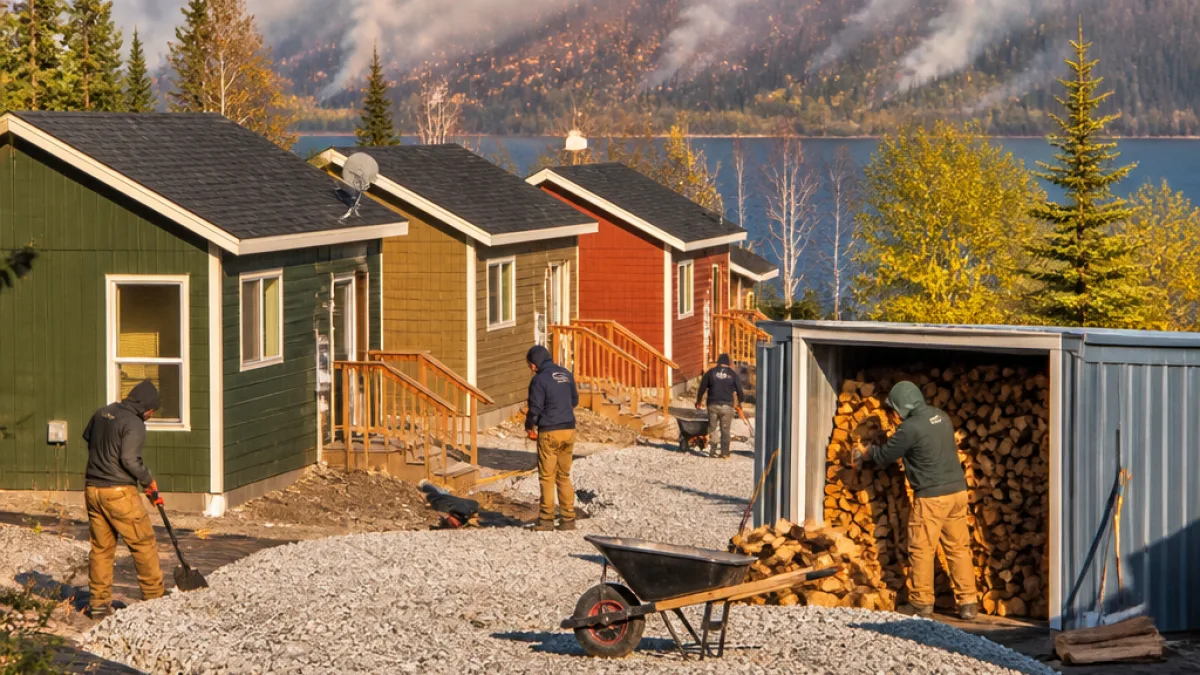
- Create communal firewood storage to keep fuel sources away from residences.
- Establish non-combustible buffers around houses, decks and other structures.
- Phase out highly flammable roofing materials, such as cedar shakes, in favour of less combustible alternatives.
Luc Bibeau noted that replacing cedar shakes with options like asphalt shingles would materially lower the chance of ignition from embers blown ahead of an advancing blaze.
| Issue | Suggested measure |
|---|---|
| Flammable roofs and siding | Phase out cedar shakes; encourage asphalt shingles and non-combustible siding |
| Ember-driven ignitions | Create non-combustible zones and reduce vegetation close to buildings |
| Community fuel loads | Establish communal wood storage and local mitigation planning |
While not identified as the territory’s most wildfire-prone area, both Carcross and Tagish exhibit distinct risks: Carcross through building materials and Tagish through dense surrounding bush. The framework therefore tailors its recommendations to local conditions rather than proposing a one-size-fits-all approach.
Local impact and next steps
The framework aims to inform municipal and First Nation decision-making, including potential bylaw changes and community projects. Its publication offers residents and local leaders a range of concrete steps to reduce the likelihood that embers or nearby vegetation will lead to catastrophic structural loss.
Implementation will require coordination between territorial authorities, the Carcross/Tagish First Nation and local homeowners. Where regulatory changes are proposed, communities will have the opportunity to consider how new standards affect cultural values, housing stock and costs.
Details about timelines, funding and specific bylaw proposals were not included in the framework summary. Residents and local officials will be watching for follow-up plans that outline how the 36 recommendations will move from guidance to action.