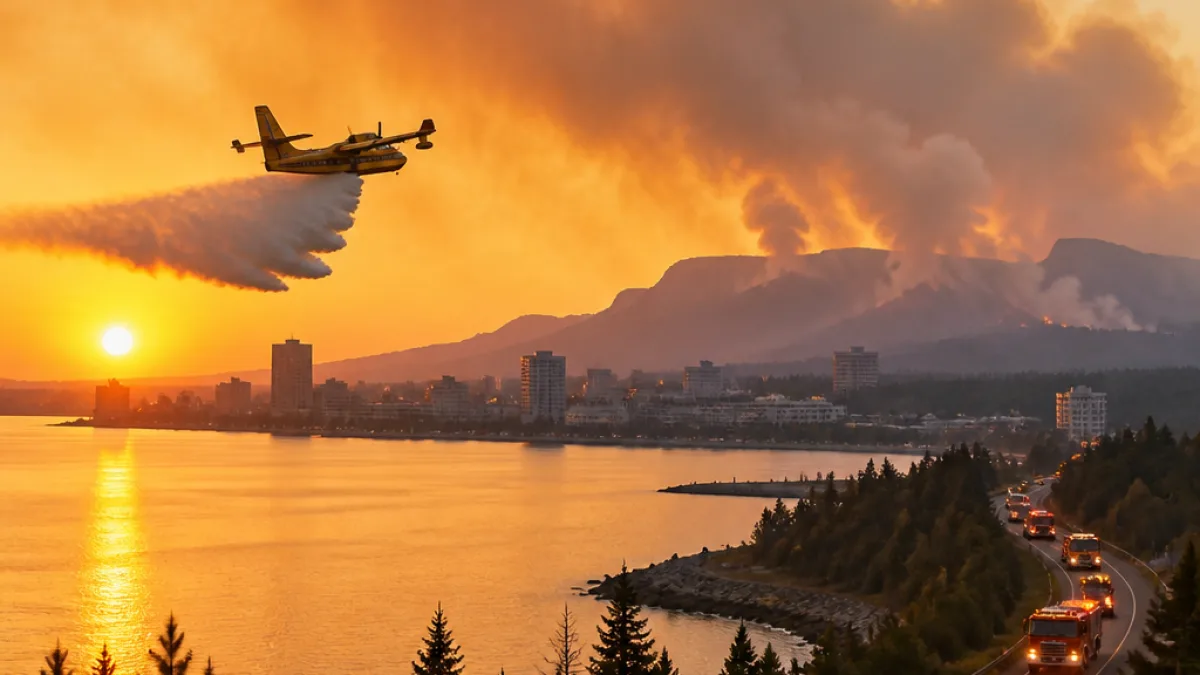
Active fires persist across the north as some areas may get short-lived relief
Northern Ontario remains the scene of widespread forest fires that have left communities coping with heavy smoke and hazardous air at times. Environment Canada said the hazy conditions affecting parts of the province could ease briefly for some residents, although in other areas smoky skies may persist through the weekend.
Officials report a large number of active incidents across the region. Authorities are monitoring communities threatened by fire, including Namaygoosisagagun First Nation (Collins First Nation) north of Thunder Bay, which has already been damaged by flames. Provincial and federal agencies, Indigenous leadership and neighbouring provinces are coordinating support and resources.
Fire numbers reported:
| Region | Active fires | Out of control |
|---|---|---|
| Northwest | 136 | 63 |
| Northeast | 44 | — |
Provincial officials and leaders representing affected Indigenous communities have urged Ottawa to provide immediate assistance. Additional help has begun to arrive: other provinces have deployed personnel and equipment — for example, Alberta sent firefighters and water-bombing aircraft to support suppression efforts.
Federal authorities say they are in close contact with Ontario and are prepared to offer further assistance if requested. Prime Minister Mark Carney has indicated the federal government is ready to help as needed.
- Public health impacts: Smoky air can aggravate respiratory conditions and irritate eyes and throats; vulnerable groups include children, older adults and people with heart or lung disease.
- Evacuations and damage: Communities such as Namaygoosisagagun First Nation have experienced significant fire impacts; local authorities continue to assess damage and coordinate relief.
- Mutual aid: Interprovincial assistance and federal coordination are part of the response as the season’s fires remain active.
Residents in affected areas should follow direction from local emergency officials, monitor air-quality advisories from Environment Canada and health agencies, and consider limiting outdoor activity when smoke is present. Where possible, people with breathing difficulties should stay indoors with windows closed and seek medical guidance if symptoms worsen.
As the situation evolves, officials will update the public on fire containment, air-quality forecasts and any necessary evacuation or support measures.