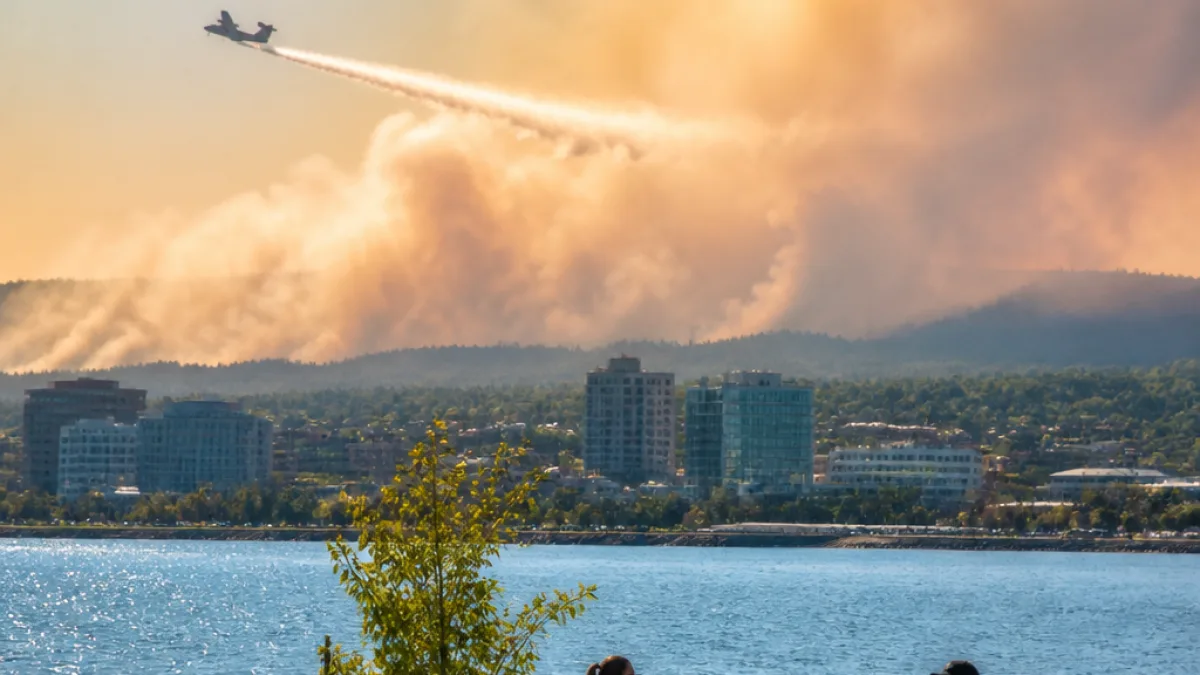
Wildfire smoke that has shrouded parts of Ontario this week may thin in some locations for a short time, Environment Canada says, but numerous forest fires continue to burn in the province's north and the smoky conditions could linger for others through the weekend.
Where the smoke and flames are
Several active wildfires in northern Ontario are generating smoke that has drifted southward, reducing air quality in both remote communities and larger urban areas. The fires have already severely affected communities including Namaygoosisagagun First Nation — also known as Collins First Nation — north of Thunder Bay.
Officials from the province and Indigenous leaders have urged the federal government for immediate support. Other provinces have moved to assist: crews from Alberta have been sent, including firefighters and water bombers, to help battle the blazes.
Health and public-safety implications
Health officials warn that smoky conditions can aggravate respiratory and cardiovascular problems, and public advisories have been issued in affected regions. People with breathing difficulties, young children and older adults are among those most vulnerable.
- Possible short-term relief: Environment Canada forecasts improvement in air clarity for some areas today.
- Ongoing risk: Smoke could persist into the weekend in other locations while fires continue burning.
- Mutual aid: Interprovincial assistance, including aircraft and crews, has been dispatched to support firefighting efforts.
Local impacts and government response
Beyond immediate health concerns, communities directly affected by fire face displacement, property loss and infrastructure damage. The call from the Ontario government and the Assembly of First Nations for federal assistance signals the scale of the emergency and the need for coordinated resources.
| Issue | Details |
|---|---|
| Notable community impacted | Namaygoosisagagun (Collins First Nation), north of Thunder Bay |
| Interprovincial aid | Alberta deployed firefighters and water bombers |
| Forecast | Temporary improvement possible in some areas; smoke may persist elsewhere through the weekend |
Residents in affected regions should follow local public-health guidance, limit outdoor exertion when air quality is poor, and consider using air filtration indoors if available. Those with respiratory conditions should have medications and action plans ready and consult health professionals if symptoms worsen.
As the situation evolves, authorities will continue to provide updates on fire activity, air-quality advisories and available supports for affected communities.
Reporting from Thunder Bay.