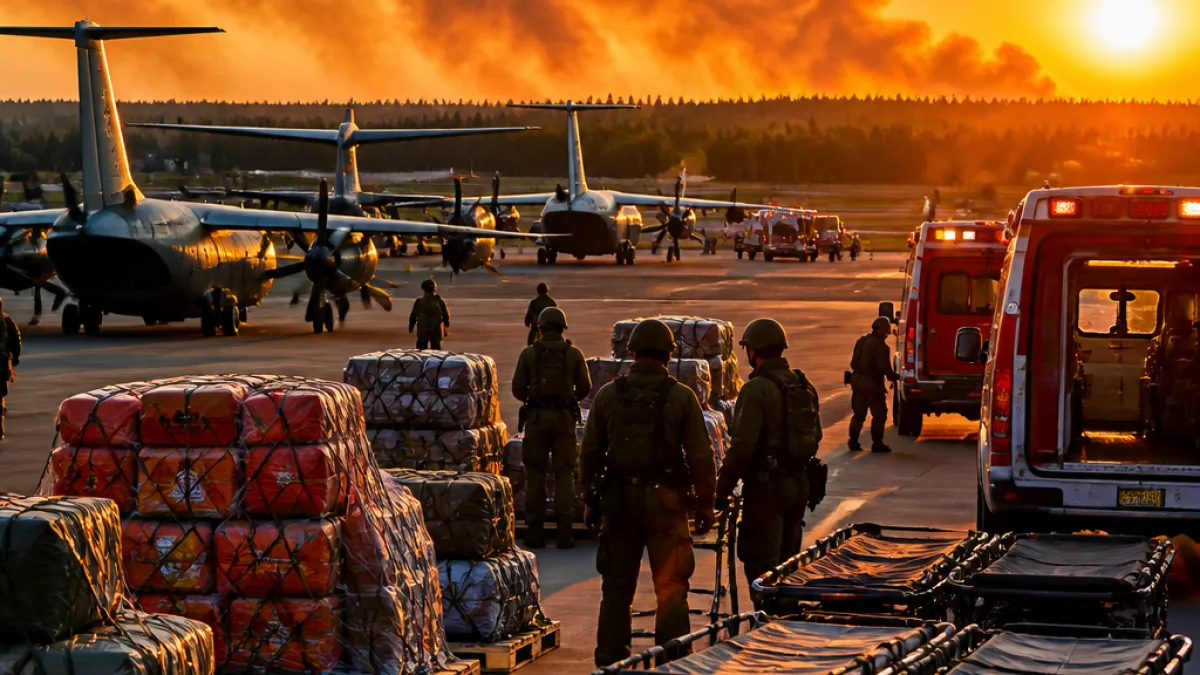
The Ontario government has formally requested federal assistance to prepare for the possibility of large-scale, air-based evacuations across the province's north as more than 180 wildfires continue to burn.
Province seeks aircraft and crews on short notice
In a letter to federal Emergency Management Minister Eleanor Olszewski, Ontario Emergency Preparedness Minister Jill Dunlop said roughly 15 northern communities have already begun evacuating or are considering evacuation. The province warned the situation could escalate rapidly and said it may not have the resources to carry out simultaneous air evacuations for communities that are inaccessible by road.
Ontario requested that the federal government ensure that aircraft and crews be made available and ready to deploy within 24 hours or less if the province requires assistance.
"Late last night, we received a Request for Federal Assistance (RFA) from the Government of Ontario for air evacuation support in the northwestern region of the province. The request from Ontario was precautionary in…" — Eleanor Olszewski (tweet)
Scope of the fires and communities affected
Premier Doug Ford said crews and aircraft are working to fight more than 180 wildfires across northern Ontario. Officials reported dozens of large, fast-moving fires that have already damaged or destroyed property in some communities.
One quickly moving blaze damaged and destroyed homes and buildings on Namaygoosisagagun First Nation, also known as Collins First Nation, north of Thunder Bay.
- Evacuation orders have been issued for Armstrong, Lac La Croix First Nation, Whitesand First Nation, Gull Bay First Nation and Lac des Mille Lacs First Nation.
- Environment Canada warned of widespread smoke and wind gusts up to 40 km/h in the Armstrong area.
- Officials warned simultaneous, air-only evacuations may be required for communities without road access.
| Region | Active fires | Out of control |
|---|---|---|
| Northwest | 136 | 63 |
| Northeast | 44 | 9 |
What residents should know
The minister's request to Ottawa was described as precautionary, aimed at ensuring rapid federal support if Ontario's firefighting and evacuation resources are overwhelmed. Residents in affected areas should follow local emergency alerts and evacuation instructions from their band councils or municipal authorities.
Provincial officials have emphasised that crews and aircraft are actively fighting fires, and that resources will be prioritised to keep people safe. The request signals provincial concern that conditions — including strong winds and widespread smoke — could force more rapid, complex evacuations than currently anticipated.
Details on federal response timing and the number and type of aircraft that may be made available have not been released publicly.