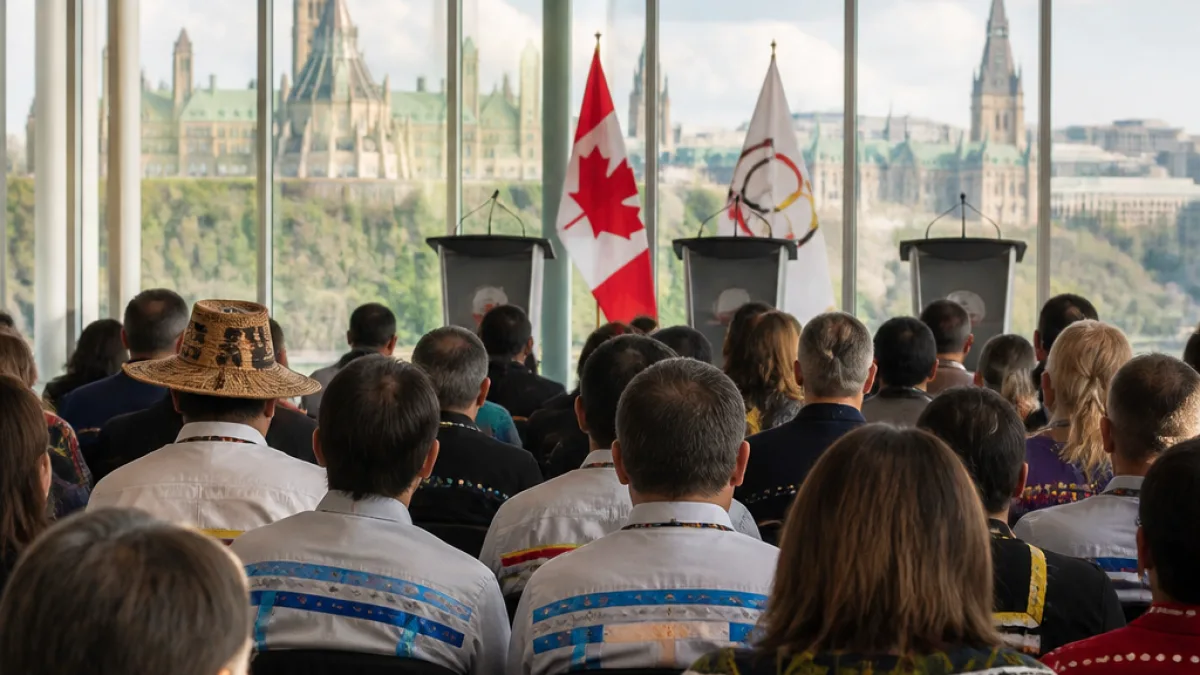
Hundreds of First Nations chiefs are meeting in Ottawa for the Assembly of First Nations' annual general assembly, where several federal ministers are scheduled to address delegates on issues ranging from public safety and the economy to natural resources and community services.
Who is speaking and why it matters
Indigenous Services Minister Mandy Gull-Masty, Public Safety Minister Gary Anandasangaree, Natural Resources Minister Tim Hodgson and U.S. Trade Minister Dominic Leblanc are among the ministers expected to appear before chiefs. Their appearances come as chiefs debate and vote on dozens of items that could shape federal-Indigenous relations and federal policy affecting communities across the country.
- Assembly delegates are debating 53 resolutions on matters including the major projects agenda, First Nations child welfare and status under the Indian Act.
- The AFN represents direction from roughly 630 First Nations chiefs through its assemblies.
- Delegates also debated calls for the Vatican to rescind certain papal decrees related to residential schools.
Decisions and positions taken at the assembly
On Wednesday, chiefs passed two measures that reaffirmed the organisation's resistance to any federal action they believe would weaken Indigenous rights or reduce their authority over decision-making affecting their communities. Those measures commit the AFN to a stance of opposition to laws or policies seen as diminishing rights.
chiefs confirmed that stance and committed the AFN to opposing legislation or policies that dilute their rights or undermine their decision-making processes
The presence of senior ministers in Ottawa underlines the federal government's intent to engage directly with leadership on files where Ottawa frequently faces criticism from Indigenous communities — including child welfare, major natural-resource projects and public safety in and around First Nations.
Local context and implications for Ottawa
The annual meeting brings national leaders, chiefs and their delegations to the national capital, increasing attention on how federal policy is negotiated and implemented from Ottawa. For local residents the conference is primarily significant as a focal point of national Indigenous-federal relations taking place here, and as an occasion that can prompt further federal announcements or commitments that affect communities across Ontario and the rest of Canada.
| Minister | Portfolio |
|---|---|
| Mandy Gull-Masty | Indigenous Services |
| Gary Anandasangaree | Public Safety |
| Tim Hodgson | Natural Resources |
| Dominic Leblanc | U.S. Trade |
As the assembly proceeds, Ottawa will remain the backdrop to discussions that could influence upcoming federal initiatives and shape the relationship between Indigenous communities and the federal government. The outcomes of votes on the 53 resolutions and any subsequent federal responses will be watched closely by chiefs, Indigenous organisations and policymakers in the capital.
Reporting on the AFN meeting continues from the national capital as ministers address delegates and chiefs complete deliberations on the resolutions before them.