
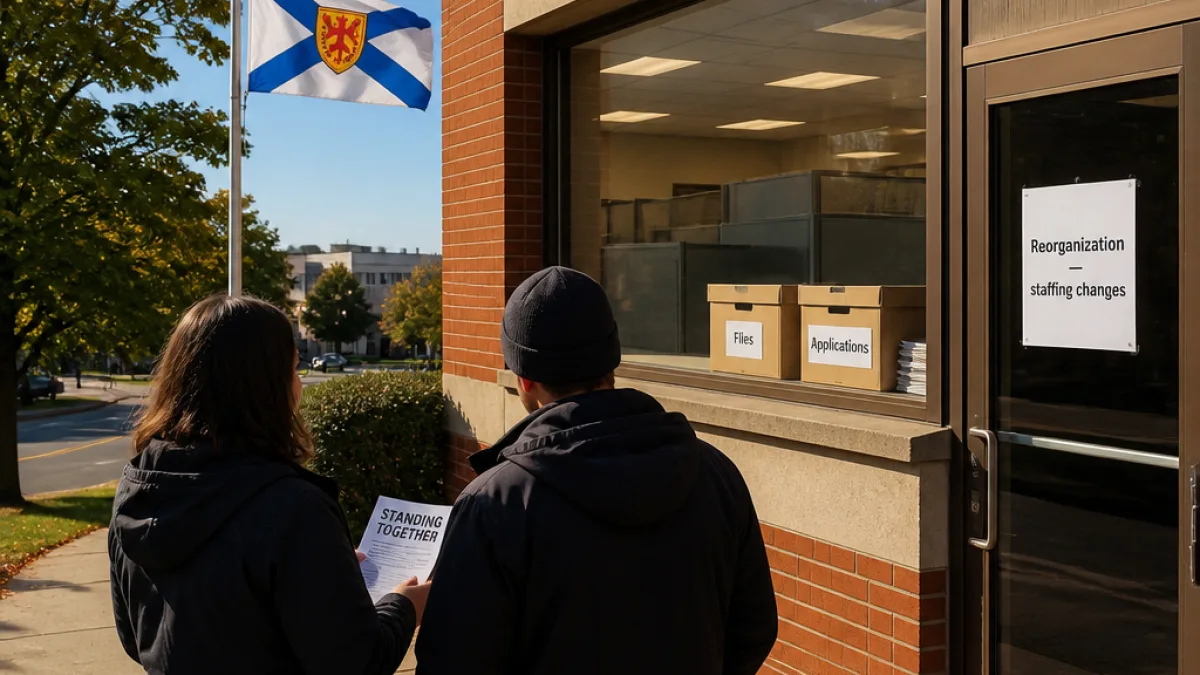
The Nova Scotia Provincial Housing Agency is reorganizing its workforce, eliminating 32 positions and creating 25 new roles as part of a move to centralize administrative tasks. The overall result is a net loss of seven jobs, the agency's interim chief executive told staff and media.
Why the changes are being made
Interim CEO Vicki Elliott said the restructuring is tied to the aftermath of an earlier merger that combined five regional housing authorities into a single provincial agency about four years ago. She said that merger revealed opportunities to standardize work and concentrate certain functions to ensure consistent decisions across the province.
Elliott identified application processing, income review and collections as areas being centralized so district teams can "focus on what they need to focus on, which is the day-to-day delivery to the tenants in our units."
"This has never been about a cost-cutting exercise. This is about better service to clients and supporting our employees in the best way to do that,"
She also said the announced reorganisation is separate from a broader government directive asking Crown corporations and agencies to reduce labour costs by three per cent annually. Elliott said planning is underway to meet that directive and that any required reductions could be addressed through attrition where possible.
Who is affected
The agency says the roles being eliminated are largely in middle management; front-line positions delivering services to tenants are not part of the cuts, Elliott added. The Nova Scotia Government and General Employees Union (NSGEU) represents 11 of the workers impacted by the changes.
"In times such as these where we know we're in a housing crisis, to see any reduction in any staffing levels in housing — an agency providing this service to Nova Scotians — is going to impact the service without question,"
NSGEU president Sandra Mullen told reporters the union views the restructuring as a cut that will reduce supervision of client services in rural mainland and Cape Breton communities. The union also said the agency did not consult on the changes.
Practical next steps and staff options
Elliott encouraged employees whose positions are being eliminated to apply for the newly created roles. She framed the exercise as an effort to support staff by positioning district teams to concentrate on tenant-facing work while central teams handle standardized administrative tasks.
- Positions eliminated: 32
- Positions created: 25
- Net change: -7 positions
- Union-represented affected workers: 11 (NSGEU)
| Measure | Number |
|---|---|
| Roles eliminated | 32 |
| Roles created | 25 |
| Net job change | -7 |
| Union-represented impacted | 11 (NSGEU) |
The agency has not provided a timeline for when the eliminated roles will be removed or when the new positions will be filled. It also did not disclose whether severance packages or other supports will be offered to staff who do not transition into the new structure.
The reorganisation comes as provincial oversight expects Crown corporations to trim labour costs by three per cent annually. Elliott said the two processes are distinct: the internal reorganisation is meant to improve consistency and service delivery, while the government directive will be addressed separately.
For tenants and advocates watching service levels closely during an ongoing housing shortage, the changes raise questions about supervisory capacity in rural areas and Cape Breton where union officials say roles are being removed. The agency maintains that front-line service staff will remain in place and that centralizing administrative tasks should free districts to focus on tenant needs.
Further details, including timelines and the specifics of the newly created roles, are expected to be clarified as the agency moves through the reorganisation.