Billions at stake as extreme weather reshapes Manitoba’s bottom line
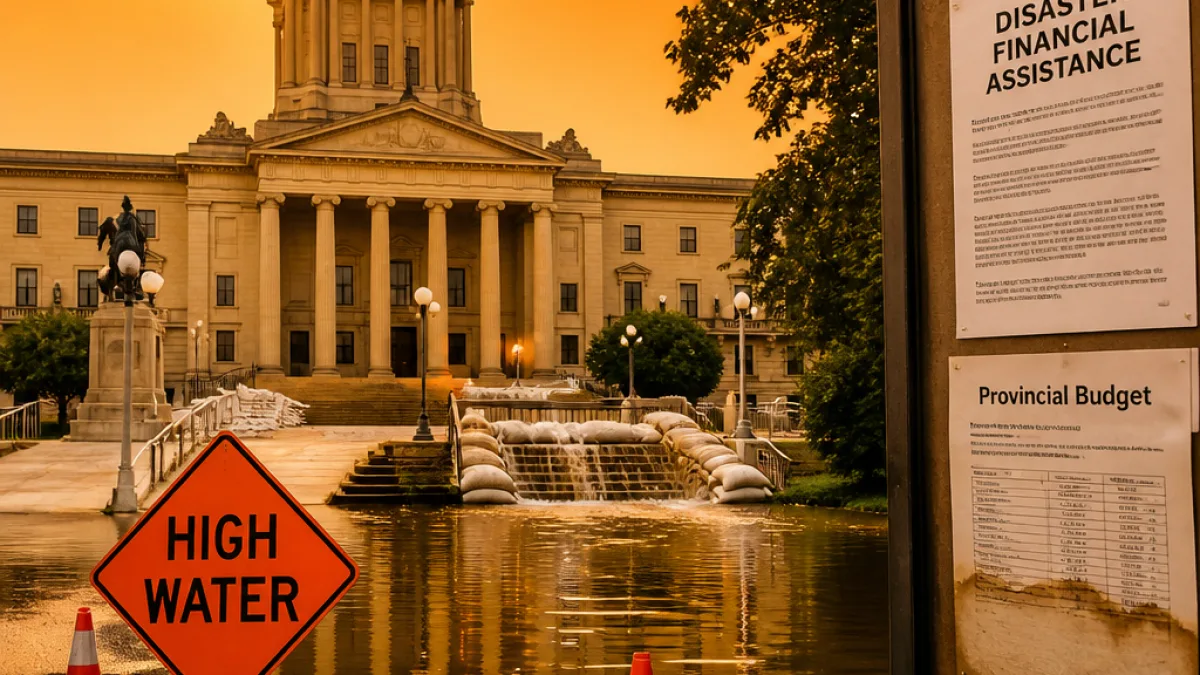
Back-to-back natural disasters have left Manitoba facing a substantial fiscal hangover. The province is managing the aftermath of 2025 wildfires and June 2026 floods that together displaced tens of thousands, destroyed infrastructure and property, and generated insurance claims in excess of $925 million. The immediate result is a provincial budget forced to redirect money from programs and deficit reduction to disaster financial assistance and infrastructure repairs.
“In financial terms, it's safe to measure the impact in the billions.”
The financial toll comes on top of the human cost, which cannot be quantified. The operational pressure on municipalities, emergency services and frontline agencies has been sustained, with 50 municipalities declaring states of emergency in 2026 alone. The scale and frequency of these events underline a shift in climate conditions in a province already known for wide weather swings.
Two hard years: what happened and what it cost
| Event | Measured impacts |
|---|---|
| Summer 2025 wildfires | 2 deaths; 33,000 displaced; 4% of land mass burned; costs in the hundreds of millions (at minimum) |
| June 2026 storms and floods | 50 municipal emergencies; damage to 30,000 vehicles; floods in hundreds of homes, businesses and fields; insurance claims over $925 million |
These figures represent only part of the ledger. While insured losses provide one window on private-sector costs, the province also faces large public expenditures to restore washed-out roads, repair bridges and culverts, and stabilize water-control infrastructure. A drone image of a Highway 10 washout near Pine River illustrates the scale of repairs now required across multiple regions.
Budget pressures and policy implications
The near-term budget consequence is straightforward: funds that otherwise might have supported services or reduced the deficit are instead being channelled to disaster recovery and capital repairs. The more consequential question is how Manitoba adapts for the long term as severe weather becomes more frequent and variable. The analysis points to a new baseline where governments must plan for repeat, large-scale emergencies rather than treat them as rarities.
- Short-term: Higher spending on disaster assistance, emergency response and immediate reconstruction.
- Medium-term: Deferred investments in other programs as recovery work proceeds.
- Long-term: Strategic adaptation to a climate with greater variability and more extreme events.
In 2026, storms and flooding affected communities across the province, damaging private vehicles and inundating hundreds of properties and agricultural lands. In 2025, wildfires forced mass evacuations and scorched a significant share of Manitoba’s land area, disrupting communities and resource operations and creating long recovery timelines.
Adapting to a more volatile climate
The analysis underscores a core challenge: Manitoba, like other jurisdictions in North America, is experiencing greater climate variability. For a province that already endures some of the continent’s most dramatic seasonal shifts, the trend means more frequent extreme weather must be anticipated in fiscal planning, infrastructure design and emergency readiness.
That shift has practical consequences. Insurers, municipalities and the provincial government are now contending with higher baseline risks. For the provincial treasury, that means building capacity for disaster financial assistance during years when multiple events may overlap. For infrastructure, it means designing and repairing assets to withstand heavier rainfall, longer wildfire seasons and more frequent freeze-thaw stress.
While the timeline and scale of future events remain uncertain, the recent two-year stretch has made one reality clear: Manitoba’s public finances are now closely tied to the pace of climate-driven disasters. As recovery continues, the province’s choices on resilience and adaptation will determine whether future budgets face the same level of disruption.