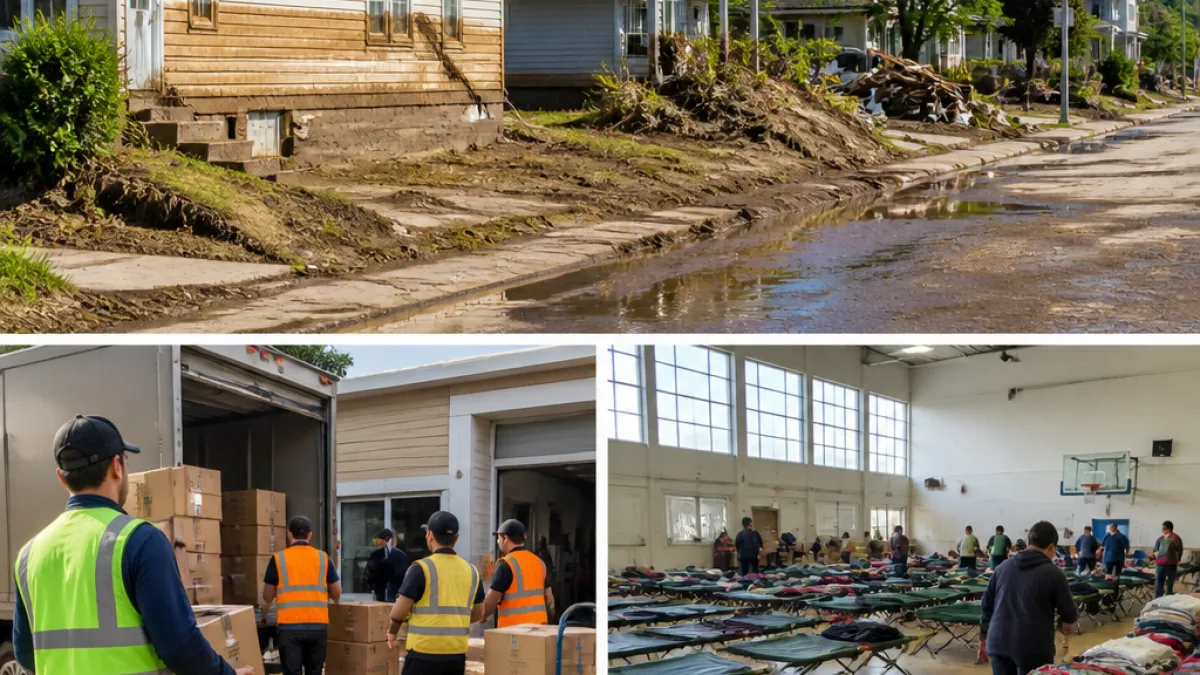
In the hours between July 19 and 20, 1996, heavy rains transformed rivers in the Saguenay–Lac‑Saint‑Jean region into surging torrents that flooded neighbourhoods, washed out roads and compelled thousands to leave their homes. The disaster was sudden, widespread and, as responders came to recognise, persistent in its consequences.
The Canadian Red Cross describes the operation that followed as the largest it had undertaken in Quebec up to that point. In the field, volunteers provided immediate assistance — welcoming evacuees, handing out clothing and arranging temporary lodging — and then shifted to longer-term support as the needs of families evolved.
Scale of displacement and response
Relief efforts reached a substantial number of households. According to the Red Cross summary of its operation, aid was delivered to more than 9,600 families, representing nearly 18,880 individuals. Roughly 1,700 volunteers were involved in those efforts. Those figures underline both the human cost of the event and the scale of local and provincial response required.
| Measure | Figure |
|---|---|
| Families assisted | 9,600+ |
| Individuals reached | ~18,880 |
| Volunteers involved | ~1,700 |
From emergency shelters to long-term recovery
Relief did not end with the closing of evacuation centres. The Red Cross account stresses that recovery extended well beyond the initial emergency phase. Services were adjusted over time to address the shifting needs of affected households, helping people regain stability and re-establish a sense of home. The organisation states that its response model continued for more than 13 years, adapting alongside the communities it served.
- Immediate relief: evacuation, clothing, temporary lodging and family reunification.
- Ongoing support: tailored services to rebuild homes, livelihoods and community ties.
- Long-term presence: operations and programming that continued for years after floodwaters receded.
"It became clear that this was no longer just a flood."
That line from the Red Cross narrative captures a central lesson for Saguenay: disasters leave both visible and invisible damage. Infrastructure can be repaired, but the social and psychological effects persist and require sustained, coordinated support from governments, NGOs and local volunteers.
For municipal authorities and public-service planners in Saguenay, the 1996 experience remains a reference point for emergency preparedness and disaster recovery. The scope of assistance delivered then — and the longevity of the response — are reminders that recovery planning must include long-term social supports as well as short-term logistics.
As the city continues to invest in flood mitigation, emergency management and community resilience, the memory of July 1996 informs both policy conversations and everyday expectations about how public services must perform when disaster strikes.