City plants the seeds of a new approach
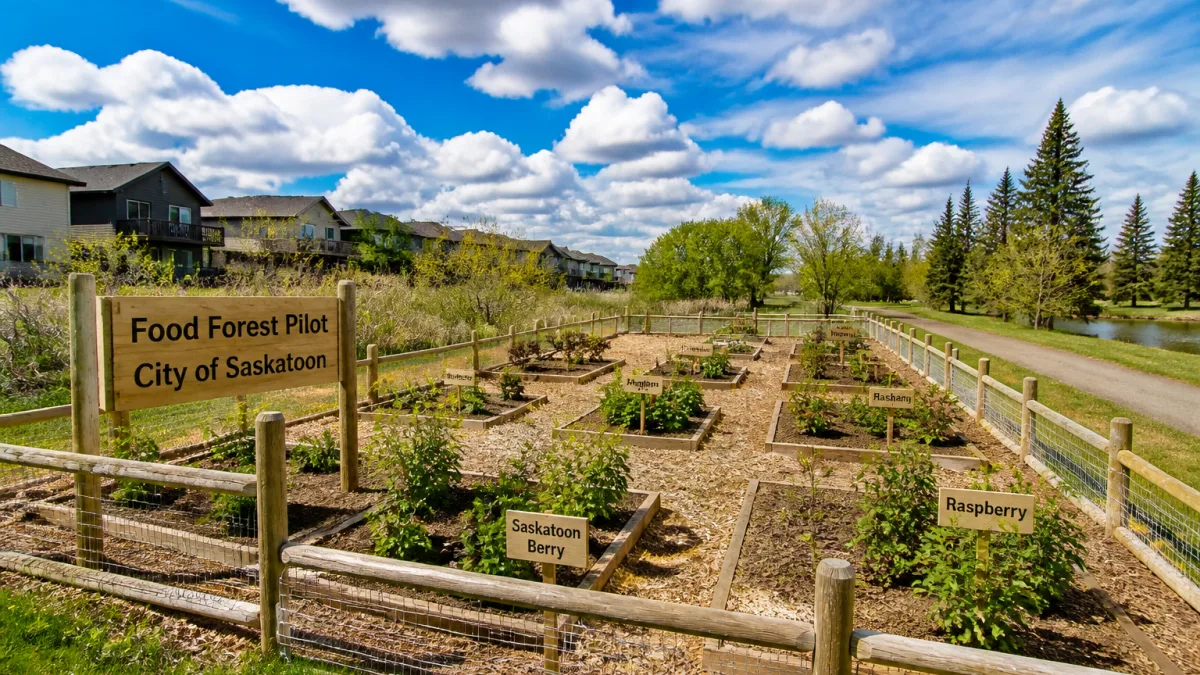
Saskatoon is trialling food forests in two west-side parks as part of a municipal effort to respond to rising food insecurity. The pilot—now underway in Broughton Park in Holiday Park and Leif Erickson Park in Westmount—introduces fruiting trees, shrubs and perennial vegetables intended to be picked and eaten by people who need fresh options close to home. City staff say the first meaningful yields are expected in about two years.
Food forests draw on an age-old idea of planting layered edible landscapes, a practice with deep roots among Indigenous peoples in the Americas. Saskatoon’s version adapts that concept to public parks, with fenced plots protecting young plantings as they establish.
Neighbourhood need and resident input shaped the sites
Both parks were selected because they sit in areas without nearby grocery stores. City figures cited by officials highlight different levels of need: approximately 15% of households in Holiday Park are low income, while the share in Westmount is described as about double that rate. The pilot emerged from ideas raised through Saskatoon’s green infrastructure planning, and the city says surrounding communities shaped what went in the ground.
“We know that two food forest projects is not going to solve food insecurity issues, but we do hope that they can contribute and show one type of solution to this problem,” said Shannon Dyck, a sustainability specialist with the City of Saskatoon.
Residents were asked what they would like to see planted. As Dyck put it,
“We gave them lots of options. Crabapples were not a favourite, so you will not see any crabapples on site.”
What’s growing now
Behind protective fencing at both parks, the city has begun establishing a mix of fruit and perennial crops suited to Saskatoon’s climate. Early plantings include:
- Saskatoon berries, raspberries and haskaps
- Strawberries and rhubarb
- Asparagus as a cold-hardy perennial vegetable
These species are intended to provide recurring harvests once mature. The city emphasizes the pilot is modest in scale and will evolve as plantings take hold and community feedback continues.
Why the locations matter
For households that rely on transit or have limited budgets for food, proximity to fresh produce can be a practical barrier. By situating edible plantings within walking distance of homes in Westmount and Holiday Park, the city aims to lower that threshold. While the initiative cannot replace comprehensive food access strategies, it creates a public-space option that complements other supports.
| Park | Neighbourhood | Context |
|---|---|---|
| Broughton Park | Holiday Park | About 15% of households low income; no nearby grocery store |
| Leif Erickson Park | Westmount | Low-income share roughly double Holiday Park; limited grocery access |
Measuring impact over time
City staff frame the work as experimental. The next two years will largely be about establishment—ensuring irrigation, soil health and protection from trampling—before plantings can produce at useful volumes. As harvests begin, the city will be in a better position to assess whether food forests can be replicated elsewhere, and how maintenance responsibilities should be shared in public spaces.
For now, the pilot offers a tangible, local test of whether layering edible perennials into parks can add resilience to neighbourhood food access. It also marks a small but visible step in answering residents who, through civic consultation, asked for greener infrastructure that feeds people as well as pollinators.