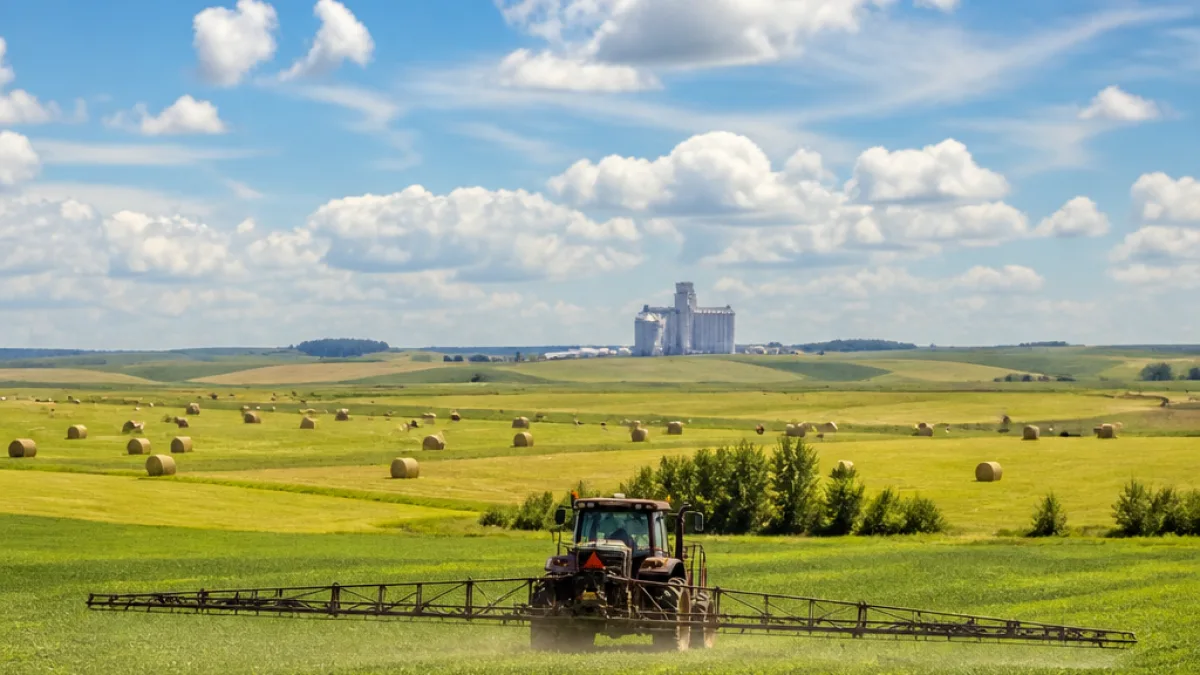
The latest provincial crop report for the period of July 7–13 says recent sunnier, warmer conditions have allowed many fields across Saskatchewan to dry and helped crops make up ground after earlier wet weather.
Provincial officials say progress is uneven, with higher humidity in some areas moderating how quickly fields can dry. Still, most crops are reported in fair to good condition and are generally at expected stages of development.
“Optimistic while monitoring pests, disease and localized weather impacts.”
Haying and field work under way
Producers have started haying and continued spraying operations. The report notes the following provincial hay progress:
- 10% of the first cut of hay has been baled or put up as silage
- 20% has been cut
- 70% remains standing
Quality ratings for hay show most of the crop in good or better condition: 27% excellent, 66% good, 6% fair and 1% poor. Some producers have begun a second cut where recent rainfall created thicker stands.
Moisture varies by region
Rainfall totals in the reporting week were highly localized. The highest amounts were recorded in the Prince Albert area with 88 millimetres, followed by Foam Lake with 72 millimetres. Overall topsoil and forage moisture conditions were reported as follows:
| Land type | Surplus | Adequate | Short |
|---|---|---|---|
| Cropland (topsoil) | 17% | 80% | 3% |
| Hayland | 14% | 83% | 3% |
| Pastures | 9% | 84% | 7% |
Cereal and crop staging
Despite the variability in weather, the report indicates the majority of fall cereal crops are developing at expected rates: 82% are at normal stages, 2% are ahead and 16% are behind. Overall, most crop types are assessed as being in fair to good health as producers continue to monitor pests, disease and localized weather impacts.
For producers and rural communities, the key takeaways are the improved drying conditions brought by recent sunshine and the ongoing need to watch regional rainfall patterns — which remain highly variable — as haying and field operations continue.
Information in this report covers provincial aggregates; conditions in individual fields and municipalities may differ significantly. Farmers are encouraged to consult local extension services and regional reports for site-specific guidance.