Coroner urges stronger safe-sleep measures after review of infant deaths
FREDERICTON — Unsafe sleep environments were identified as a factor in 36 per cent of infant deaths in New Brunswick over a five-year span, according to a new report from the province’s chief coroner. The review covers cases from January 2020 to September 2025 and found that unsafe conditions were a direct cause or contributing element in the deaths of 20 children under two.
The findings point to recurring risks in where and how babies are placed to sleep. Investigators concluded that in 16 of the 20 cases examined, unsafe sleep practices were directly linked to the cause of death. The report calls for bolstered education and clearer policy to prevent similar tragedies.
What the review found
| Measure | Figure |
|---|---|
| Share of infant deaths involving unsafe sleep (2020–2025) | 36% |
| Infant deaths with unsafe sleep as direct or contributing factor | 20 |
| Cases where unsafe sleep was directly linked to cause of death | 16 |
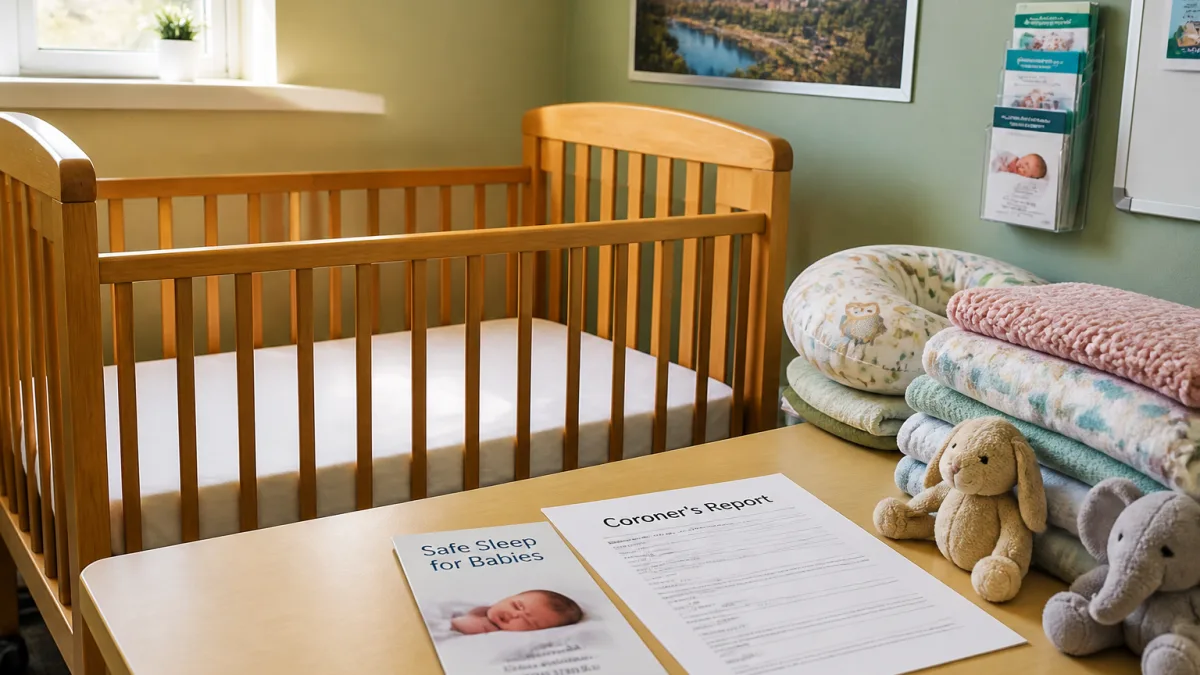
Investigators cited recurring patterns that heightened risk. Examples included babies being placed on their side or stomach to sleep, bed-sharing, sleeping in adult beds or on couches, and sleep areas that contained soft items such as pillows, blankets or toys.
Practices flagged as unsafe
- Placing an infant to sleep on their side or stomach.
- Bed-sharing and use of adult beds or couches for infant sleep.
- Sleep spaces containing soft bedding or toys.
The report emphasizes that preventable hazards persist despite long-standing guidance from federal health authorities. National recommendations advise that infants sleep alone, on their backs, in a crib or cradle free from soft items. The coroner’s office says stronger, consistent messaging and enforcement of safe-sleep standards in homes and care settings could reduce risk.
Provincial response
Public Safety Minister Robert Gauvin said the findings underscore the need for ongoing outreach by government, health-care providers and community groups. In a written statement, he said:
“These findings reinforce the importance of safe sleep practices and the need for continued public awareness, education and collaboration across government, health-care providers and community partners.”
The report’s central recommendation is to strengthen safe sleep education and policy. While specific program details were not outlined in the summary provided, the call suggests a broader, coordinated approach to ensure families receive consistent information at critical points, such as prenatal visits, hospital discharge, and early postnatal care.
Federal guidance reiterated
The review restates federal advice, which recommends that babies sleep:
- Alone, not sharing a sleep surface with adults or other children.
- On their backs, not on the side or stomach.
- In a crib or cradle that is free of blankets, pillows and toys.
Health guidance emphasizes keeping the sleep space clear to reduce suffocation and entrapment risks. The coroner’s office notes that these simple steps are widely promoted but not always followed, and that inconsistent practices continue to show up in fatality investigations.
Why it matters in New Brunswick
With more than a third of infant deaths in the period reviewed involving sleep-related risks, the data suggest a sustained public health challenge. The report’s timeframe includes the early years of the pandemic through 2025, capturing a period of shifting family routines and pressures on the health system. The coroner’s analysis indicates that clearer guidance and reinforcement of safe-sleep norms could prevent deaths among New Brunswick’s youngest residents.
Officials say the next steps involve ensuring families and caregivers receive practical, repeated reminders of safe-sleep basics and that care providers apply consistent standards in clinical and community settings. The report positions education and policy as complementary tools: one to change daily habits in the home, the other to set and uphold expectations in nurseries, day cares and other environments where infants may sleep.
While the review does not enumerate program-by-program changes, it puts a spotlight on the common circumstances that elevate risk and on measured, evidence-based precautions. The province’s challenge now is to translate the findings into routine practice at home and in the health and social services that support new parents.