Evacuation to Thunder Bay as smoke thickens across the North
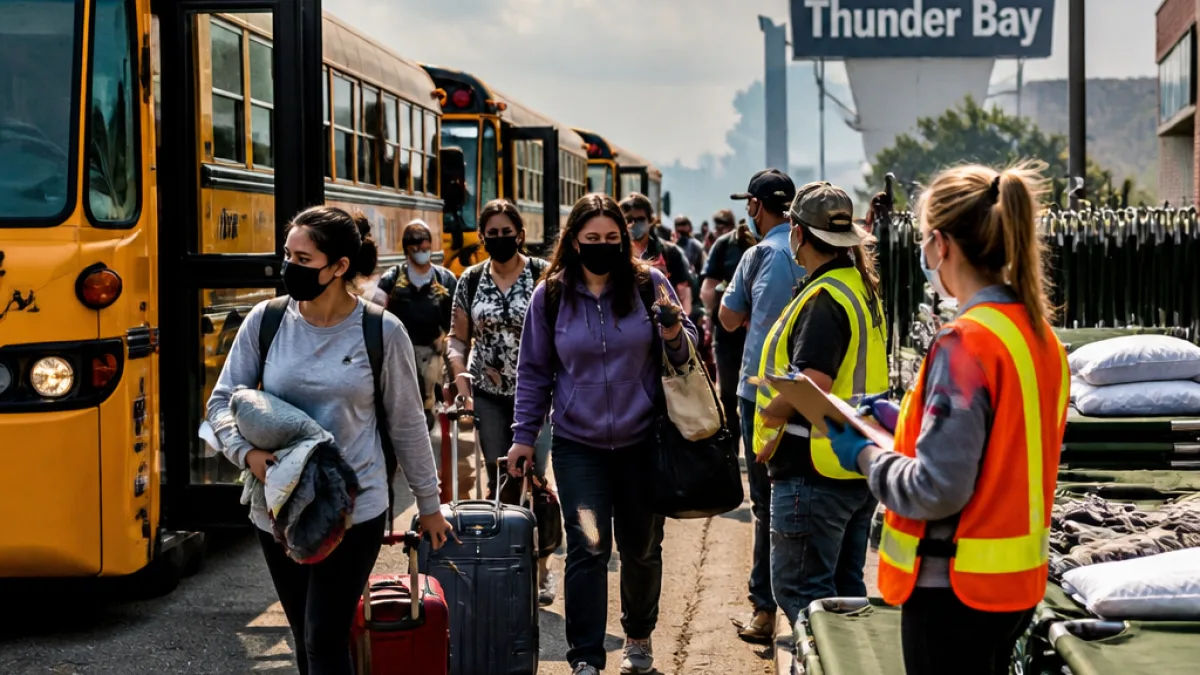
THUNDER BAY — A fast-changing wildfire situation in northern Ontario has pushed hundreds of residents from Whitesand First Nation and the neighbouring unincorporated communities of Armstrong and McKenzie Lake into hotels in Thunder Bay, where they now wait for word on their homes. Community members described a rapid turn from haze to choking smoke and ash falling from the sky as nearly 200 wildfires continue to burn across the region.
By Monday afternoon in Whitesand, smoke grew so dense that debris began dropping from the pines and visibility shrank. Panic rose in the remote community, located more than 250 kilometres north of Thunder Bay, as residents loaded vehicles and made for the highway. Others from the already hard-hit Collins First Nation have also reached Thunder Bay as blazes expand and winds drive smoke south and east, spreading poor air quality across Ontario and into several U.S. states.
‘We’ve got to get out’: urgency on the ground
Retired firefighter Daniel Nodin said conditions shifted from worrisome to unsafe within hours. He moved through the community encouraging neighbours to leave while there was still time. He noted that while flames can appear distant, the immediate risk often comes from the air itself.
“You breathe that, then … your lungs might collapse because of the smoke inhalation and the heat,” he said. “I went back around town telling people we got to get out of here — that thing’s going to go out of control.”
Nodin and his family are among nearly 350 people from Whitesand, Armstrong and McKenzie Lake now sheltering in a Thunder Bay hotel. Along the drive south, he described a red-tinged sky, long lineups at a gas station and a sense of urgency among travellers trying to get clear of the worst smoke.
Displacement and difficult choices
Some evacuees left with only a few days’ worth of clothing. Others were forced into wrenching decisions in the rush to go. Daniel’s brother, Andrew Nodin, said his family escaped but could not bring their German shepherd, a loss weighing heavily as they navigate the uncertainty of an extended stay away from home.
The human impact of this fire season is expanding alongside its geographic reach. Authorities report the fires have already burned more land than all of last year’s blazes, with smoke plumes drifting far beyond the fire lines and settling over communities hundreds of kilometres away. In Thunder Bay, evacuees from multiple communities are sharing space and information while they await updates on fire behaviour and any potential path back home.
Health risks from smoke at the forefront
Residents who managed to get out ahead of the heaviest smoke described a scene that escalated quickly: darker skies, stronger odours and particulate matter collecting on vehicles and buildings. Those conditions align with elevated health risks, particularly for children, older adults and people with existing respiratory or cardiac conditions. For evacuees now in Thunder Bay, cleaner indoor air and rest are the immediate priorities while local agencies coordinate lodging and basic supports.
Communities affected and where people are sheltering
While the full scope of displacement continues to evolve, people from several communities have reached Thunder Bay. The following summarizes what’s known from evacuees’ accounts:
| Community | Situation | Where people are now |
|---|---|---|
| Whitesand First Nation | Rapid smoke and falling debris prompted evacuation | Hotel accommodations in Thunder Bay |
| Armstrong (unincorporated) | Evacuating due to proximity and smoke conditions | Thunder Bay |
| McKenzie Lake (unincorporated) | Evacuating with nearby communities | Thunder Bay |
| Collins First Nation | Fire-ravaged; additional evacuees arriving | Thunder Bay |
What evacuees are watching for next
- Fire behaviour and wind shifts: Changes in wind and humidity will influence smoke and access.
- Access updates: Decisions on when, or if, residents can safely return will depend on active fire lines and air quality.
- Health and supports: Evacuees are prioritizing clean indoor air, medicine, and essentials while away from home.
As conditions continue to evolve, evacuees in Thunder Bay are focused on staying connected with community leaders and monitoring official updates on the northern fire situation. For now, the priority remains safety: putting distance between families and the worst of the smoke while crews continue the fight on multiple fronts.