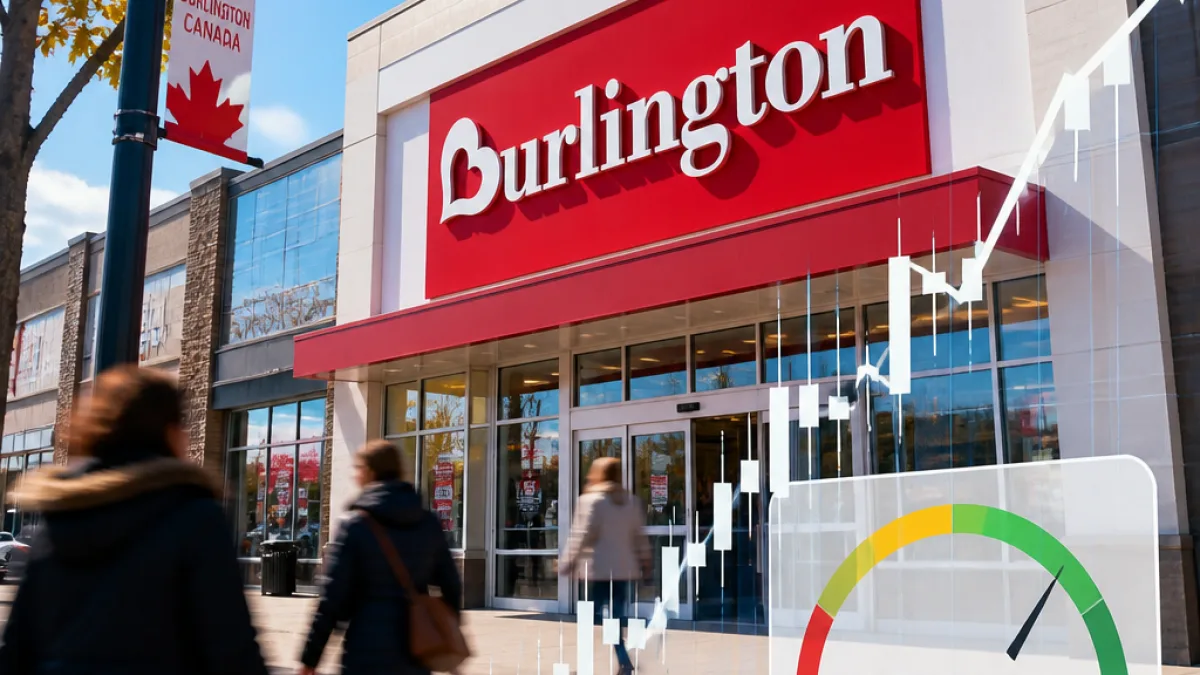
Shares of Burlington Stores Inc. rose 3.3 per cent on July 15 to close at US$345.24, but a valuation model from investing site GuruFocus indicates the stock may be trading above its implied intrinsic value. The site's GF Value™ estimate places fair value at US$292.82, implying the market price is roughly 17.9 per cent higher than that estimate.
What the numbers show
GuruFocus assigns Burlington a GF Score™ of 84 out of 100, reflecting a mix of strong momentum and profitability alongside more moderate financial-strength metrics. The report highlights several key measurements:
- Momentum: rated 10/10, indicating strong recent price performance.
- Profitability: rated 8/10.
- Financial strength: rated 5/10, a weaker area relative to other metrics.
GF Value™ is GuruFocus' proprietary estimate of intrinsic value, based on historical trading multiples, past growth and future performance assumptions. Using that framework, the site labels Burlington as "Modestly Overvalued."
"Modestly Overvalued"
Valuation context
While the GF Value point estimate suggests the stock is above fair value, the site's price-earnings analysis offers further nuance: Burlington's trailing 12-month price-to-earnings (P/E) ratio stands at 35.5x, which is lower than its five-year median P/E of 38.5x. The forward P/E cited is 29.4x, a figure that can reflect expected future earnings growth.
| Metric | Current | Historical (5-yr median) |
|---|---|---|
| P/E (TTM) | 35.5x | 38.5x |
| Forward P/E | 29.4x | N/A |
That mix of metrics underpins GuruFocus' view that, despite solid recent performance and strong momentum scores, the share price carries some premium relative to the firm's valuation model. The site's overall GF Score balances high marks for momentum and profitability with a middling financial-strength rating.
Local relevance
For Burlington-area investors tracking North American retailers or residents monitoring national retail trends, the report offers a snapshot of market sentiment and risk. A higher-than-model price suggests potential downside if expected growth does not materialize, while the lower-than-historical P/E median could be read as relative restraint compared with past valuations.
Readers considering investment decisions should treat third-party intrinsic-value models as one input among many and consider consulting a licensed financial adviser for decisions tailored to personal circumstances.