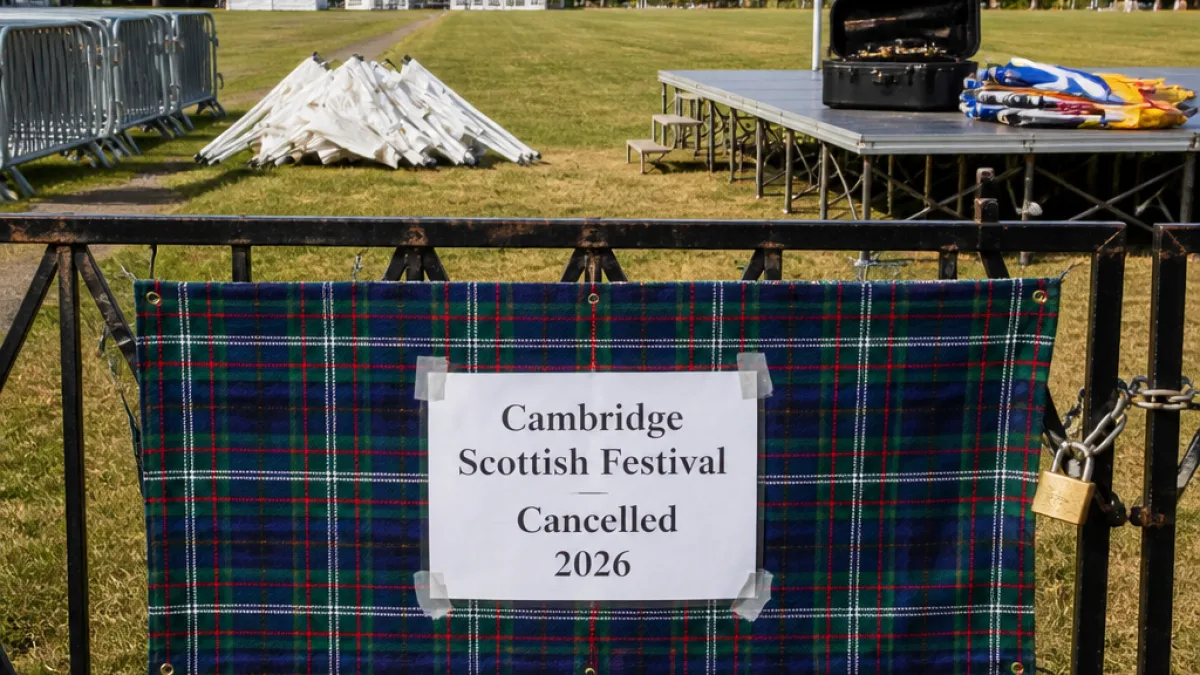
Organizers pause event amid funding and volunteer strain
The Cambridge Scottish Festival will not run in 2026 after organizers cited a loss of board members, a shortfall in funding and a lack of volunteers. A board member said the decision was difficult but necessary as the non-profit contends with operational gaps that could not be closed in time for this year’s planning window.
Board member Duncaun McLeod said the organization has not made a final call on 2027, though he remains hopeful the festival can return if the board stabilizes its leadership and finances. The event has traditionally relied on a broad volunteer base and community support to deliver one of the city’s longstanding cultural gatherings.
“The board is going to get together in another month and then we’ll regroup. There’s no decision. The intent is we’re going to move forward but a decision will be made in a month’s time.”
Financial realities and tourism impact
According to McLeod, staging the festival requires about $100,000 each year. He said the event has been a tourism draw, with participants travelling from Ottawa, Windsor and the United States, and estimated the festival generates roughly 2.5 times the spending it receives. That economic contribution underscores the wider local implications when the event pauses, including reduced visitor traffic and fewer vendor opportunities during the festival period.
| Measure | Figure/Detail |
|---|---|
| Estimated annual budget to stage | $100,000 |
| Estimated economic return per $1 | 2.5× (organizers’ estimate) |
| Regional draw | Ottawa, Windsor, United States |
| Timing of notice to council | About two days before cancellation |
City support came too late to avert cancellation
McLeod said that as the board weighed its options, he contacted Ward 6 councillor Adam Cooper because the games are held in his ward. He described prompt engagement from Cooper and acknowledged efforts by Mayor Jan Liggett to assemble an emergency council meeting to consider municipal funding. However, he said the festival’s approach to the city came with insufficient lead time to enable a formal decision before the board moved to cancel.
“It was a very tough, tough decision for the board to have to cancel. As far as I’m concerned it was the right decision for this year. We really thought hard and tried to save it. I’m fairly confident we’ll be back next year but there’s no decision.”
Why timing matters for community events
Large-scale community festivals typically require months of planning with early commitments from sponsors, vendors, performers and municipal services. Organizers say the combination of a funding gap and departures from the board compressed timelines further this year. While the city explored options to help, formal public funding usually requires committee review and council approval, which can be difficult on short notice—even with special meetings.
- Operations: Board turnover and volunteer shortages challenged logistics.
- Finances: Organizers estimate a six-figure budget is needed to confirm venues, programming and safety plans.
- Governance: City support efforts require advance notice to navigate council processes.
Next steps and call for stability
McLeod said the board will reconvene in roughly a month to reassess. That review will focus on volunteer recruitment, board capacity and funding options. The festival’s return will hinge on whether organizers can rebuild a reliable base of people and resources to deliver a safe, sustainable event.
For residents and local businesses, the pause removes a summer fixture that has historically driven foot traffic and spending. The board’s upcoming decision will signal whether the festival can re-emerge in 2027 with a stronger foundation—or whether it needs more time to address structural gaps that surfaced this year.