
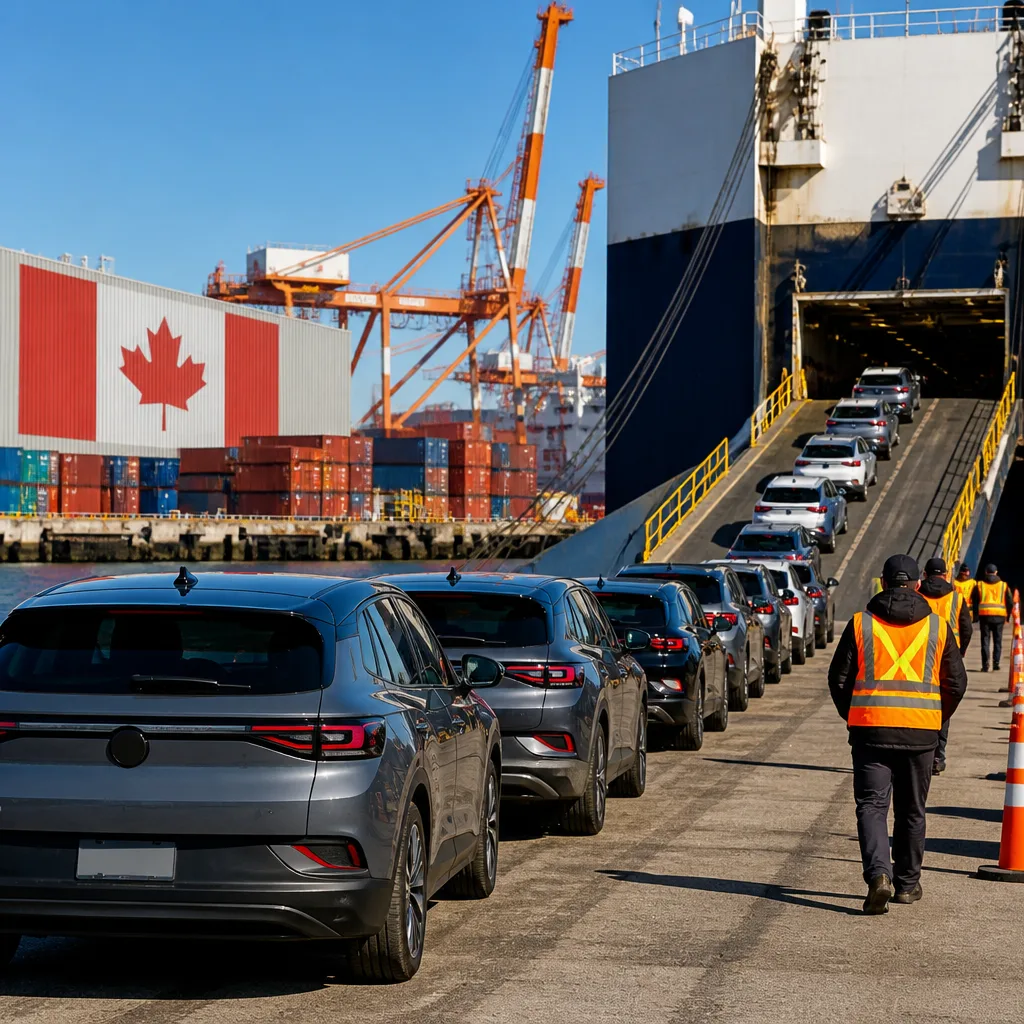
Chinese electric vehicles have started to arrive in Canada and officials expect thousands more to enter the country this year under a recently announced strategic partnership between the two nations, signalling a notable shift in the Canadian auto market.
At the same time, Canadian manufacturers and builders are sounding alarms about mounting pressures at home. Producers in the aluminium extrusion sector say their businesses are being squeezed even as aluminium prices rise, and homebuilders report a slowdown in construction activity as demand softens and inventories grow.
What’s arriving and what it means
Photographs from eastern China show vehicles from brands such as BYD and MG staged at a port ready for export — an early sign of imports already moving toward Canadian dealers and consumers. The Financial Post summary reports that these initial shipments are only the start, with thousands more of Chinese-brand electric vehicles slated to enter Canada this year as part of a new bilateral arrangement.
- Early arrivals include models from BYD and MG.
- Thousands more Chinese EVs are expected to come to Canada this year under a strategic partnership.
- Officials and consumers will be watching pricing, dealer networks and cross-border access.
The implications are broad: more vehicle choices for Canadian consumers, upward pressure on competition for domestic and other foreign manufacturers, and potential questions about access for vehicles at the U.S. border. The summary notes consumers will want clarity on what to expect, which brands may land here, how prices could compare and whether vehicles imported into Canada could face restrictions at U.S. crossings.
Economic strains in other sectors
Alongside the auto story, other summaries in the same briefing highlight strains across Canadian industry and investment:
- Aluminium extrusion: Operators report business instability despite aluminium being the best-performing base metal this year. They blame surging metal costs, U.S. tariffs and what they describe as dumping from overseas.
- Housing construction: New home building thinned in June, consistent with builders pulling back amid weak demand, rising costs and a surplus of unsold homes.
- Quantum computing: Photonic Inc., a Coquitlam-based startup, has attracted major Canadian institutional investors but still needs to demonstrate scalable, billable technology to government and corporate customers.
"We're getting hammered"
That blunt assessment, used as a headline in the same briefing, encapsulates the mood inside parts of the aluminium-processing industry as it faces price volatility and trade tensions.
National consequences and immediate watch points
The convergence of these stories matters for policy-makers, investors and the public. An influx of competitively priced Chinese EVs would reshape market dynamics and could affect domestic manufacturing strategies, dealership networks and consumer incentives. Meanwhile, rising input costs and perceived unfair competition in metals threaten jobs and supply chains in the manufacturing heartland. The slowdown in residential construction points to cooling housing markets that can ripple through local economies and municipal planning.
Observers should watch for further announcements detailing the scope of the strategic partnership that will bring Chinese EVs to Canada, any formal responses from Canadian auto-industry stakeholders, updates on tariffs or trade remedies related to aluminium, and data releases on housing starts and inventories in the coming months.
| Story | Immediate national issue |
|---|---|
| Chinese electric vehicles arriving | Competition, pricing, cross-border access |
| Aluminium sector pressure | Trade disputes, rising input costs, employment risk |
| Housing construction slowdown | Economic cooling, builder retrenchment, unsold inventory |
| Quantum startup funding | Commercialisation challenge despite investor backing |
These developments arrive as Canadian households, investors and policy-makers weigh affordability, industrial competitiveness and economic resilience. With initial Chinese EV shipments already en route and stringer signals from multiple sectors, the weeks ahead may clarify how fast market structure and policy responses will need to adapt.
— National reporting based on Financial Post summaries.