
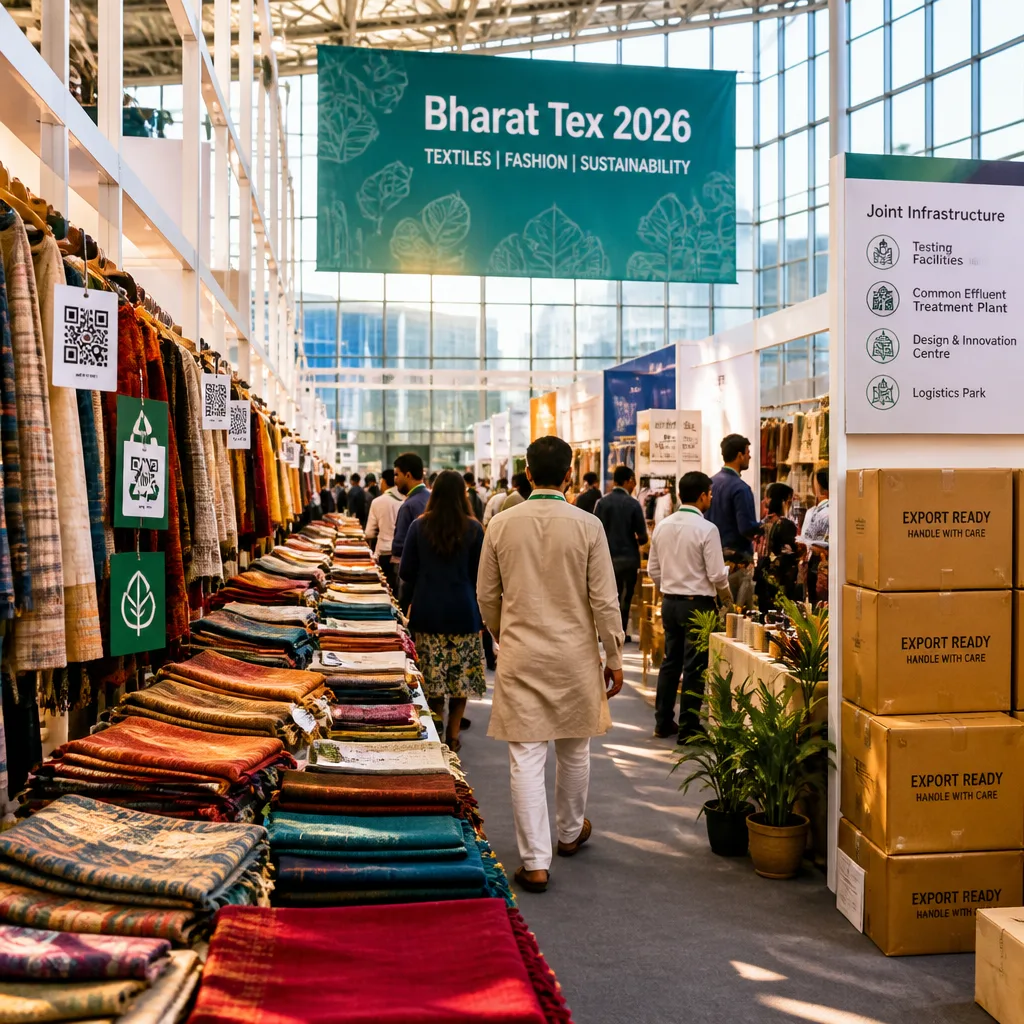
India is positioning its textile and lifestyle sector to compete on the world stage by emphasising quality, sustainability and its craft heritage, senior government and industry leaders said at Bharat Tex 2026.
Big ambition, clear metrics
Officials noted that the sector recorded textile and apparel exports of around ₹3.16 lakh crore in 2025-26 and has set its sights on reaching ₹9 lakh crore by 2030. The announcement at the annual trade event in New Delhi highlighted both immediate market opportunities and long-term strategic priorities for making Indian brands globally recognisable.
“The annual textile event provides artisans and weavers with a platform to showcase their craftsmanship, connect with international buyers and create sustainable livelihoods,”
Textiles Minister Giriraj Singh framed the moment as an opening for artisans and small producers to link directly with overseas buyers, while industry participants outlined the operational work required to fulfil the ambition.
What industry leaders say
Textiles Secretary Neelam Shami Rao emphasised that creating internationally known designer houses will be a slow, deliberate process that also requires shared infrastructure and enhanced visibility online. E-commerce platforms and omnichannel strategies were identified as central tools for brand expansion beyond India’s borders.
- Supply chain and competitiveness: Manufacturers flagged the need to bolster production ecosystems and supply chains to meet global standards and volumes.
- Collaboration: Speakers urged partnerships between large exporters and creative designers to combine manufacturing scale with design innovation.
- Sustainability: The sector singled out environmentally responsible practices as a central enabler for accessing premium international markets.
Numbers at a glance
| Year | Textile & apparel exports |
|---|---|
| 2025-26 | ₹3.16 lakh crore |
| Target 2030 | ₹9 lakh crore |
The conversation at Bharat Tex 2026 linked policy intent to practical levers: better design houses, shared logistics and digital market presence. For Canadian and other international buyers tracking global supply and ethical sourcing trends, the developments signal a sector seeking higher-value positioning rather than only volume growth. Observers will watch whether investments in infrastructure and designer collaborations translate into the sorts of export growth and brand recognition the government has outlined.