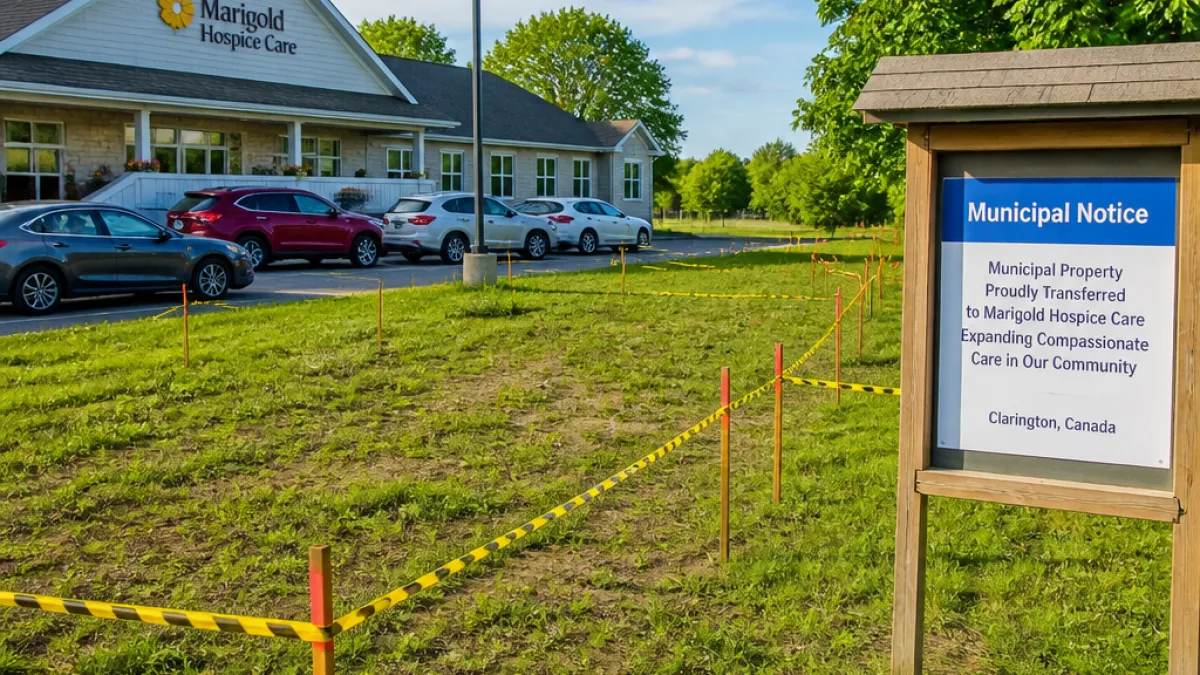
Clarington backs hospice with land to expand parking
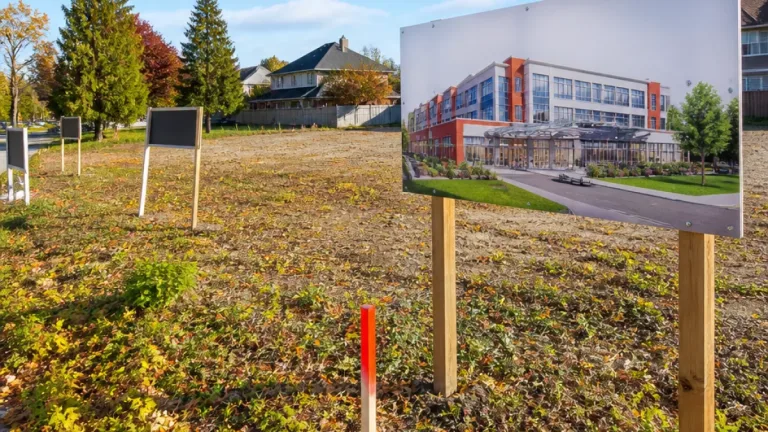
The Municipality of Clarington will make additional land available to Marigold Hospice Care in Newcastle to address a chronic shortage of parking for families and visitors. Following a delegation at council from the hospice, which outlined its first-year operations, councillors directed staff to proceed with the transfer of up to 0.50 acres of municipally owned property to the organization. The move is intended to accommodate approximately 16 additional parking spaces, according to a municipal statement.
Marigold Hospice Care operates a home-like residence in Newcastle and admits patients from anywhere in Durham Region. The hospice told council that as demand for end-of-life care has grown since opening last year, pressure on parking has followed, particularly at peak visiting hours when multiple families gather to spend time with loved ones.
“The board identified a challenge with parking capacity for families and visitors spending time with loved ones in hospice care,” the municipality said.
What council approved
Council’s direction authorizes staff to complete the land transfer, with conditions. The transfer is subject to staff confirming it will not interfere with municipal needs or the property rights of others. That caveat signals the municipality will examine any operational or legal constraints before finalizing the transaction. No changes to the hospice facility itself are part of this decision; the focus is on improving access and circulation for visitors through added surface parking.
The municipality framed the donation as an extension of its support to a health-care partner serving residents across communities in Clarington and beyond. By freeing up capacity for vehicles on-site, the goal is to reduce spillover onto nearby streets and ensure families can remain close to patients without added stress over parking availability.
Why it matters for Newcastle and beyond
Parking access is often a practical barrier for people visiting loved ones in palliative care settings. For Marigold Hospice, which draws referrals region-wide, visitor traffic can be concentrated at certain times as relatives arrive together. Additional stalls are expected to ease congestion and lower the risk of overflow into surrounding areas, improving safety and predictability for neighbours and hospice staff.
Clarington’s decision also reflects the municipality’s role in facilitating supportive health infrastructure, even when clinical care is delivered by non-profit providers. While hospitals and hospices are funded and governed differently, municipalities frequently address site-level needs—like road access, transit connections or parking—that affect how residents experience care.
Details at a glance
| Element | Planned capacity |
|---|---|
| Land transfer size | Up to 0.50 acres |
| Additional parking | Approx. 16 spaces |
| Service area | Open to Durham Region residents |
Next steps and access
The direction from council sets in motion the staff review and transfer process, which must be completed to the municipality’s satisfaction. Clarington has emphasized that the donation cannot impede municipal operations or compromise neighbouring property rights. Once that is confirmed, Marigold Hospice will be positioned to proceed with expanding visitor parking on the donated parcel.
In the meantime, the hospice continues to welcome referrals to its residence for people living with a life-limiting illness. The organization describes its setting as home-like, underscoring a focus on comfort and family presence—factors closely tied to the need for reliable on-site visitor parking. Residents and families from across Durham who rely on personal vehicles to reach the Newcastle site stand to benefit from the added capacity when implemented.
- Council action: Staff directed to transfer land, pending conditions.
- Immediate impact: Space for about 16 more parking spots at the hospice.
- Regional reach: Facility accepts patients from all parts of Durham Region.
For Newcastle, the decision offers a practical fix to a specific pinch point. For families, it can mean shorter searches for a stall and more time at the bedside. And for the hospice, it provides a modest but meaningful expansion that aligns its site capacity with the level of visitation it has drawn in its first year of operation.