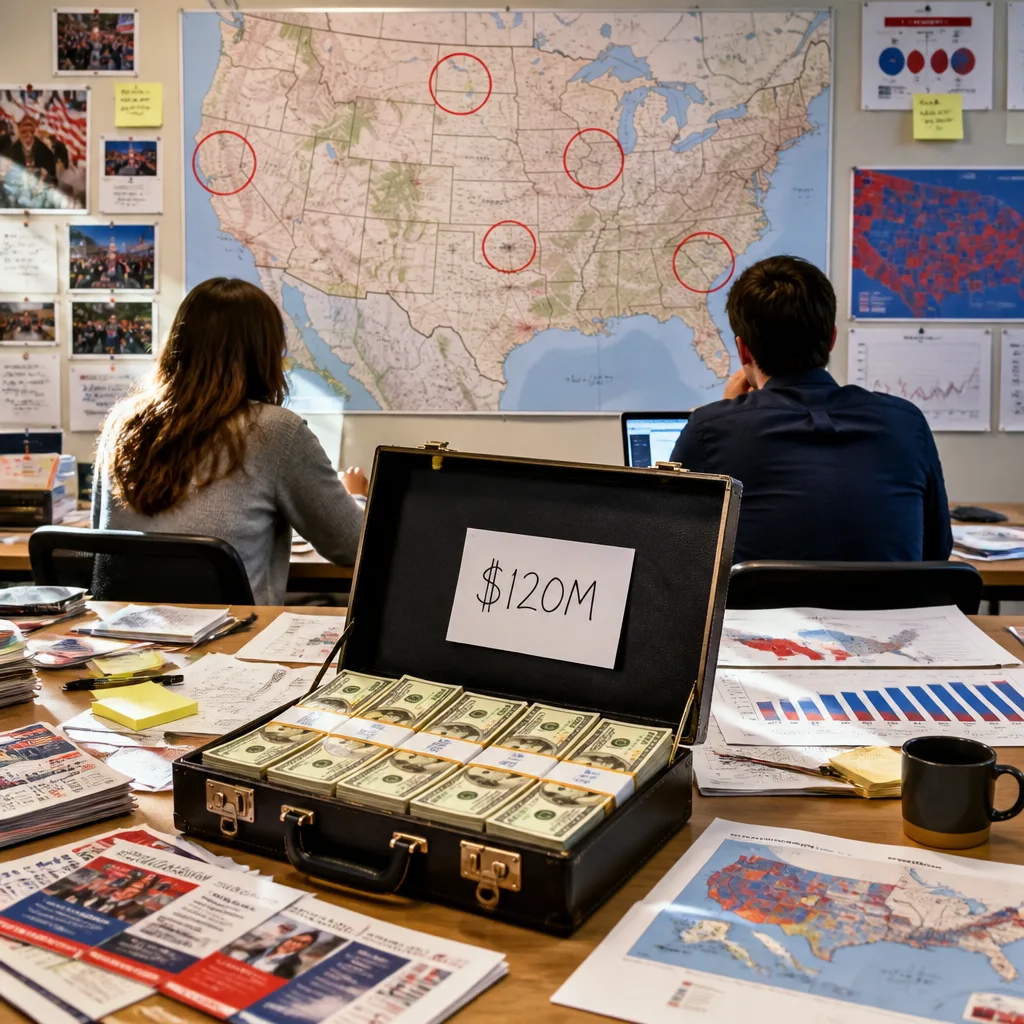
Tech entrepreneur Elon Musk has authorised the reactivation of a Super PAC that could deploy as much as US$120 million in the coming midterm cycle, the New York Times reported, with an initial emphasis on five competitive Senate contests.
Fundraising tilt widens
The reported infusion of cash comes against a backdrop in which Republican committees held markedly larger war chests at the end of June. According to figures cited in reporting, the three main Republican fundraising committees together had US$277 million, while the top Democratic committees held US$118 million.
| Committee grouping | Funds (end of June) |
|---|---|
| Republican committees (three main) | US$277 million |
| Top Democratic committees | US$118 million |
Party coordination and reaction
A senior Republican official told Spectrum News that the Republican National Committee intends to coordinate with the revived Musk-aligned Super PAC, a development the source said will further consolidate the GOP’s financial edge heading into November.
“Elon Musk, dropping millions into midterm elections, tells you everything you need to know about the Republican party,” DNC spokesperson Jaelin O’Halloran said.
The Democratic National Committee spokesperson characterised the potential spending as evidence of the party’s reliance on wealthy backers rather than broad-based support from ordinary voters.
Musk’s recent political involvement
Musk played a prominent role in the 2024 election, including significant financial support for Donald Trump’s campaign. Reporting notes he spent roughly US$260 million during that cycle and at times offered direct incentives to voters via large checks. His relationship with the president has been uneven: they have publicly engaged in cooperative gestures — such as the president posing with a Tesla at the White House — while also clashing over policy and rhetoric. Musk criticised a key tax and spending bill last summer and floated the idea of forming a third party before relations improved.
Implications and limits
Reactivating a Super PAC of this scale signals an intent to shape outcome in targeted Senate races, yet the specific strategic focus beyond an initial set of five battlegrounds has not been disclosed publicly. Outside spending of this magnitude typically prompts both parties to reconsider resource allocation and can eclipse the fundraising capacity of formal party committees.
- US$120M — authorised potential from Musk’s revived Super PAC.
- US$260M — approximate amount Musk spent in the 2024 cycle, per reporting.
- US$277M vs US$118M — end-of-June cash-on-hand comparison between leading Republican and Democratic committees.
As the midterms approach, the presence of high-net-worth donors and mega-donors will remain a central element of campaign dynamics. How parties and independent groups respond to a large-scale infusion of outside money will influence where resources flow and which Senate races become the most fiercely contested.