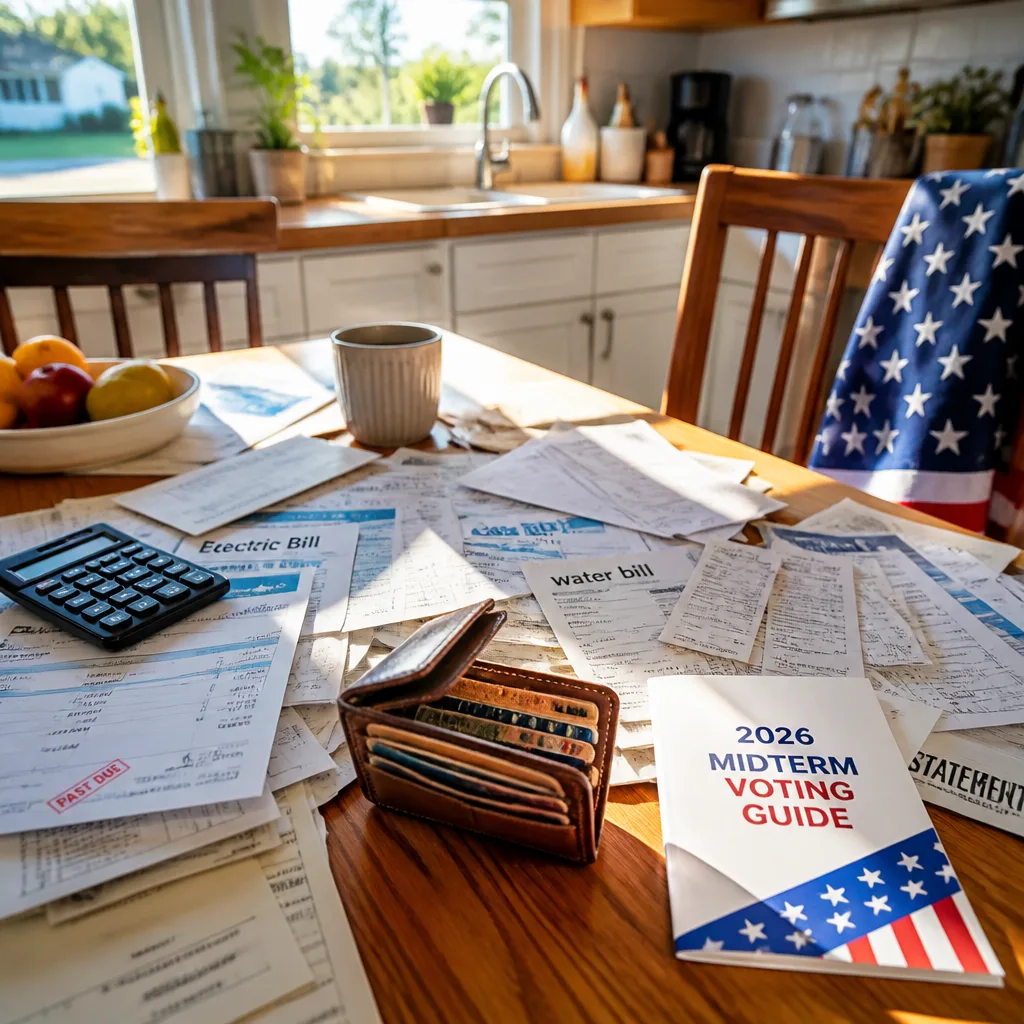
A minority of U.S. voters who have not yet made up their minds say the high cost of living is their dominant concern as they decide how to vote this November — a cohort whose choices could be decisive for control of the next Congress.
What undecided voters say
NBC News reporters interviewed a sample of voters who remain uncommitted in the 2026 midterm cycle. Among those interviewed is James Morton, a 67-year-old retired truck driver in Colorado, who described both major parties as unsatisfactory and signalled interest in third-party options. Morton said his decision hinges on whether candidates can deliver relief on prices and inflation.
“The No. 1 thing is getting the cost of things back down, inflation under control, and pretty much that’s it,”
Morton’s comments reflect a pattern identified in national polling: undecided voters frequently point to household affordability as their top priority. NBC News reported that roughly 5 per cent of respondents in a recent survey identified themselves as undecided about which party they want to control Congress.
Potential consequences for congressional control
How this small segment resolves its doubts could have outsized consequences. NBC News cited a national poll showing 50 per cent of voters prefer Democrats to control Congress, while 45 per cent favour Republican control. Those margins indicate that even modest shifts among undecided voters could alter the majority margin in the House or Senate for 2027.
| Party preference in NBC News poll | Share |
|---|---|
| Democrats | 50% |
| Republicans | 45% |
Why undecided voters matter
Undecided voters differ from base supporters in two important respects: they express weaker partisan loyalty and they emphasise concrete policy outcomes, particularly economic ones such as food and energy costs. NBC News spoke with 16 undecided voters, many of whom said they felt neither party understood their priorities. For some, economic pressures are prompting consideration of alternatives beyond the two major parties.
- Economic concerns dominate: affordability and inflation are the leading issues for undecided voters.
- Low share, high impact: about 5 per cent of voters are undecided, but their eventual choices may tip tight races.
- Potential for ticket-splitting: several undecided voters signalled openness to third-party candidates or splitting votes between parties depending on perceived competence on costs.
For observers in Canada and elsewhere, the dynamics among undecided American voters are worth watching: small shifts in voter priorities can influence Washington’s political balance, which in turn affects trade, regulatory settings and international diplomacy.
As campaigns intensify, candidates and parties will likely direct messaging and resources toward persuasion of this narrow but consequential group in battleground states and competitive districts.