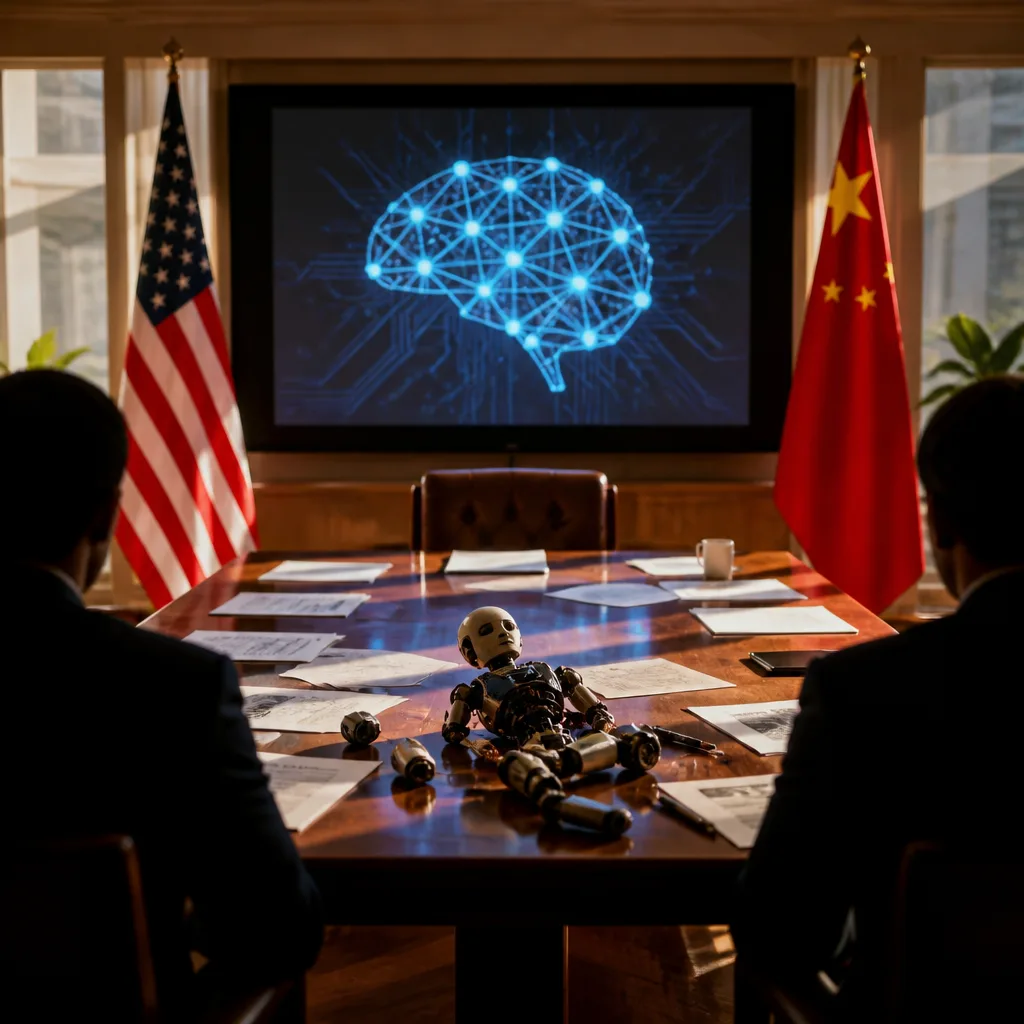
As President Donald Trump and Chinese President Xi Jinping foregrounded artificial intelligence in recent talks, a group of U.S. lawmakers and advocates are calling for restrictions on the development of so‑called artificial superintelligence.
Rising concern amid diplomatic engagement
The dialogue between the leaders of the world’s two largest economies has put AI safety into the diplomatic spotlight. At the United Nations General Assembly this week, Mr. Trump warned against heavy‑handed regulation that could slow technological progress, describing the technology’s potential as surpassing previous revolutions.
At the same time, advocacy organisations and some members of Congress argue that unrestrained development of advanced AI models could present catastrophic risks, including threats to critical infrastructure and loss of control scenarios. Brendan Steinhauser, chief executive of the Alliance for Secure AI, said his group supports congressional action to address those dangers while acknowledging the strategic imperative to remain competitive with China.
“We're really worried about the months ahead and the impact that this technology could have on everything from cybersecurity to protecting our critical infrastructure like power, water and transportation, and even, yes, loss of control scenarios,”
Steinhauser made the remarks in a media interview, urging bipartisan attention to the issue on the grounds that it affects all citizens.
Legislative proposals and political voices
Progressive lawmakers have introduced measures aimed at constraining systems defined as possessing cognitive capabilities that exceed human intellect. Rep. Greg Casar and Sen. Bernie Sanders are cited by advocates for taking the matter seriously by proposing limits intended to prevent the emergence of uncontrolled artificial superintelligence.
Casar warned of the risks associated with an unchecked AI arms race, using a stark metaphor to underline the potential consequences.
- Advocacy group: Alliance for Secure AI — pressing for congressional action.
- Legislators: Rep. Greg Casar and Sen. Bernie Sanders — sponsors of proposed restrictions.
- Policy concern: Risk to critical infrastructure, cybersecurity and potential loss of control.
Observers note a tension between protecting safety and preserving economic and strategic advantages: advocates stress precaution, while some political leaders caution against measures that could stifle innovation.
| Actor | Position |
|---|---|
| Donald Trump | Cautions against stifling growth of AI |
| Alliance for Secure AI / Brendan Steinhauser | Calls for congressional limits to prevent catastrophic risks |
| Rep. Greg Casar, Sen. Bernie Sanders | Introduced legislation to limit superintelligence |
The debate unfolding in Washington may influence allied countries’ approaches to AI governance. Policy choices made now could shape international norms and the regulatory environment for developers, researchers and critical infrastructure operators in Canada and beyond.