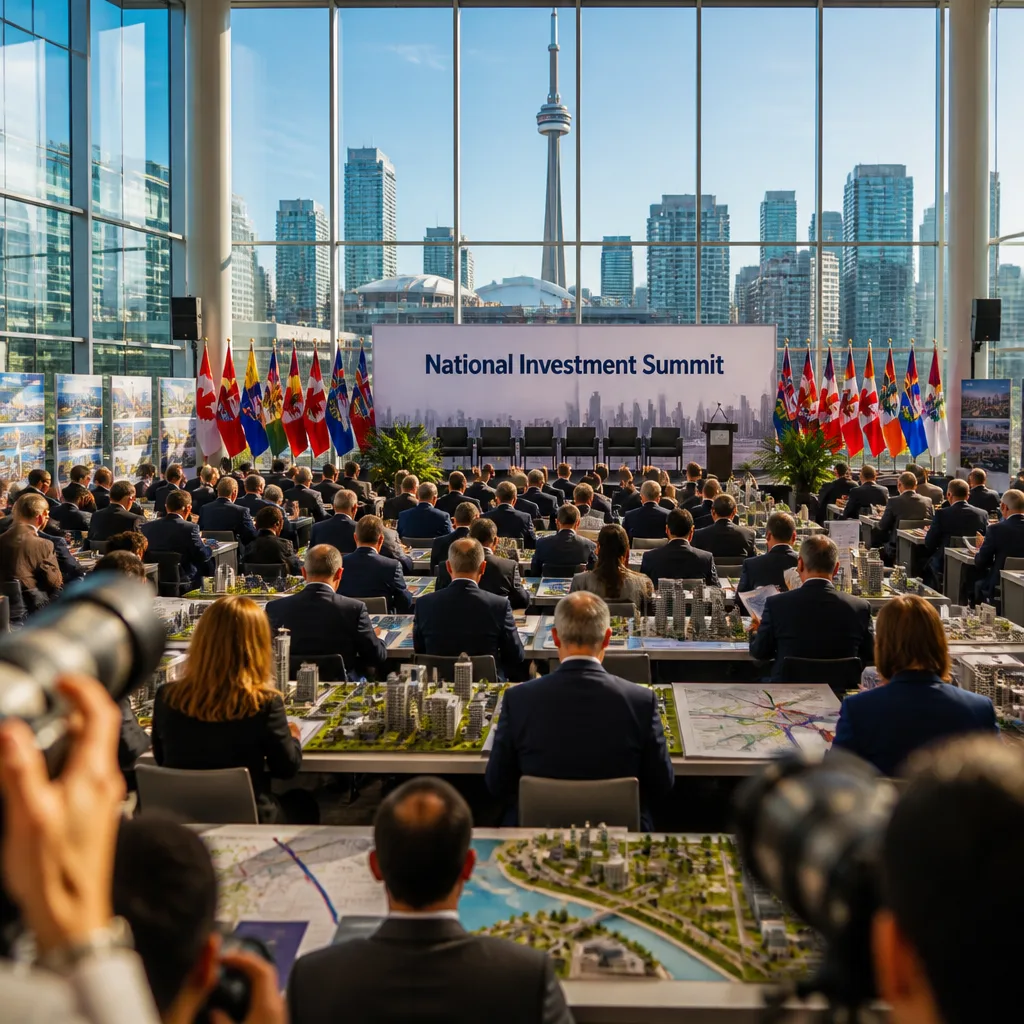
Prime Minister Mark Carney will bring hundreds of large domestic and international investors to Toronto next week for Canada’s first national investment summit, aiming to address a long-running weakness in private-sector capital formation that policymakers say has weighed on growth.
Summit aims and participants
The two-day event, scheduled for Sept. 14–15, will assemble institutional investors who together oversee trillions of dollars in assets. The federal government, provincial leaders and business officials will present a pipeline of major projects seeking private financing.
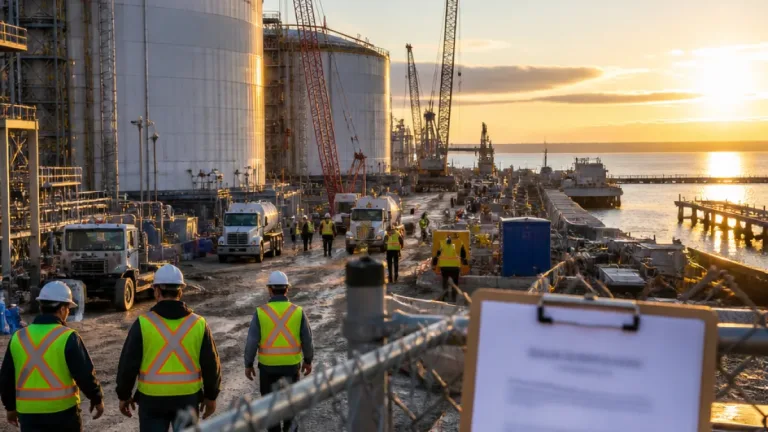
Organizers include the Prime Minister’s Office, the Canada Pension Plan Investment Board (CPPIB) and Public Sector Pension Investments (PSP Investments), two of the country’s largest asset managers. Provincial premiers are travelling with lists of proposed projects to pitch directly to the investor audience: for example, Alberta’s delegation plans to promote 34 projects, while Saskatchewan and New Brunswick are highlighting opportunities in energy, minerals, defence, ports and data infrastructure.
Why it matters
Federal officials frame the summit as a response to a sustained shortfall in business investment that has hurt productivity and economic growth. The government has publicly set an ambitious target of mobilizing $1 trillion of new investment into Canadian projects over five years; the summit is intended to turn that target into firm commitments.
“This has been a bit of Canada’s Achilles heel over the last couple of decades. And this is why I think Prime Minister Carney, upon being elected, this was his big bet on rebuilding the Canadian economy,”
The observation comes from Mahmood Nanji, a fellow at the Ivey School of Business, who has pointed to low private investment as a central constraint on growth.
Potential impacts on households and businesses
If the summit succeeds in directing significant private capital into Canadian projects, potential effects include:
- Short-term construction and engineering jobs tied to infrastructure and industrial projects;
- Longer-term operational employment where projects reach completion, such as ports, data centres and energy facilities;
- Improved productivity if investments modernize capacity or digital infrastructure, which can lift wages and lower costs for businesses over time.
However, the scale of outcomes will depend on how much of the pitched pipeline attracts private financing, the terms of investment, and whether projects advance with the necessary permitting and regulatory approvals.
Event snapshot
| Item | Detail |
|---|---|
| Dates | Sept. 14–15 |
| Organizers | PMO, CPPIB, PSP Investments |
| Provincial examples | Alberta: 34 projects; Saskatchewan and New Brunswick pitching energy, minerals, ports and data centres |
| Federal goal | Catalyse up to $1 trillion of investment over five years |
The summit represents a shift toward actively marketing Canada’s project pipeline to global capital pools. For businesses and households, the promise is tangible: more investment can translate into jobs, higher productivity and improved infrastructure — but only if projects are bankable, timely and aligned with investor risk appetites.
Officials and investors will use the two days to test appetite, negotiate terms and set timelines. The outcomes will offer an early signal of whether Ottawa’s capital-focused strategy can move from ambition to concrete deals.