
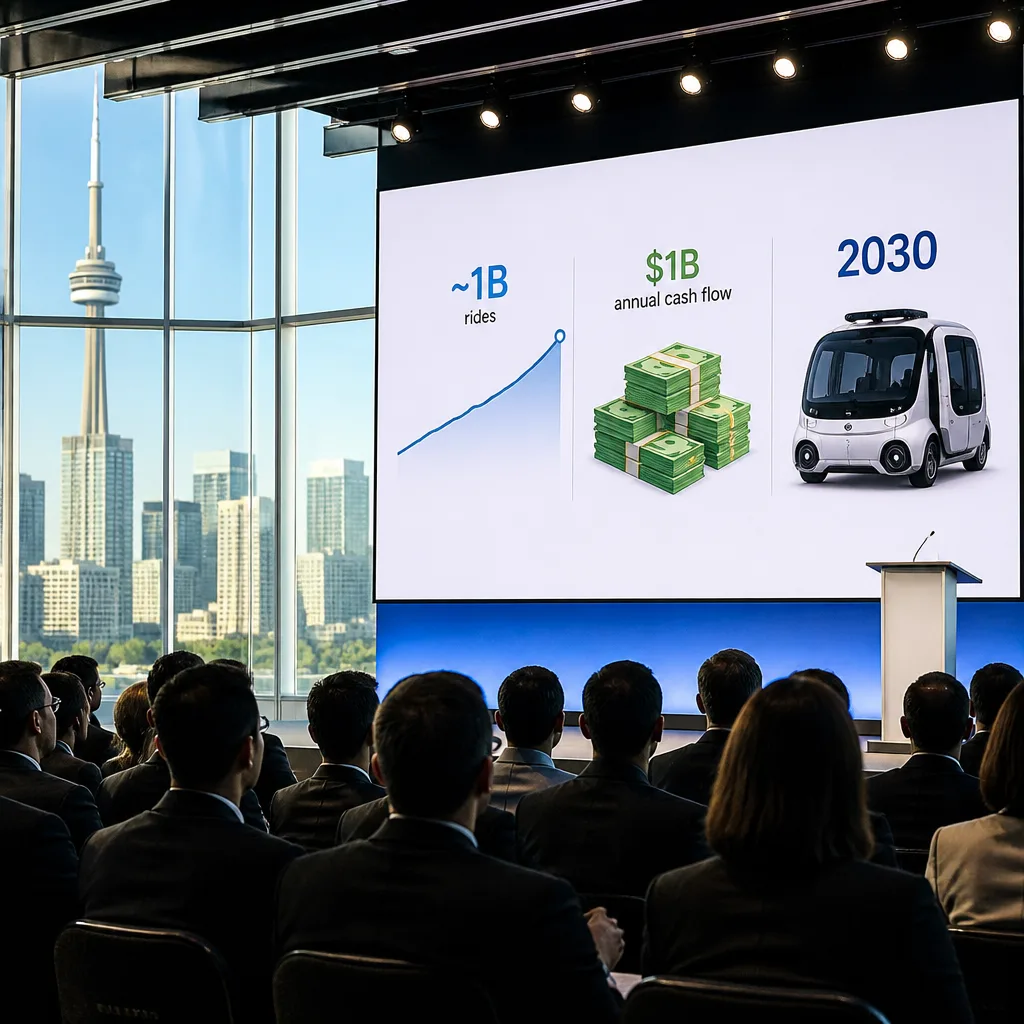
Lyft outlines growth, profitability and an AV roadmap
Lyft used its appearance at the Goldman Sachs Communacopia + Technology Conference to present what it described as a sharply improved business: annual rides approaching 1 billion, a move from cash burn to roughly US$1 billion in annual cash generation, and a stated path toward integrating autonomous vehicles into its service mix.
Company executives highlighted three avenues for future growth: premium services, international expansion through its FreeNow partnership, and autonomous vehicles. Management said the business has shifted from loss-making to profitable on a GAAP basis and is producing about US$700 million in annualized EBITDA, annualized from second-quarter results.
- Ridership: From about 700 million rides three years ago to a run rate projected to top 1 billion rides.
- Cash flow: Transitioned from burning roughly US$250–300 million annually to generating about US$1 billion a year.
- Profitability: Company states it has achieved GAAP profitability and significant EBITDA improvement.
The company framed these changes as the result of scale and a shift in product mix toward higher-value trips and new partnerships. Executives cited improvements in unit economics including reduced insurance costs in California as a material margin and pricing development.
"Per-ride insurance costs in California fell from about $6 to about $0.30."
Lyft signalled that autonomous vehicles are viewed as an opportunity rather than a threat, estimating that AVs could account for about 10 per cent of its business by 2030. The company said it still faces a long transition as it expands internationally, deepens partnerships and balances traditional driver-based rides with new technologies.
| Metric | Reported/Projected |
|---|---|
| Annual rides (three years ago) | ~700 million |
| Projected annual rides (current) | Top 1 billion |
| Annual cash flow | ~US$1 billion |
| Annualized EBITDA (Q2) | ~US$700 million |
Why this matters
The shift to sustained profitability and positive cash generation narrows the gap between ride-hailing as a growth experiment and a stable transport business model. For cities and regulators, Lyft’s path toward AV deployment — even at a modest 10 per cent share by 2030 — signals ongoing disruption for drivers, insurers and transit planning.
International expansion through partners such as FreeNow points to a two-track approach: grow core rideshare volume while experimenting with higher-margin services and new technologies. The company emphasised that scale and product mix improvements drove the turnaround; lower regulatory costs, such as the cited fall in per-ride insurance in California, also played a role.
Lyft’s presentation outlines a business that is moving from rapid growth toward sustainable operations, while still betting on technological change to lift margins and reshape its service mix over the coming decade.