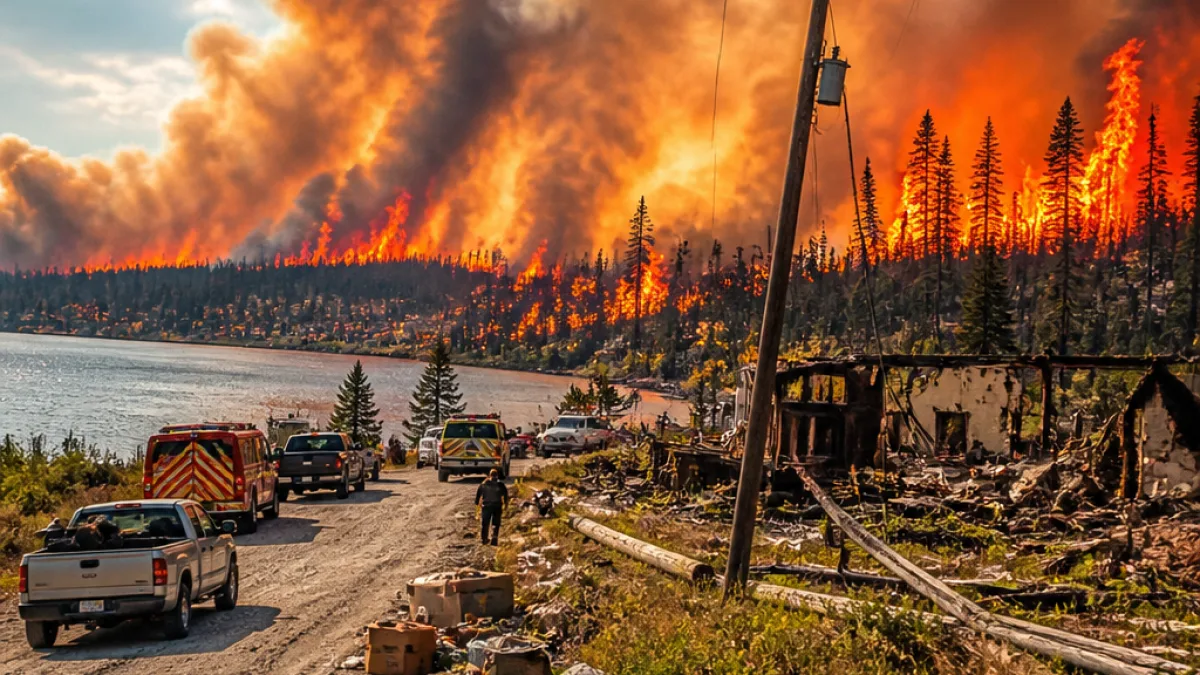
Dozens of forest fires sweeping northern Ontario have led to multiple evacuation orders, damaged and destroyed homes and widespread smoke across the region, officials said Thursday.
Scope and immediate impacts
Provincial and local authorities say crews are battling more than 180 wildfires across northern Ontario, with hot, windy conditions complicating suppression efforts. Fire officers reported 148 active fires in the northwest region alone, of which 69 were out of control.
Evacuation orders have been issued for several communities, including Armstrong, Lac La Croix First Nation, Whitesand First Nation, Gull Bay First Nation and Lac des Mille Lacs First Nation. One rapidly spreading blaze damaged and destroyed homes and other buildings on Namaygoosisagagun First Nation, also known as Collins First Nation, north of Thunder Bay.
Weather and fire behaviour
Environment Canada warned winds from the northwest could produce gusts up to 40 kilometres per hour, a factor likely to accelerate and spread some of the fires. Those same winds have been carrying smoke into southern parts of the province, reducing visibility and prompting air-quality alerts in other regions.
Provincial response and local consequences
Premier Doug Ford said provincial crews were working to suppress the blazes and that the government would spare no expense to keep people safe. Firefighting teams from provincial, municipal and Indigenous agencies are engaged in containment and support operations, while transportation and local services in affected areas have been disrupted.
- More than 180 wildfires reported across northern Ontario.
- 148 active fires in the northwest region; 69 out of control.
- Evacuation orders in place for multiple First Nations and communities.
Where people are affected
| Community | Situation |
|---|---|
| Namaygoosisagagun (Collins First Nation) | Homes and buildings damaged or destroyed |
| Armstrong | Evacuation order; heavy smoke expected |
| Lac La Croix First Nation | Evacuation order |
| Whitesand First Nation, Gull Bay First Nation, Lac des Mille Lacs First Nation | Evacuations and emergency response underway |
Residents in affected towns and reserves have been urged to follow instructions from local emergency management teams. People with respiratory conditions are being advised to limit outdoor activity while smoke persists.
Broader impacts and next steps
Smoke from the northern fires has travelled south, prompting air-quality warnings in other parts of Ontario. Officials cautioned that with the prevailing northwest winds, smoke and the potential for fire spread could persist for several days. Fire officials continue to monitor weather, deploy resources where risk is greatest and co-ordinate evacuations and relief for displaced residents.
Further updates will come from provincial emergency services, local band councils and Environment Canada as conditions evolve.