Extreme heat has accelerated Ontario’s wildfire season, leaving the province with a large cluster of active fires in the northwestern region and forcing residents to abandon homes and communities. Officials say the situation is evolving quickly as crews fight dozens of separate blazes.
Scope of the emergency
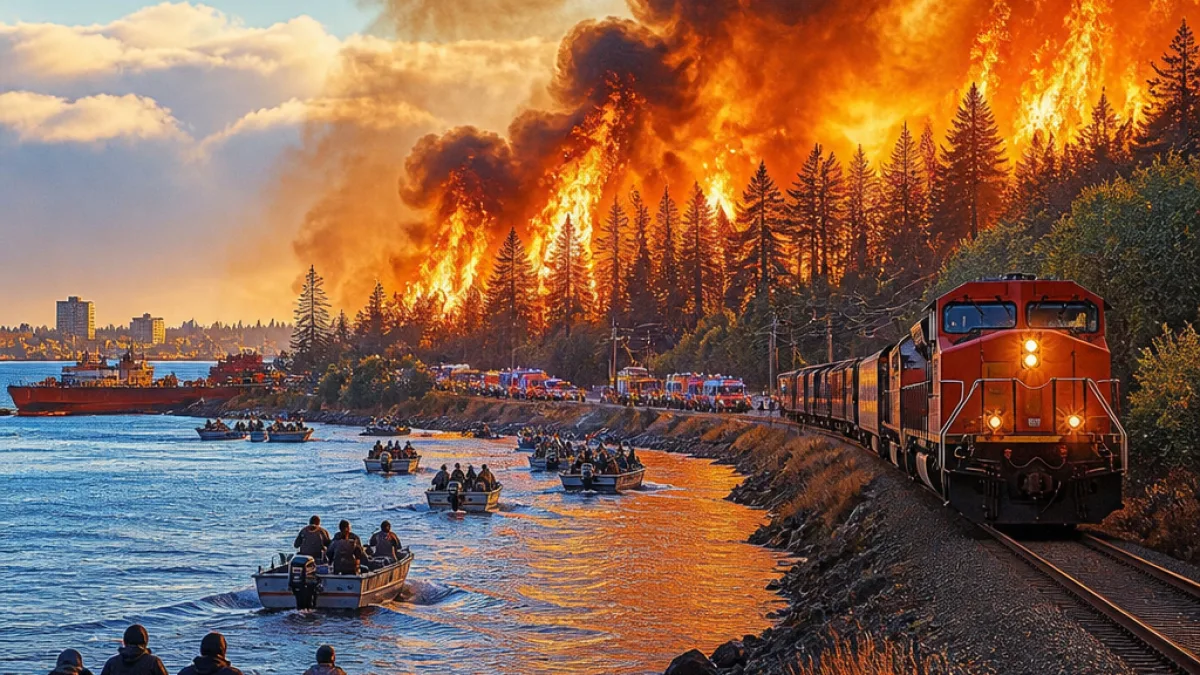
Fire activity has surged across northwestern Ontario, with more than 100 active wildfires reported in the broader Thunder Bay region. Several communities have been placed under evacuation orders, and dramatic footage circulating on social media shows flames close to populated areas and ash blanketing neighbourhoods.
In some locations residents have had to leave by boat. Video shared online also showed a CN Rail train operating in an evacuation capacity while intense fire activity burned nearby.
Smoke and air quality impacts
The smoke from the northern blazes has travelled for hundreds of kilometres, pushing air quality readings in parts of southern Ontario to levels among the worst in the world. Health officials warn that smoke exposure poses a risk to people with respiratory or cardiac conditions, older adults and children.
- Active fires: 100+ in northwestern Ontario
- Evacuations: Multiple communities ordered to leave; some residents evacuated by boat
- Air quality: Readings in parts of southern Ontario have reached extremely poor levels due to smoke
What residents should know and do
Authorities advise people in affected areas to follow evacuation orders and local emergency instructions without delay. For those outside evacuation zones but affected by smoke, officials recommend limiting outdoor activity, keeping windows and doors closed, using air conditioners on recirculate where possible, and seeking cleaner-air locations if symptoms develop.
People with medical vulnerabilities should be particularly cautious. If you experience breathing difficulty, chest pain, light-headedness or other worrying symptoms, seek medical attention.
| Issue | Practical action |
|---|---|
| Evacuation orders | Follow local municipal or emergency management directions; take essentials and medications |
| Smoke exposure | Stay indoors, use HEPA/A/C filtration if available, avoid strenuous activity |
| Information | Monitor Ontario Ministry of Natural Resources and Forestry updates and municipal notices |
Because conditions can change rapidly, residents should rely on official sources for the latest evacuation maps and air-quality bulletins. Local emergency management offices and the provincial Ministry of Natural Resources and Forestry are posting updates as crews respond to the fires.
Response efforts involve provincial fire-fighting resources and local crews working to protect lives and property, but the combination of extreme heat and dry conditions is complicating suppression efforts.
The coming days will be critical for containment and for public health as smoke continues to drift across broad swaths of Ontario. Those in affected areas should stay informed and prepared to move if directed by authorities.