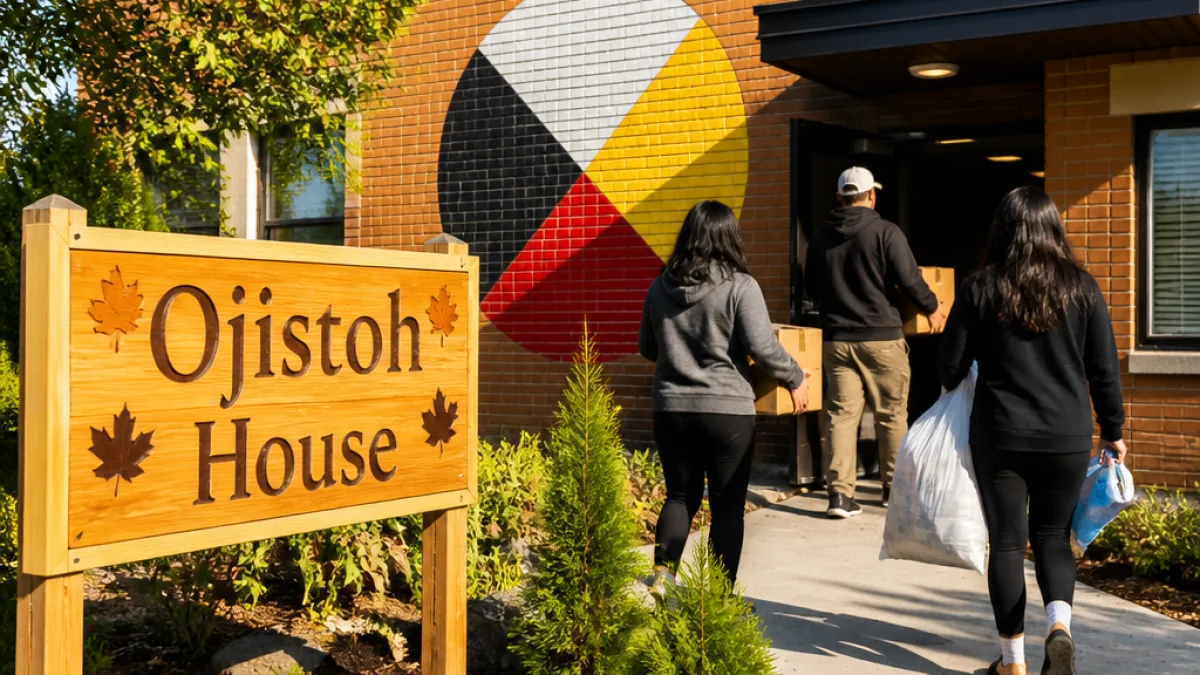
The federal housing agency Build Canada Homes has committed funding to an Indigenous-led transitional supportive housing project in Brantford, the agency and project partner announced on July 17.
What the project is
Known as Ojistoh House, the development is being delivered by Brantford Native Housing and is described as the first transitional supportive housing project of its kind serving Brantford and Brant County. The project is aimed at Urban Indigenous women, children, youth, gender-diverse and Two‑Spirit community members who are experiencing, or are at risk of, homelessness, violence and housing insecurity.
"Every person in Canada deserves a safe and affordable place to call home."
The announcement frames the project within a broader federal effort to increase the supply of affordable, supportive and community housing through Build Canada Homes, which partners with Indigenous and non-profit housing providers on community-led projects.
Services and supports
Ojistoh House is being designed to provide culturally safe, transitional accommodation with on-site or connected supports intended to help residents transition to permanent housing. The release lists the following elements as core components of the project:
- Housing stabilisation services and case management
- Cultural programming and elder supports
- Life-skills development
- Mental health and wellness services
- Referrals to health, addictions and other community resources
The supports are intended to help residents develop skills, increase independence and prepare for permanent housing.
Funding
The federal agency is reported to be investing more than $4.3 million toward the project. The announcement characterises the funding as part of Build Canada Homes' mandate to accelerate homebuilding and to support projects that respond to local needs.
| Item | Details from announcement |
|---|---|
| Project | Ojistoh House — Indigenous transitional supportive housing |
| Lead developer | Brantford Native Housing |
| Target population | Urban Indigenous women, children, youth, gender‑diverse and Two‑Spirit people |
| Federal contribution | More than $4.3 million |
Local context and implications
For Brantford, the announcement represents a targeted addition to the local continuum of housing and support services for Indigenous residents. Transitional supportive housing like Ojistoh House is intended to fill an intermediate role between emergency shelter and permanent housing, offering time-limited accommodation together with wraparound services that address health, cultural and social needs.
Because the project is led by a local Indigenous housing provider and described as "for‑Indigenous, by‑Indigenous," the model emphasises culturally appropriate programming and elder supports — elements stakeholders say can increase effectiveness for residents who have experienced trauma or displacement.
The funding and the project align with the federal agency's stated priorities to speed up housing construction and to support community-led initiatives, but details on project timelines, unit counts and site location were not provided in the announcement. Residents and service providers will be watching for planning, permitting and operational timelines, and for clarity on how referrals and intake will be managed once the housing opens.
As the project advances, municipal and community partners will need to coordinate on service delivery, supports and links to permanent housing options to ensure residents can move successfully from transitional units to long-term housing.