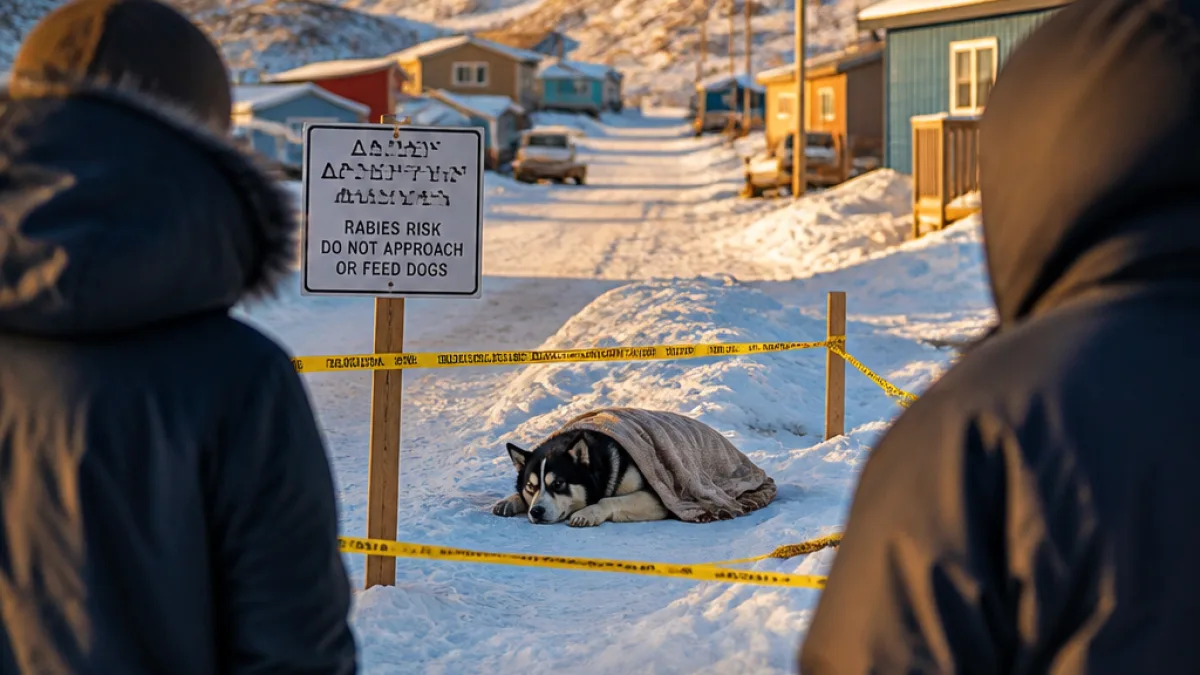
The Nunavut Department of Health has issued a community alert in Pangnirtung after a large black-and-white husky found loose last Friday was killed on Saturday for showing signs consistent with rabies. The dog was not available for laboratory testing, officials said.
Immediate public-health advice
Health authorities are urging anyone who had contact with the loose husky to visit the health centre to be assessed and, if necessary, begin post-exposure treatment. Rabies is a viral infection that, if not treated quickly after exposure, is almost always fatal.
“Rabies remains an active and serious threat in the community,”
The department reminded residents of typical signs of rabies in animals, including unusual aggression, staggering, frothing at the mouth, choking, odd vocalizations and — in wild animals — a lack of fear toward people. Animals showing any of these behaviours should be avoided and reported to the environmental health officer or a conservation officer.
Recent cases and what’s known
Public information from the Department of Health indicates this is the fourth dog in Pangnirtung observed with rabies-like symptoms since May. Of the earlier animals, three dogs and one fox tested positive for the virus.
| Animal | Test result / status |
|---|---|
| Dog (most recent loose husky) | Not available for testing; euthanized after showing symptoms |
| Other dogs | Three tested positive |
| Fox | One tested positive |
Officials say anyone bitten or scratched by an animal exhibiting concerning behaviour should seek care at the health centre immediately because prompt treatment is critical.
Precautions for pet owners and residents
The Department of Health is asking people in Pangnirtung to take steps to reduce risk in the community:
- Keep dogs securely tied up or otherwise under control.
- Watch pets closely for any change in behaviour or signs of illness.
- Report animals acting strangely to local environmental health or conservation officers.
- If you are bitten or scratched, go to the health centre at once for assessment.
Health staff will determine whether post-exposure prophylaxis is needed. Treatment is most effective when started as soon as possible after exposure.
Local authorities continue to monitor the situation. Residents with questions about potential exposures or animal reporting procedures should contact the health centre or the community’s environmental health officer for guidance.