On a busy stretch of Makati in Metro Manila, a two-storey facility quietly hosts one of the most unusual training programs in Asia: a school for exorcists. The Saint Michael Center for Spiritual Liberation and Exorcism — just five months into operation this week — was built to meet what its director describes as a surge in people seeking help for suspected spiritual oppression.
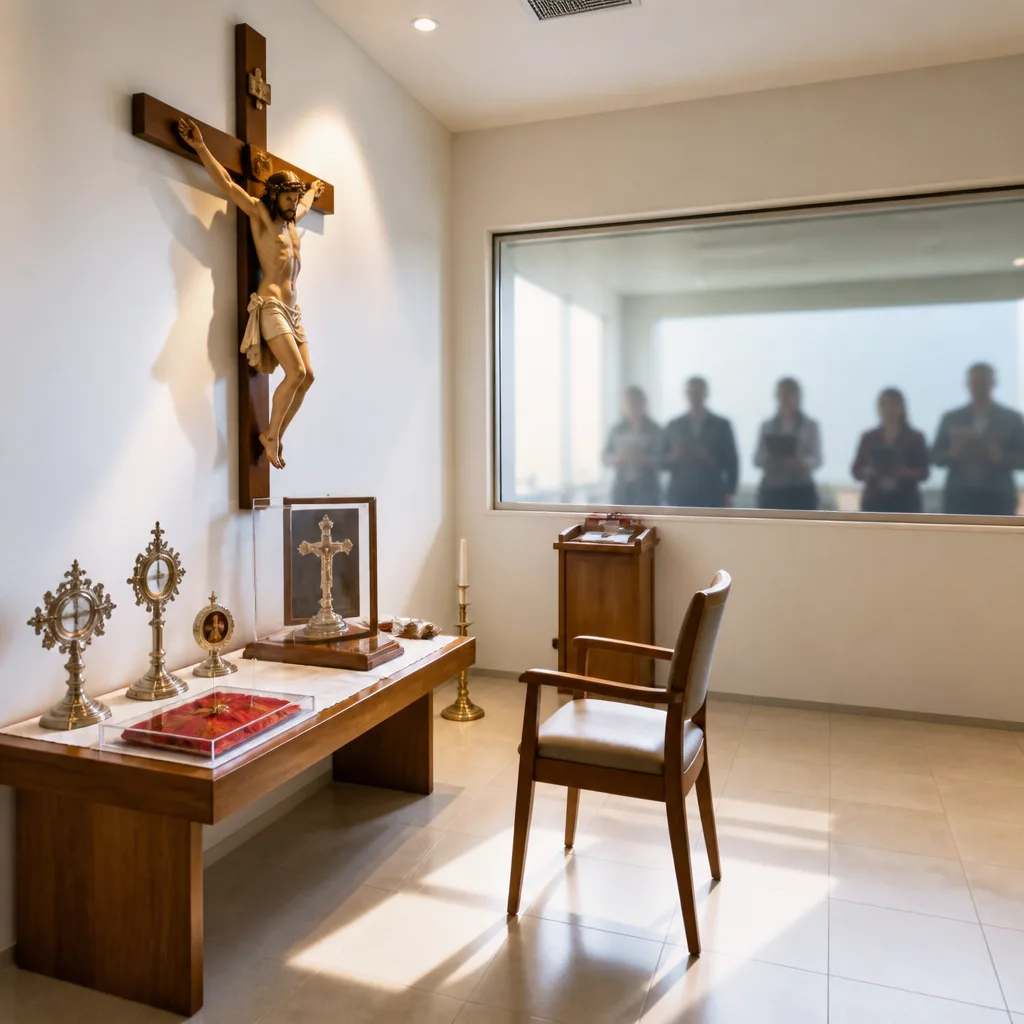
Down warmly lit corridors, neatly prepared guest rooms for visiting clergy open toward a chapel where a centuries-old ritual is carried out. Along one wall, sacred relics are arranged for use in rites; on another, a one-way mirror allows family members and novice priests to observe without disrupting proceedings. The atmosphere mixes practicality with pastoral care — and a dose of clinical rigour.
“We had to find a more permanent and secure and private place to pray over people,” Father Jose Francisco Syquia said.
A regional hub for a rare discipline
Described by its leadership as the only dedicated exorcism centre of its kind in Asia, the facility was created not just to serve the Philippines, but to train clergy from across the region. According to Father Jose Francisco Syquia, priests from Singapore, Malaysia, Cambodia and India are already seeking places in its courses. He told AFP he was unaware of any other centre worldwide that specifically trains exorcists in this way.
Much of the centre’s financing came from local families who say they previously found relief there — an origin story that underscores its deeply personal pull in the Philippines, a country where Catholic faith and community networks run strong.
Why demand is rising
The centre’s team says the need isn’t born of cinematic spectacle but from a complicated mix of hardship and trauma. Staff see cases linked to bullying, sexual abuse, and family separations — the last a familiar reality in the Philippines, where loved ones often leave to work abroad. Those breaks, the director suggests, can leave profound emotional scars that some interpret through a spiritual lens.
That framing leads to a defining feature of the program: a rigorous effort to tell the difference between what might be a psychological condition and what clergy regard as a spiritual problem. The aim, leaders say, is not to sidestep medicine but to start there.
- Training goal: Teach clergy to discern psychological distress from suspected spiritual affliction.
- Regional reach: Priests from multiple Asian countries are lining up for instruction.
- Community support: Built largely with contributions from families who sought help in the past.
Clinical partners at the core
While the centre operates without strict Vatican supervision, Syquia says it abides by longstanding Church norms governing exorcism — notably the requirement for professional evaluation by mental health experts before any rite is undertaken. He describes a collaborative roster that includes clinical psychologists, a psychiatrist and neurologists.
| Specialist | Role in assessment |
|---|---|
| Clinical psychologists | Conduct psychological evaluations and screening |
| Psychiatrist | Medical diagnosis and treatment oversight |
| Neurologists | Rule out neurological causes and conditions |
The emphasis on evaluation reflects a broader move within Church practice, where exorcists increasingly work alongside clinicians. Here, the idea is simple: if someone needs therapy, medication or neurological care, that comes first. The centre’s curriculum leans into this distinction, training clergy to recognize red flags and refer appropriately.
What the space looks and feels like
Photographs taken in March 2026 capture the centre’s softer side: tidy quarters for visiting priests, a modest exterior in the heart of Makati, and a stark teaching aid — video footage of past rites — used to prepare trainees for what they might encounter. The one-way viewing window in the chapel gives families a place to be present without adding pressure, and offers apprentices a structured view of procedures, from quiet prayers to more formal rites.
For travellers curious about the cultural fabric of Metro Manila, the facility’s existence is a reminder that spirituality here is deeply intertwined with daily life. The city’s mix of devotion and modernity sits just outside the centre’s doors — skyscrapers and cafés on one side, a chapel designed for solemn ritual on the other.
Rules, guardrails and why they matter
Syquia says long-established Church rules shape everything the team does. That includes a clinical review before rites and clear steps to determine when not to proceed. The approach aims to protect vulnerable people from harm and to ensure that, where spiritual care is offered, it’s grounded in caution and cooperation with health professionals.
In practical terms, that makes the centre as much a classroom as a chapel. The program trains priests to document cases, pay attention to patterns, and understand when a psychologist’s expertise is needed over a prayer — or when both forms of care can respectfully coexist. It’s a pragmatic, safety-first ethos couched in faith-based ministry.
Why this matters beyond the Philippines
The centre’s regional draw speaks to a wider conversation in Asia about how institutions — sacred and secular — respond to mental health and trauma. That priests from Singapore, Malaysia, Cambodia and India are seeking training suggests a search for structured, accountable models in an area that has long been informal and, at times, controversial.
At its core, this is a story about care and boundaries. Families facing pain want answers; faith leaders want tools; clinicians want to prevent harm. By putting all three into one building, Manila’s Saint Michael Center is testing a path that pairs ritual with oversight — and insists that if you’re going to do exorcism at all, you must also do the hard, methodical work of ruling out everything else first.