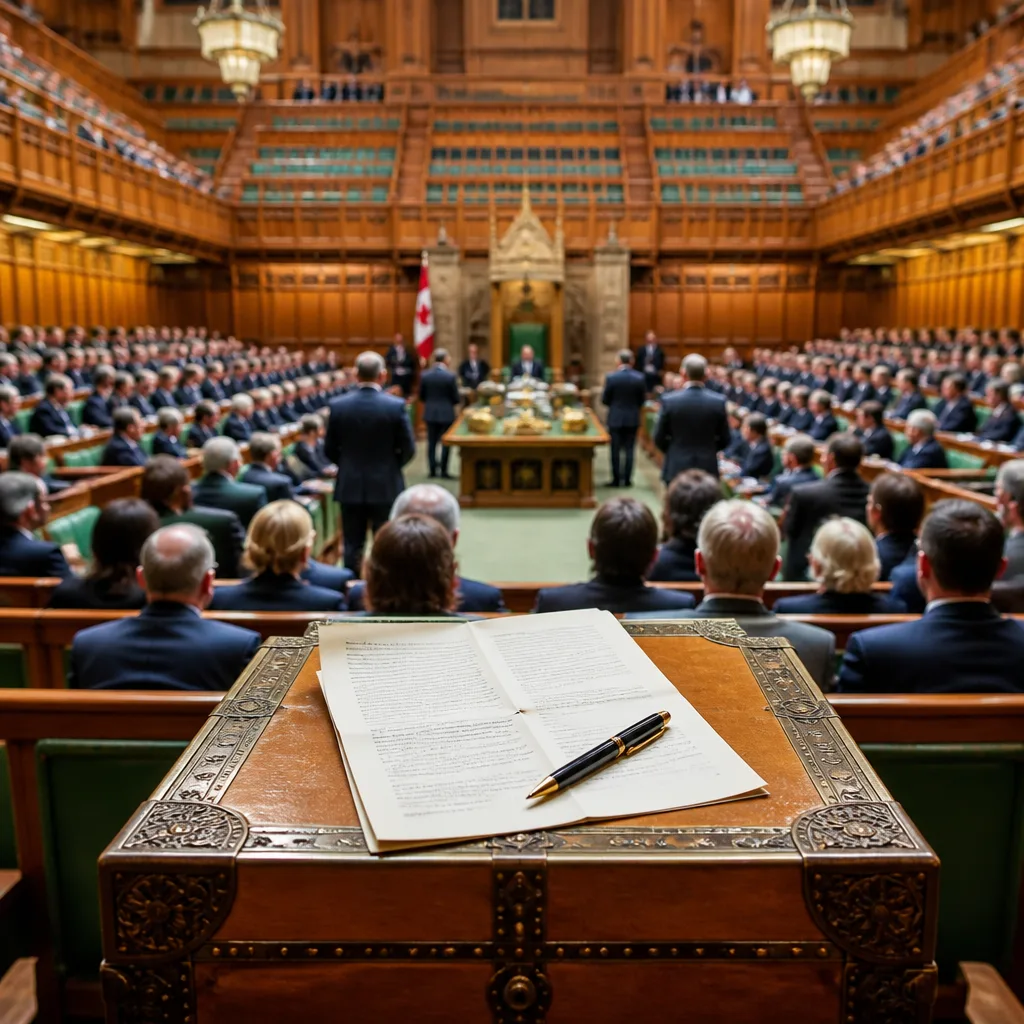
Prime Minister Keir Starmer told the House of Commons on Wednesday that he will step down next week after losing the backing of his party, delivering a farewell appearance at the weekly Prime Minister’s Questions ritual.
Valedictory Commons session
In a session that combined customary sparring with moments of levity and personal tribute, the outgoing prime minister said he was leaving the country in “
better shape than I found it” and declared that his public political mission had concluded. He indicated he intends to continue as a backbench lawmaker for the time being.
Starmer’s resignation comes after six years as leader of the Labour Party and two years as prime minister. He will formally vacate the office next week, at which point the party’s chosen successor, Andy Burnham, is expected to assume the premiership.
What this means for governance
Under Britain’s parliamentary system, a change of party leader usually produces a change in prime minister without requiring a national election. That means the next general election does not have to be held until 2029, and continuity of government will depend on the incoming leader’s ability to secure support within the parliamentary Labour grouping and among ministers.
- Timing: Starmer leaves office next week; the parliamentary system allows a leader change without a national vote.
- Succession: Andy Burnham is poised to take over as Labour leader and prime minister.
- Future role: Starmer plans to sit as a backbencher after stepping down.
Security and tone
Opening his final question period, Starmer addressed a recent act of violence that has drawn national attention, describing the killing of former MP Ann Widdecombe as “horrified” and “chilling.” He noted that counterterrorism authorities are treating the incident as a murder and urged colleagues to redouble efforts to protect democratic institutions, pointing out that three serving or former members of Parliament have been killed during his 11 years in Parliament.
The session also touched on the often theatrical character of Prime Minister’s Questions — a weekly test of quick responses to questions from opposition benches and backbenchers. Starmer’s concluding appearance was notably more conciliatory than many, interweaving criticism of opponents with personal remarks and lighter exchanges about contemporary political oddities.
| Metric | Detail |
|---|---|
| Years as Labour leader | 6 |
| Years as prime minister | 2 |
| Next required national election | By 2029 |
The transition underscores how leadership changes within governing parties can produce rapid shifts at the head of government in the United Kingdom without immediate recourse to the electorate. The incoming leader will face the twin tasks of reassuring ministers and the public while setting priorities that may differ from those of the departing prime minister.