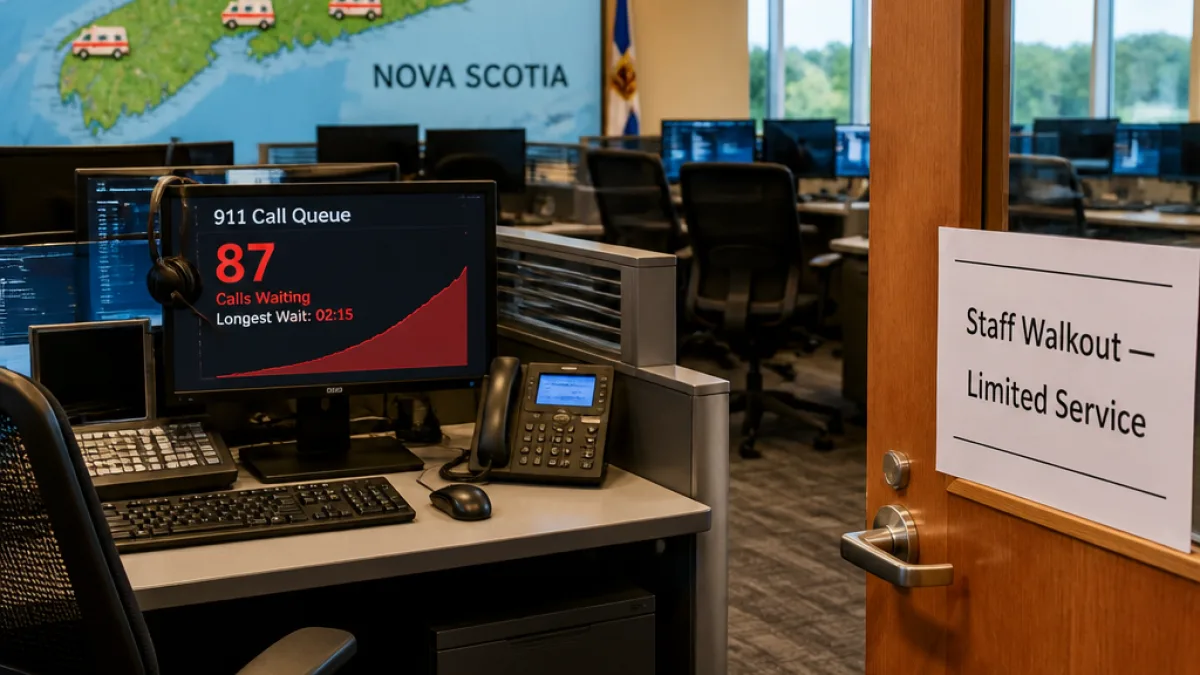
More than 60 emergency medical dispatchers in Nova Scotia are on strike, the province's health system confirmed on July 18, 2026. The action removes a significant portion of staff who answer and triage medical 911 calls and coordinate ambulance responses.
What dispatchers do and why the strike matters
Emergency medical dispatchers perform critical front‑line duties when someone dials 911 for a medical issue. Their tasks commonly include:
- receiving emergency calls and determining the nature and severity of medical problems;
- providing pre‑arrival instructions to callers; and
- dispatching ambulance crews and coordinating resources with other emergency services.
With more than 60 dispatchers off the job, the province faces reduced capacity to handle the volume and complexity of incoming emergency medical calls. That can lead to longer wait times for callers and potential delays in sending ambulances to people in urgent need.
Immediate implications and likely responses
When dispatcher staffing falls sharply, health and emergency management agencies commonly take contingency steps such as adjusting dispatch protocols, reducing non‑urgent transfers, reassigning staff from other duties, or requesting mutual aid from neighbouring jurisdictions. At the same time, some non‑urgent calls may be rerouted or deferred to preserve capacity for life‑threatening situations.
A basic snapshot of the situation:
| Detail | Information |
|---|---|
| Number of dispatchers on strike | More than 60 |
| Date | July 18, 2026 |
| Service affected | Emergency medical dispatch (911 medical calls) |
What residents should know and do
During labour disruptions that affect emergency response, residents are advised to:
- reserve 911 for immediate life‑threatening emergencies;
- use alternative health resources for non‑urgent medical questions, such as nurse advice lines and walk‑in clinics; and
- be prepared to give clear, concise information if calling 911, including location, the nature of the problem and whether the person is breathing or conscious.
Officials have not released details publicly about the duration of the walkout or any negotiated terms. Labour disruptions involving emergency services typically prompt expedited talks because of the potential risk to public safety.
The strike comes amid continuing debates across Canada about staffing, working conditions and compensation for emergency services workers. For now, Nova Scotians should monitor official provincial and municipal communications for updates on ambulance services and any temporary changes to emergency call handling.
InfoRadar will follow developments and report further information as it becomes available.