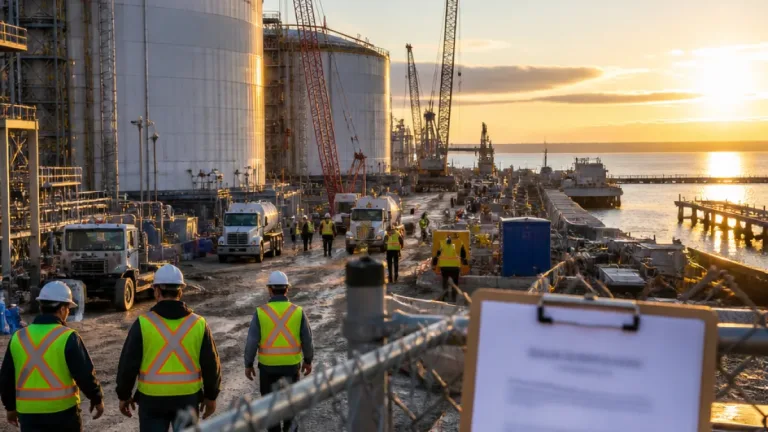

St. John’s — Newfoundland and Labrador’s offshore petroleum industry is entering a pivotal phase marked by improving output, planned project starts and renewed development interest, even as longstanding fields mature and operational challenges persist.
From early discoveries to a seasoned industry
The province’s modern offshore sector traces back to the discovery of Hibernia in 1979 and the signing of the Atlantic Accord in 1985, which established a joint federal–provincial management regime and opened the door to long-term economic benefits. Hibernia produced its first oil in November 1997, and developments that followed — including Terra Nova, White Rose and Hebron — have helped make St. John’s a recognized centre for harsh-environment offshore expertise.
Stronger production, but a complex outlook
After several years of project delays, production interruptions and limited exploration, industry observers note an upswing. Recent months have seen stronger oil output and the planned near-term start-up of West White Rose, while activity around the proposed Bay du Nord development has picked up. At the same time, established fields are maturing, costs for operating in the North Atlantic remain high and new developments face tightening economic, environmental and regulatory expectations.
- Historic milestones: Discovery of Hibernia (1979); Atlantic Accord (1985); first oil from Hibernia (1997).
- Current producing facilities: Hibernia, Terra Nova, White Rose and Hebron.
- Near-term projects: West White Rose start-up and continued interest in Bay du Nord.
| Facility | Role in the industry |
|---|---|
| Hibernia | First major discovery and long-running producing field |
| Terra Nova | Established producing field |
| White Rose (and West White Rose) | Producing complex with imminent West White Rose start-up |
| Hebron | Major contributor to provincial production |
The coming decisions by industry and government could determine whether the offshore sector gradually contracts as assets age or renews itself, initiating another multi-decade investment cycle. The province retains important advantages — decades of local experience, a developed supply chain and existing infrastructure — that could support future growth if economic and regulatory conditions align.
For communities across Newfoundland and Labrador, the outcome matters for jobs, provincial revenues and the wider economy. The industry’s direction will depend on how operators, regulators and policymakers balance costs, technical demands and evolving environmental expectations while seeking to unlock remaining offshore resources.
As the sector moves into this consequential period, observers will be watching production trends, the West White Rose start-up timeline and progress on any decisions related to Bay du Nord as indicators of whether the province’s offshore industry will embark on a new phase of investment.