Evacuations increase as fires intensify across the northwest
Communities in Northern Ontario are bracing for more displacements as nearly 200 wildfires continue to burn across the region, with 57 reported as out of control. Officials say the majority of fire activity is concentrated in the province’s Northwest, where conditions remain volatile and smoke is expected to worsen in the days ahead.
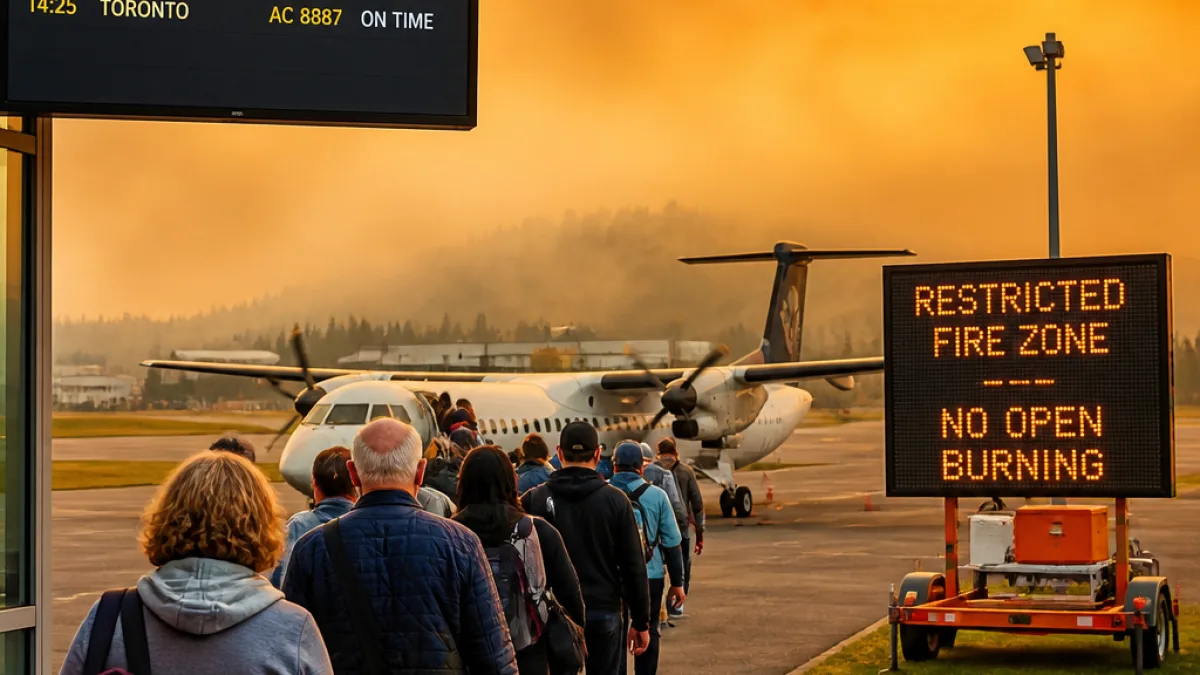
Neskantaga First Nation has arranged another evacuation flight to Toronto today, redirecting evacuees after Thunder Bay ran short on available hotel rooms. Authorities say they are prioritizing the movement of vulnerable residents and maintaining access to essential services as flight and accommodation logistics shift with demand.
Leaders in Whitewater Lake First Nation have reported severe losses from recent fire activity, citing destroyed homes, personal property and critical infrastructure. The damage has heightened concern among remote communities with limited road access and constrained emergency supports.
"Nearly 200 wildfires are currently burning across Northern Ontario, with 57 said to be out of control."
Response focuses on life safety and essential services
Fire crews say immediate operational goals include protecting lives, residential areas and key infrastructure while containment work continues around advancing fire lines. Province-wide measures remain in place across parts of the northwest, including restricted fire zones and bans on open-air burning until further notice.
While scattered rainfall has slowed some fire behaviour, officials warn that sustained precipitation is needed to bring lasting relief. Communities are monitoring changing smoke patterns and supply-chain disruptions, with some residents facing interruptions in deliveries due to road closures or flight constraints.
Conditions and public guidance
Emergency officials advise residents and evacuees to follow local instructions and prepare for changing air quality and visibility. With multiple evacuation hubs at or near capacity, hosts and receiving municipalities are coordinating additional space as flights adjust to hotel availability.
- Evacuees from Neskantaga First Nation are being flown to Toronto due to accommodation shortages in Thunder Bay.
- Restricted fire zones and open-air burning bans remain active across parts of northwestern Ontario.
- Residents are urged to track smoke advisories and heed local emergency directions as conditions shift.
Snapshot of the wildfire situation
| Item | Detail |
|---|---|
| Active wildfires (Northern Ontario) | Nearly 200 |
| Out of control | 57 |
| Primary region affected | Northwest |
| Evacuations | Neskantaga First Nation to Toronto; Thunder Bay capacity strained |
| Community impacts | Whitewater Lake First Nation reports extensive damage to homes and infrastructure |
| Public measures | Restricted fire zones and open burning bans in effect |
What residents should know now
Authorities are emphasizing life safety and the protection of key assets as fire crews redeploy to where conditions are most severe. Evacuees should stay in contact with community leadership for flight details and register with host municipalities on arrival to access health, lodging and social supports. Those remaining in affected areas are encouraged to prepare for rapid changes in air quality and to limit exposure to heavy smoke whenever possible.
Officials say the fire threat will remain dynamic until the region sees sustained rain. In the meantime, response teams continue to reposition staff and equipment to keep people safe and limit damage to homes, community buildings and transportation links.