Evacuations move families to Thunder Bay as fires threaten
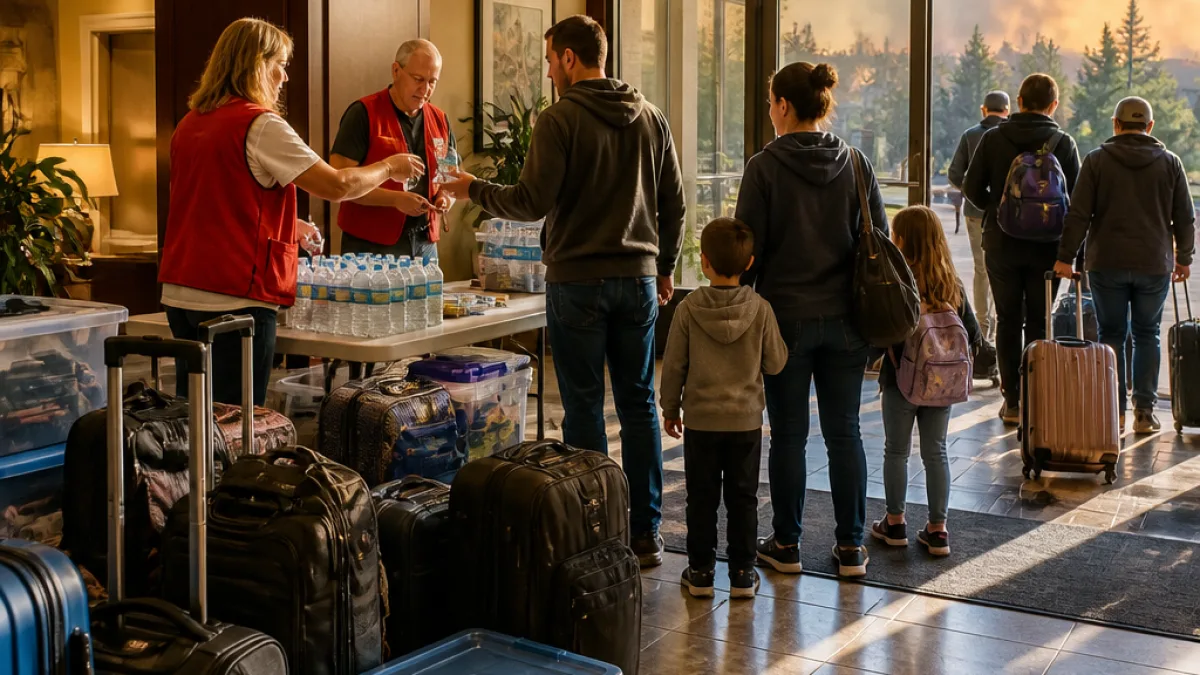
Residents of McKenzie Lake have been displaced by a nearby wildfire threat and are now sheltering in Thunder Bay, Ont., according to reporting by The Canadian Press. A photo taken Friday, July 17, 2026, shows Ella and Basil Arney in a hotel room in the city after leaving their home community as conditions worsened. The move reflects the growing disruption to families in northern communities during the current wildfire threat.
“We’re in danger.”
The phrase — reported alongside accounts of a hurried departure — captures the urgency faced by people leaving ahead of advancing fire. While detailed evacuation figures were not immediately available, the image from Thunder Bay underscores how hotels and other temporary accommodations are being used to house evacuees who have travelled to larger centres for safety.
What we know so far
The Canadian Press report places evacuees in Thunder Bay as of mid-July, with families arriving from McKenzie Lake due to the threat of wildfires. The move occurred before the weekend, with evacuees settling into temporary rooms as they await further updates. The situation remains fluid, and timelines for returns depend on fire behaviour and local safety assessments.
| Detail | Information |
|---|---|
| Evacuee location | Thunder Bay, Ontario |
| Home community | McKenzie Lake |
| Date photographed | Friday, July 17, 2026 |
| Reason for displacement | Threat of nearby wildfires |
Impact on evacuees and host community
For people who have left their homes, the immediate priority is safe shelter and access to basic needs while officials assess conditions on the ground. Moving to a regional centre like Thunder Bay typically means being farther from home supports, workplaces and community services, adding stress to an already difficult period. The photo of the Arneys in a city hotel is a reminder of how quickly routines are upended and how displacement can extend from days to longer stretches, depending on weather and fire activity.
Host communities also experience pressure as accommodation fills and services adjust to meet increased demand. Although precise numbers were not provided in the report, Thunder Bay’s role as a destination for evacuees positions the city as a critical waypoint for those waiting on official clearance to return.
Conditions and next steps
Return timelines for residents from McKenzie Lake will depend on fire proximity, air quality, and the status of transportation routes. Those conditions can shift with wind, temperature and precipitation. Authorities typically weigh the safety of travel and the stability of nearby fire lines before advising people to go back. Until then, evacuees remain in temporary lodgings and continue to monitor official communications for updates on their neighbourhoods.
Staying informed and prepared
People affected by wildfire movement are watching for notices from local authorities and updates distributed through provincial channels. In practice, evacuees commonly keep essential documents, medications and communication devices on hand, maintain contact with relatives and neighbours, and track advisories for information on services that may be available while away from home. For those outside the immediate area, the situation is a prompt to review personal plans for sudden departures, including transportation and meeting points with family members.
- Evacuees from McKenzie Lake have relocated to Thunder Bay because of wildfire danger.
- Temporary accommodation in the city includes hotel rooms, as shown in a CP photo taken July 17.
- Return plans hinge on changing fire conditions and formal safety guidance.
The Canadian Press report highlights the personal dimension of an evolving emergency in northern Ontario. With communities still navigating uncertainty, evacuees are focusing on day‑to‑day needs while awaiting the all‑clear to head home.