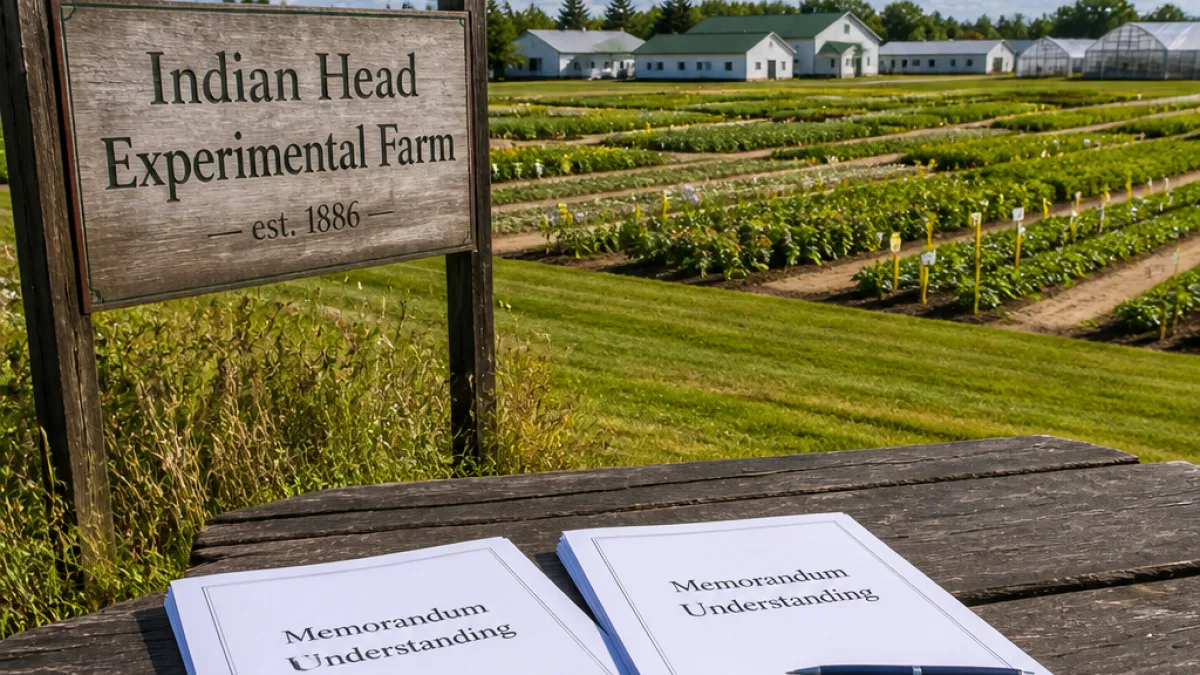
Saskatchewan's Ministry of Agriculture and Agriculture and Agri‑Food Canada have reached a memorandum of understanding that will allow two federal research farms in the province to remain open after they had been identified for closure earlier this year.
Local relief after planned federal closures
The farms affected are the long‑running experimental station in Indian Head and the satellite facility in the town of Scott. The federal department had announced plans to shutter seven research operations across Canada, prompting alarm among producers, researchers and municipal leaders in Saskatchewan.
Indian Head’s mayor described the announcement as a cause for celebration in the community. He noted the site’s historical importance and the breadth of impact its continued operation will have for producers across the province and beyond.
“There's a lot of excitement going on and happiness that a research farm that's been here for 140 years is going to remain open and still stay part of our community,”
Academics and industry observers stressed the role experimental farms play in developing practices and varieties suited to Prairie conditions. A University of Saskatchewan agricultural economist said the Indian Head farm was the second experimental farm ever established in Canada and that its potential loss would have been a major setback for agricultural research and productivity.
What the agreement means locally
The memorandum of understanding formalises a provincial commitment to assume operations at the two sites previously slated for closure by Agriculture and Agri‑Food Canada (AAFC). Municipal officials and community advocates had mobilized after the federal announcement to explore options for keeping the research capacity in place.
- Sites secured: Indian Head and Scott research farms.
- Significance: Indian Head farm has operated for more than 140 years and has contributed research benefitting Western Canada.
- Context: AAFC had planned to close seven research operations nationally.
Local officials said the effort to stop the closure involved multiple stakeholders coming together to identify a way forward. One municipal leader summed up the reaction simply: “We won.”
Practical implications and next steps
The agreement should maintain ongoing field trials, variety testing and extension work that feed directly into on‑farm decisions. Retaining the stations preserves research infrastructure that regional producers and researchers have relied on to adapt crops and practices to Prairie growing conditions.
Details on how operations will be funded, staffed and integrated into provincial research programming were not included in the initial announcement. Officials from both levels of government will need to outline timelines for transition, responsibilities under the MOU, and how existing federal research projects will be managed moving forward.
| Research farm | Location | Status |
|---|---|---|
| Indian Head | Indian Head, Saskatchewan | Will remain open under MOU |
| Scott | Scott, Saskatchewan | Will remain open under MOU |
For producers and municipal leaders in the region, the pact offers immediate reassurance that local research and extension services tied to these stations will continue. The next weeks and months should clarify operational arrangements, funding sources and how provincial authorities will integrate these sites into broader agricultural research priorities.