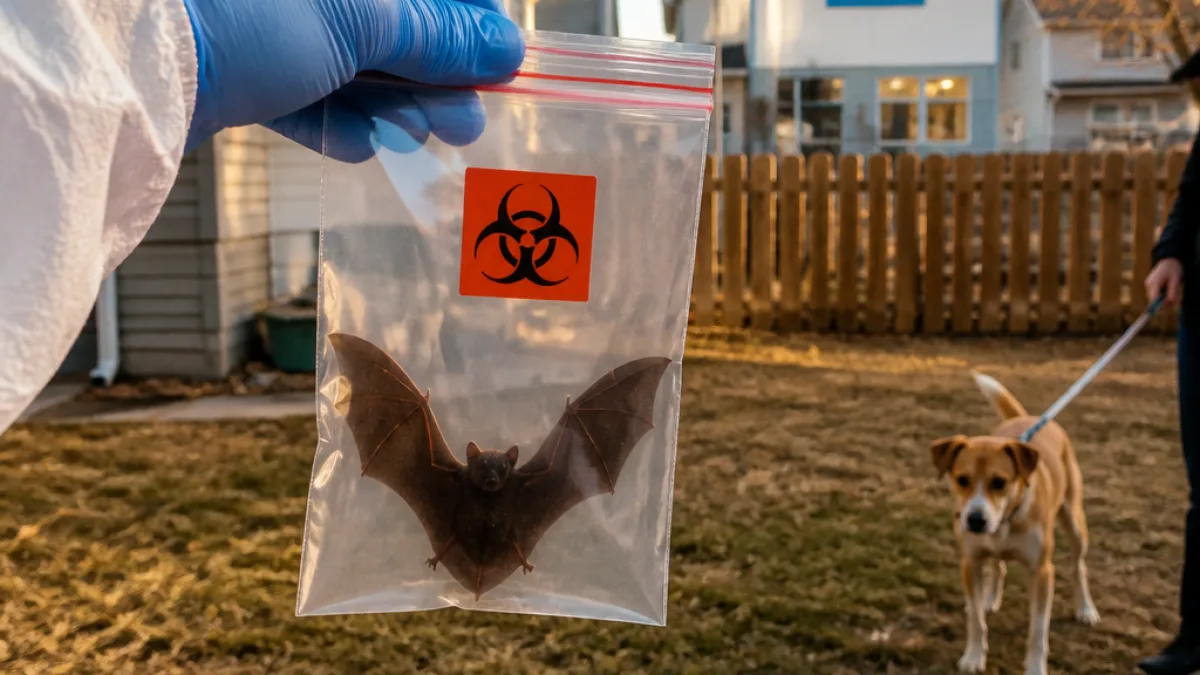
Public-health authorities and a Regina veterinary clinic have launched tests for rabies after three dead bats were found in residential yards between Regina and Lumsden over the past two weeks. The findings have prompted renewed warnings to pet owners about vaccination and precautions around wildlife.
Samples sent to provincial lab
TM'z Veterinary Clinic in the Regina area collected the animals and sent them to a laboratory in Saskatoon for rabies testing. The clinic said test results are expected in about a week.
"We send them off to a laboratory in Saskatoon, and we will get the results back in a week,"
The veterinarian quoted by the clinic noted that bats are commonly encountered this time of year and are one of the most frequent carriers of rabies in Saskatchewan. Rabies is transmitted through bites; once clinical signs appear the disease is invariably fatal.
What residents should know
Local animal-health professionals stressed preventive measures for both pets and people. TM'z Veterinary Clinic emphasised rabies vaccination for companion animals as a public-health priority, noting that avoiding bats entirely is not realistic.
- Three dead bats found in residential yards between Regina and Lumsden in the past two weeks
- Specimens sent to a Saskatoon laboratory; results expected in about one week
- Veterinary clinic urges keeping pets up to date on rabies vaccination
Veterinarians described a range of possible signs in animals that may be infected, from excessive drooling and difficulty swallowing to neurological symptoms such as weakness, staggering or, conversely, unusually calm behaviour. They warned that once clinical signs develop the outcome is fatal.
Why more bats may be found this season
The clinic attributed an expected rise in bat activity to this year’s weather patterns. Increased moisture and heat, combined with abundant insect prey, have created favourable conditions for bats to feed and reproduce. Clinic staff said they anticipate seeing more bats submitted for testing in the coming weeks.
| Item | Detail |
|---|---|
| Number of bats discovered | 3 |
| Locations | Residential yards between Regina and Lumsden |
| Laboratory | Saskatoon provincial lab |
| Expected test turnaround | About one week |
Public-health officials and veterinarians advise residents not to handle bats with bare hands. If people find a bat in which human or pet contact is suspected, they should contact local health authorities or a veterinary clinic for guidance on capture and testing procedures.
The situation underscores the role of routine vaccination in preventing zoonotic disease transmission: for rabies, vaccination of domestic animals remains one of the most effective defences available to communities.